

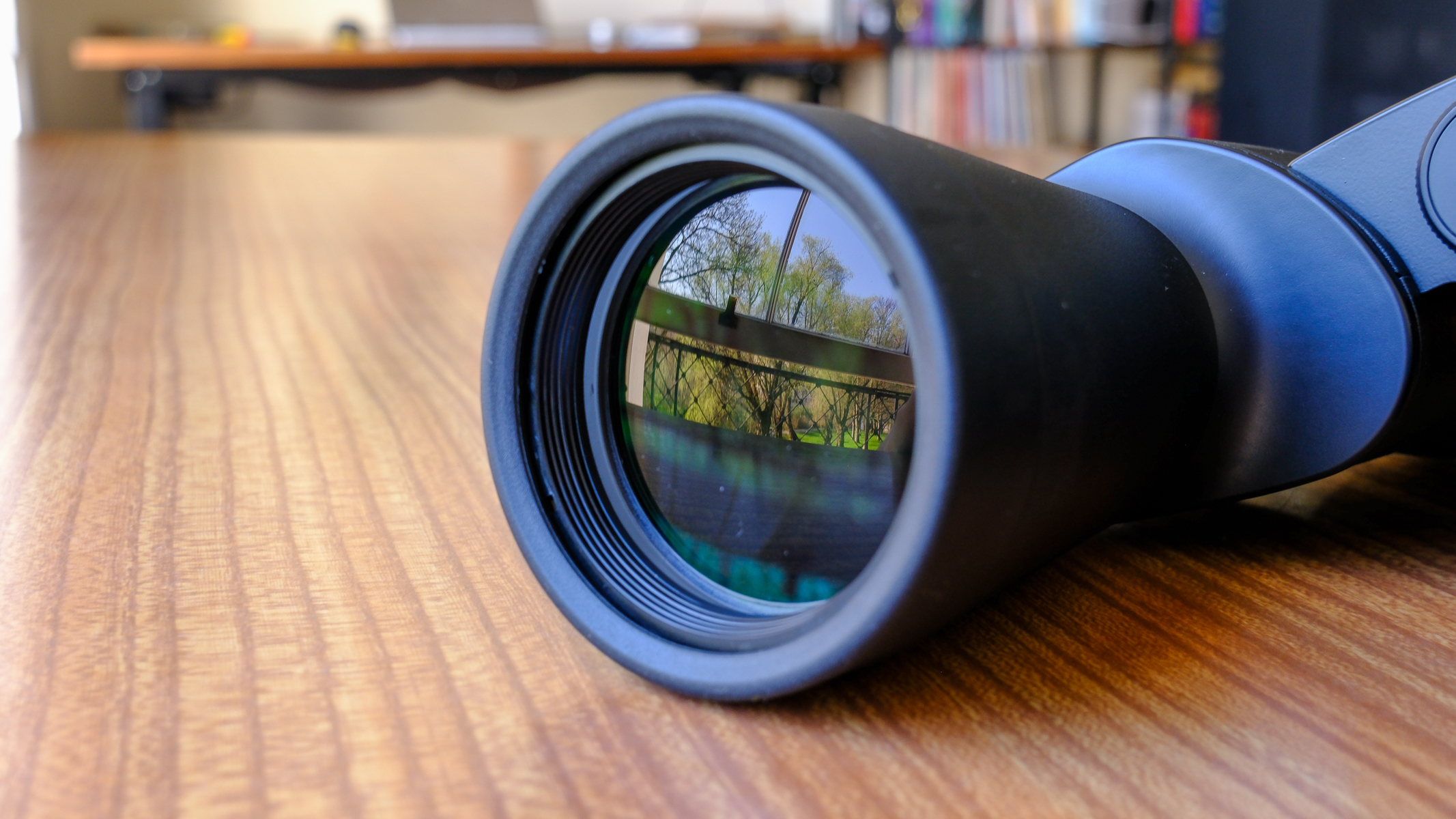
Of all the models in the renewed Nikon Action range released in 2026, the Action Zoom 10–22×50 is definitely one of the most attention-getting, with its zoom capability from 10x to 22x magnification.
These are Nikon’s third-generation 10-22×50 binoculars, building upon the past designs of 2007’s Action VII Zoom XL 10-22×50 and 2013’s Aculon 10-22×50 in 2013. The new design features a generous 16.3mm of eye relief, a tough aluminum chassis and updated optics.
We found them to be a versatile pair of binoculars, and used them at 10x magnification to locate objects before zooming in to 22x for a closer look. Changing magnifications is easily done with a lever on the right eyecup, but the optics do suffer from the sacrifices required when producing a binocular with zoom functionality.
Nikon Action Zoom 10-22×50 binoculars review
Nikon Action Zoom 10-22×50 binoculars: Design
- Strong aluminum chassis
- Easy magnification change
- Big focus dial
Along with the fixed magnification models in the Action series, the Action Zoom 10-22×50 binoculars have the same strong, lightweight aluminum chassis. This helps to protect the careful arrangement of lenses required for zooming, as well as making the binoculars more durable without adding extra weight.
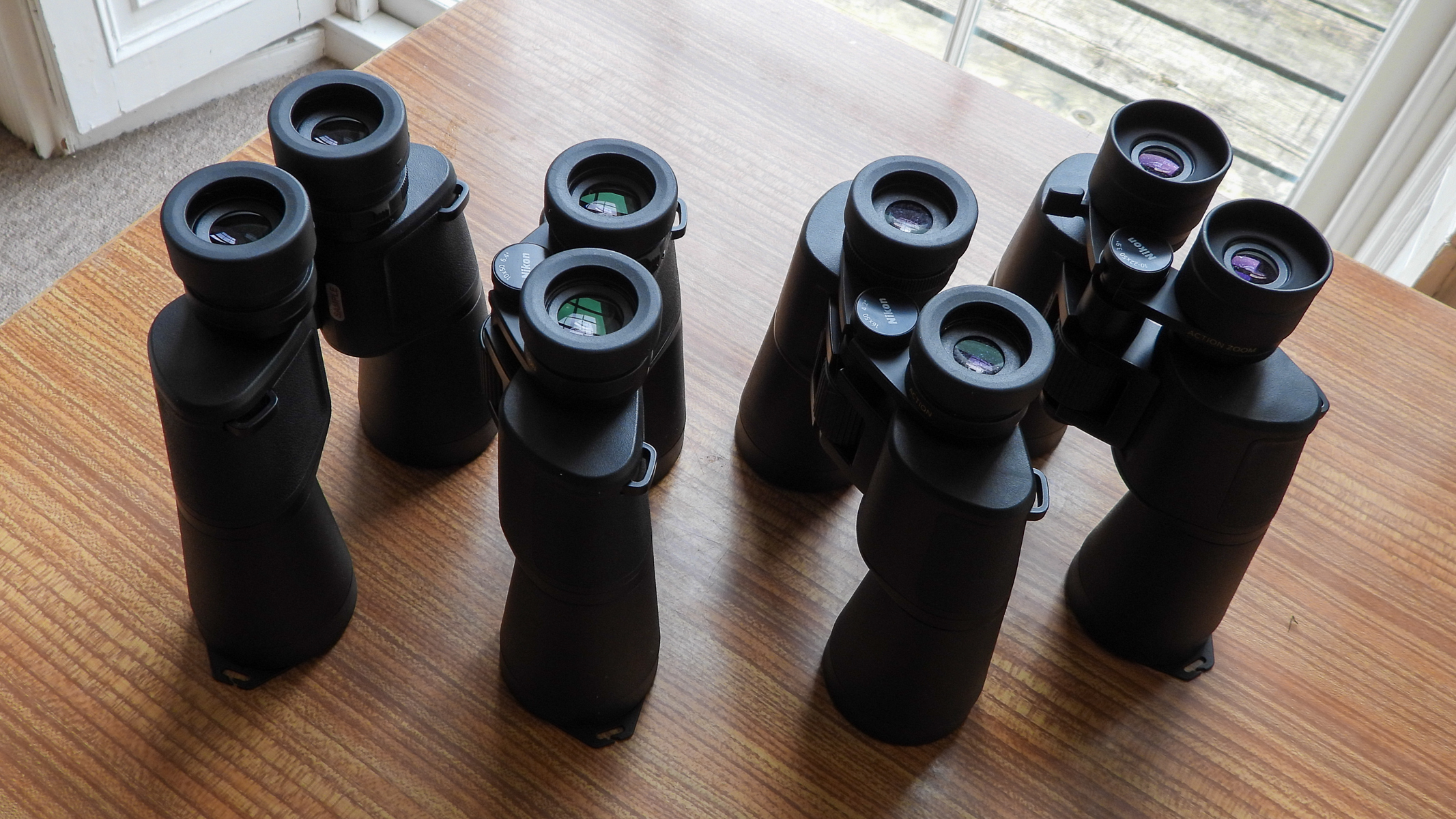
In fact, the 2026 Action Zoom 10-22×50 is 0.4 oz (10 grams) lighter than the previous Aculon model. This is important for the stargazer or hiker who may already have lots of heavy gear to carry, where small amounts can make all the difference.
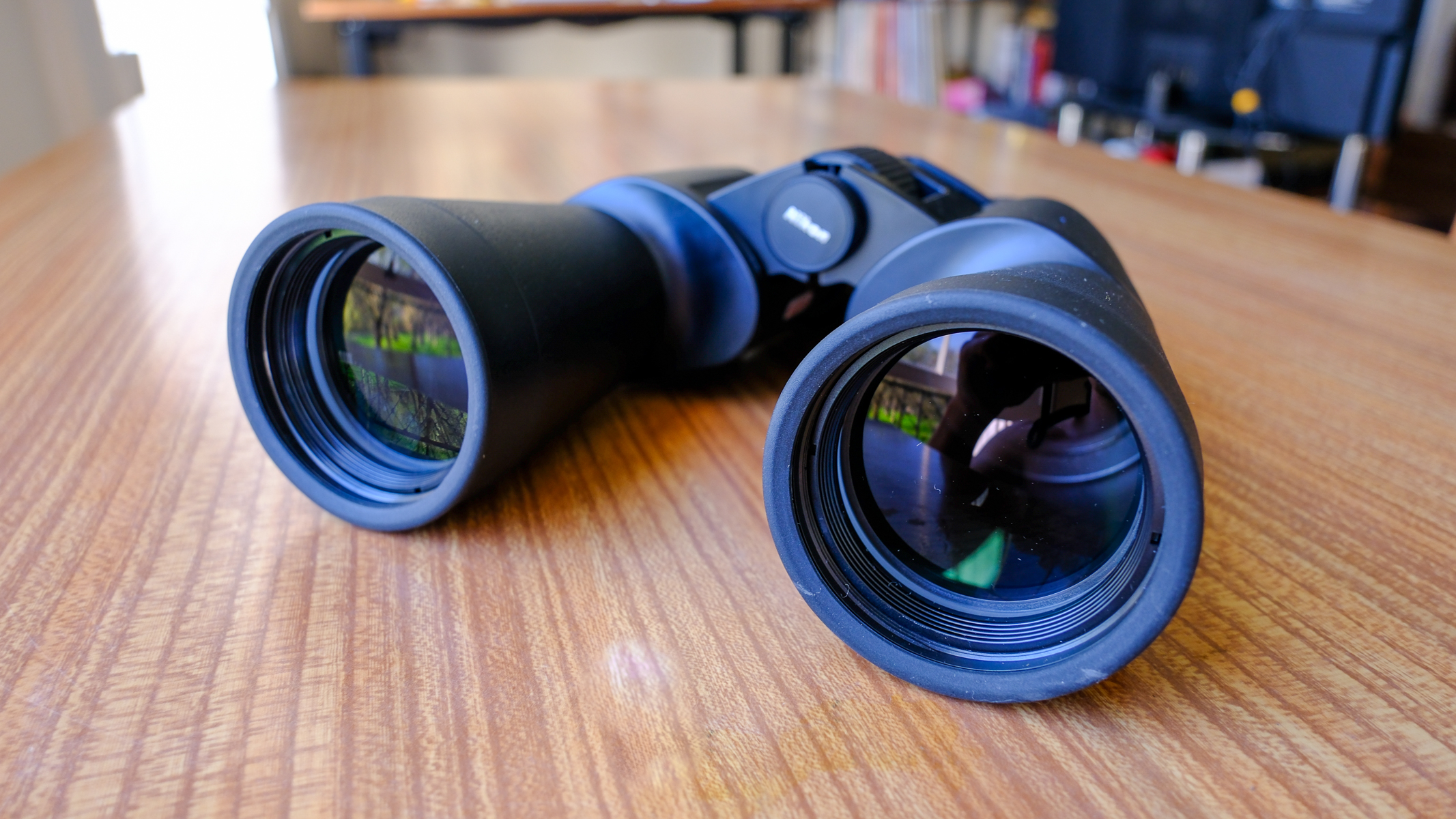
The exterior of the binoculars is covered in a textured rubber armor, which provides good grip while scanning the skies. A chunky focus dial between the barrels is easy to find with your fingers and use, enabling you to adjust focus quickly while observing. Focus touch-ups are usually required when changing magnification.
Design: Porro prism
Magnification: 10-22x (zoom)
Objective lens diameter: 50mm
Exit pupil: 5.0mm (10x) – 2.27mm (22x)
Angular field of view: 3.9 degrees (10x)
Eye relief: 16.3 mm
Weight: 2.09 lbs (950 g)
Dimensions: 8.0 x 7.9 x 2.6 in (202 x 200 x 66 mm)
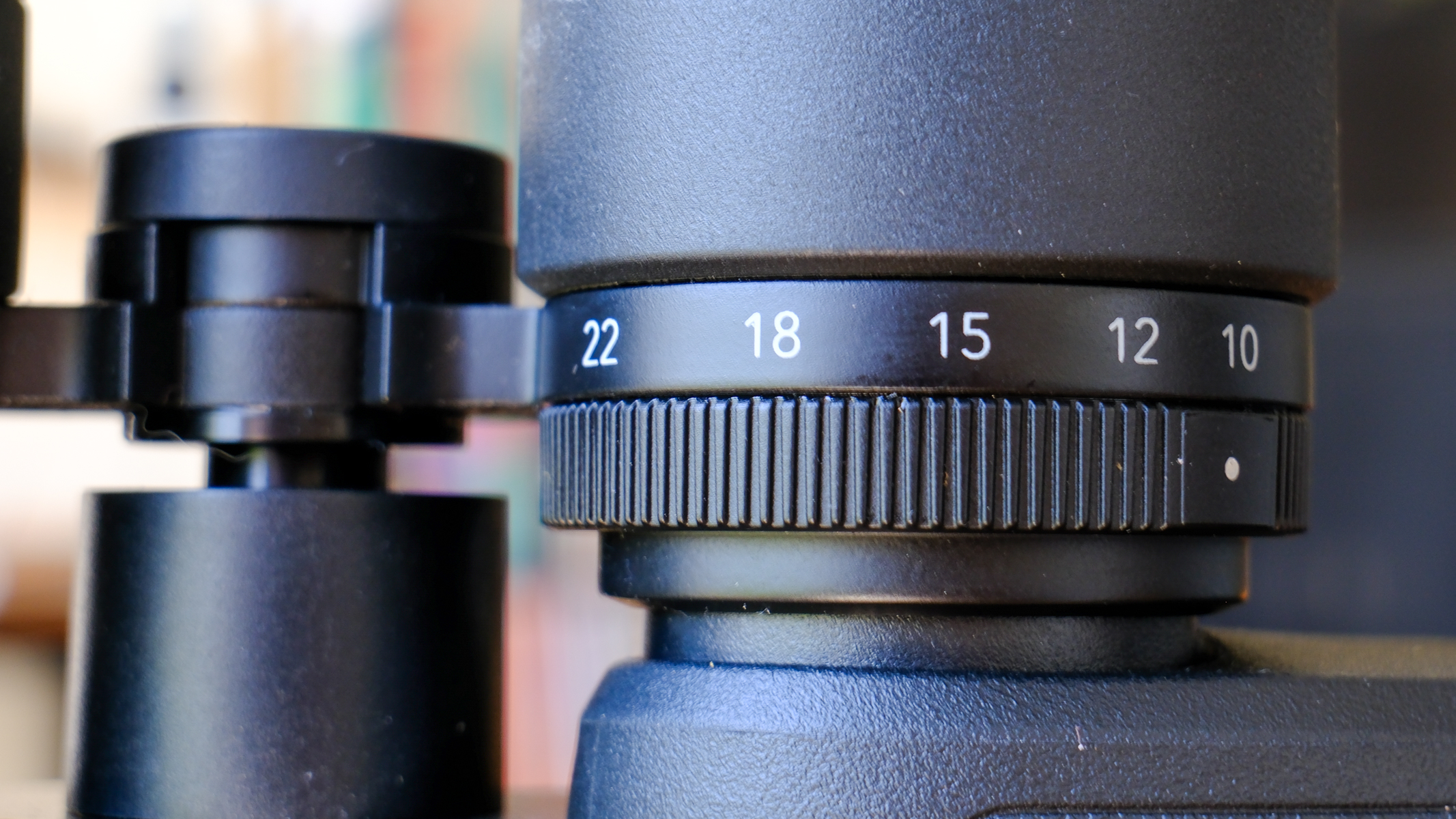
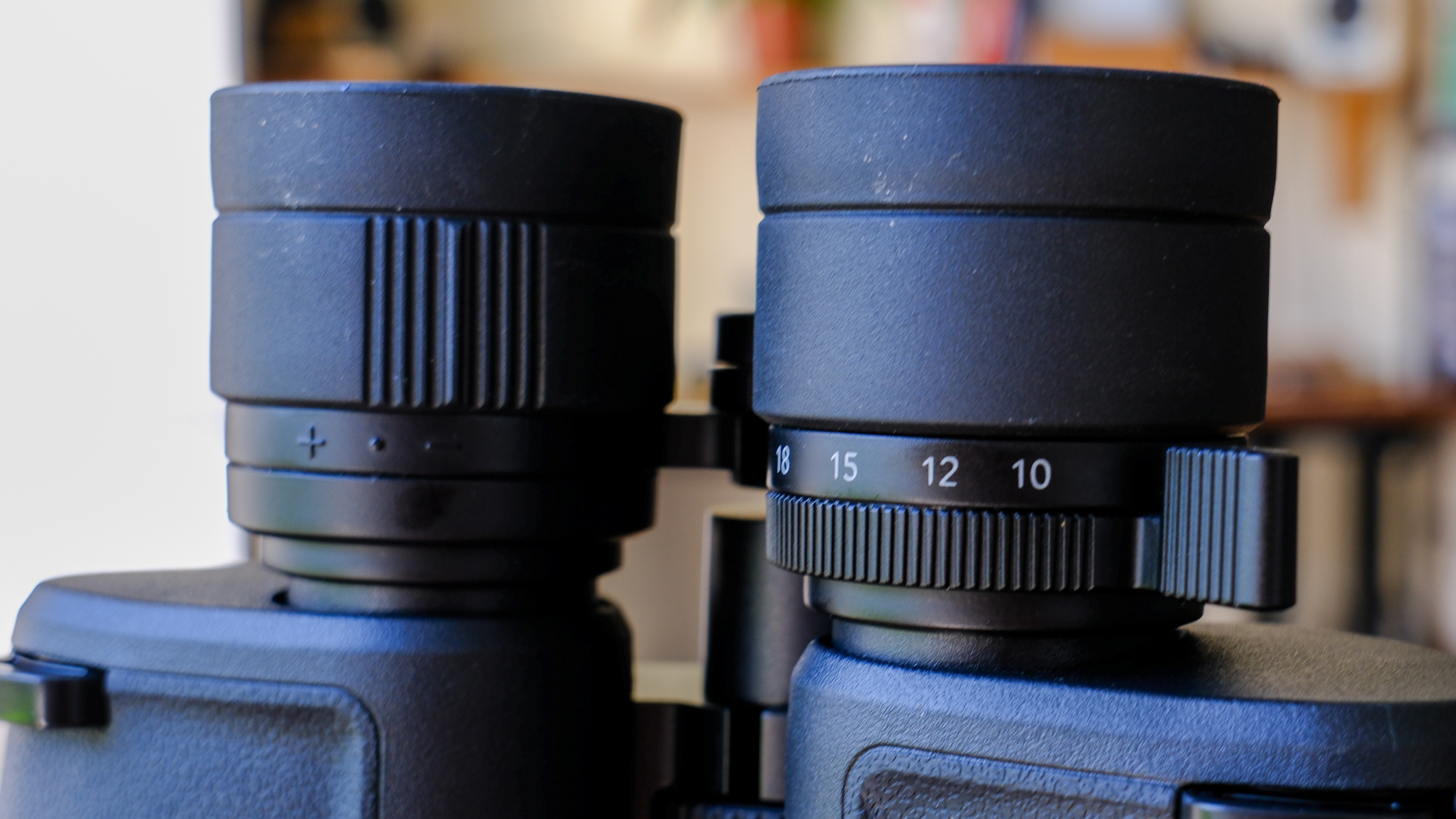
Magnification is easily changed with the right eyecup zoom lever, which is pushed down with the right index finger to move from 10x through to 22x. On the bottom of the right eyecup, there are printed white numbers on the body so that you can also set the magnification precisely at 12x, 15x and 18x. This helps with observing targets that don’t require the full 22x zoom, and allows an astronomer to be more precise in their observations.
When moving the zoom lever, the lenses in the eyepieces slide forward and backward, changing the distance to the objective lenses at the front of the binoculars. This changes the effective focal length and magnification of the binoculars.
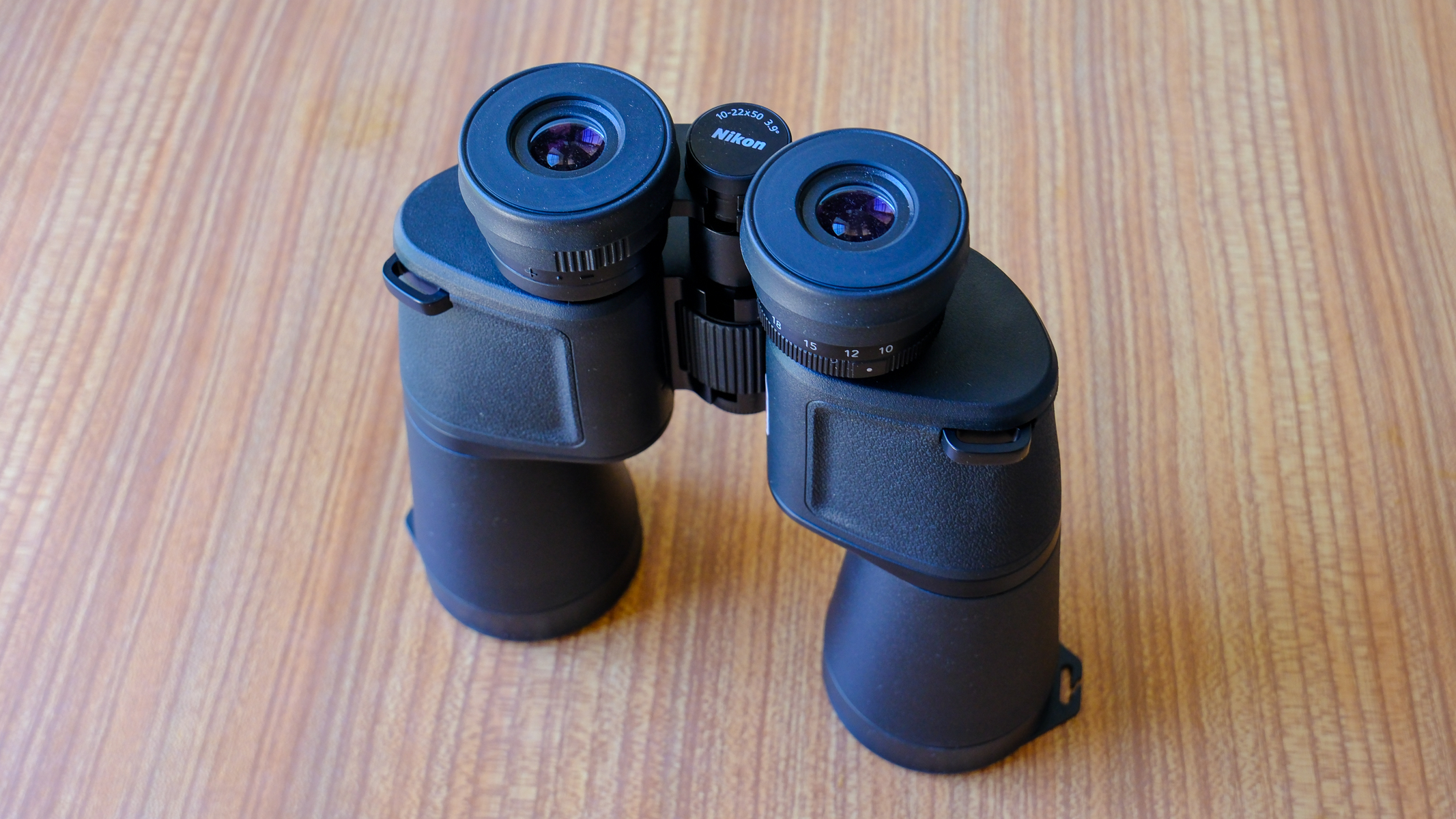
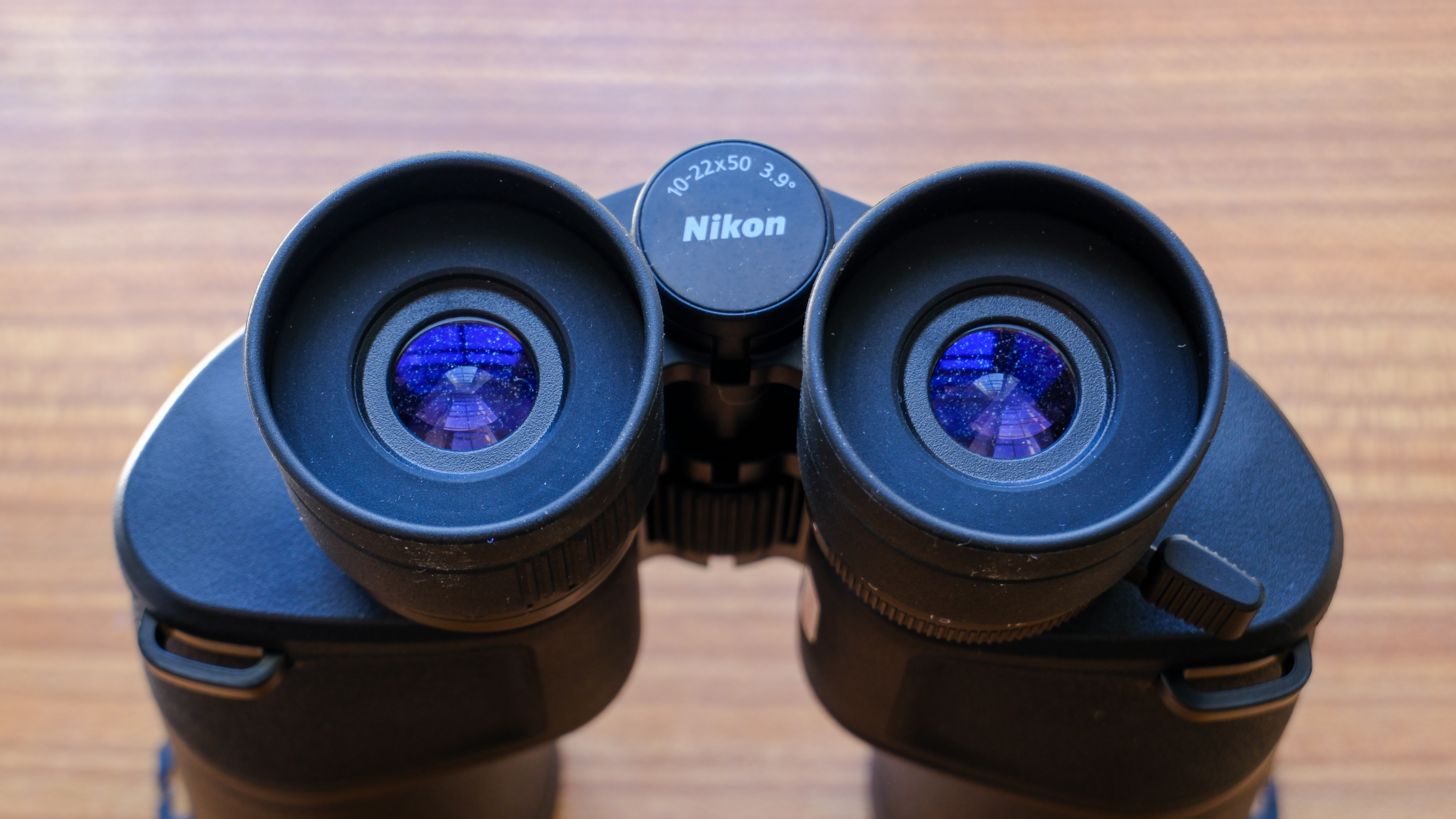
50mm objective lenses let plenty of light through the binoculars when stargazing, delivering a bright image at 10x magnification and helping you to spot faint objects.
Nikon Action Zoom 10-22×50 binoculars: Performance

- Good for star-hopping then zooming in
- Noticeably dimmer at 22x
- Needs a tripod for overhead views at 22x
The 22x magnification on the Nikon Action Zoom is the strongest out of the entire range, with the next one down being the 16×50. During handheld observation, the zoom functionality was good for night sky objects that weren’t too high overhead or terrestrial observation at horizontal and downward angles.
We were able to see the top portion of the Orion constellation with the magnification at 10x, with a bright Orion’s belt and smudgy Orion nebula (M42). Switching to 22x magnification, we got a close-up view of the three stars making up Orion’s belt and the dog-star Sirius to its left. At 22x these points of light were much more impressive but the binoculars handled stars much better than diffuse objects such as the Orion Nebula, which looked fairly unimpressive at 22x. We actually got a better view of the Orion Nebula with the NIkon Action 16×50.
The maximum exit pupil on the Action Zoom is 5 mm at 10x magnification, but when fully zoomed in at 22x, the exit pupil drops to 2.3 mm, effectively halving the amount of light your eye is receiving. This makes the view seem dimmer and was especially noticeable when observing Orion’s nebula and during terrestrial viewing in daylight.
We found the Beehive Cluster by star-hopping from Castor to Pollux and then to the star cluster. We used the 10x magnification for star-hopping before zooming in to get a better view of the Beehive cluster, but it was still disappointing. The wide-field view of the Beehive Cluster within the triangle of Cancer at 10x was much better than the zoomed-in dim view at 22x. Paired with the increased handshake from overhead observation without a tripod, it was less rewarding than observing at lower magnifications.
For beginners we would usually recommend using a tripod or getting an image-stabilized model when using binoculars with 12x magnification or over. It is possible to get sturdy views during handheld viewing by tucking your elbows into your chest or sides, but this only works when observing on the horizontal or downwards. When looking directly overhead, it was very hard to keep the Nikon Action Zoom 10-22×50 still enough to make out any details when fully zoomed in.

This was also an issue when observing another overhead observation target, Jupiter. When trying to spot the faint line of its Galilean moons, the resulting observation was just a mess of bright squiggles. This would definitely be remedied with the use of a tripod adapter and tripod, but be aware that these accessories become a necessity when stargazing overhead.
Looking at the half moon was good and offered a range of lunar views thanks to the magnification change, but again, the higher magnifications required steady hands. The moon at 22x magnification also looked significantly dimmer than the moon when observed with the Nikon Action 16x50s. While it suffered from similar levels of handshake, 16x50s have better light transmission because of their fixed magnification and wider exit pupil. At 10x magnification, the binoculars suffered from distortion around the edges of the view, but this disappeared when zooming into higher magnification.
Nikon Action Zoom 10-22×50 binoculars: Functionality
- Rubber eyecups block light
- Versatile zoom range
- Tripod adapter socket
The Nikon Action Zoom 10-22×50 is a versatile optical tool and is useful when you are unsure what level of magnification you will need before you go out. We tested them out with the other binoculars in the Nikon Action range, the 7×50, 10×50 and 16×50. If we were going out for the evening, we would usually reach for these as it saved us having to take two different binoculars for wide-field and close-up viewing.
The zoom lever was incredibly easy to use during observation and touching up the focus with the focus wheel was easy with my middle finger. That said, viewing overhead objects at 22x magnification is heavily marred by hand shake and would be improved with the use of a tripod.
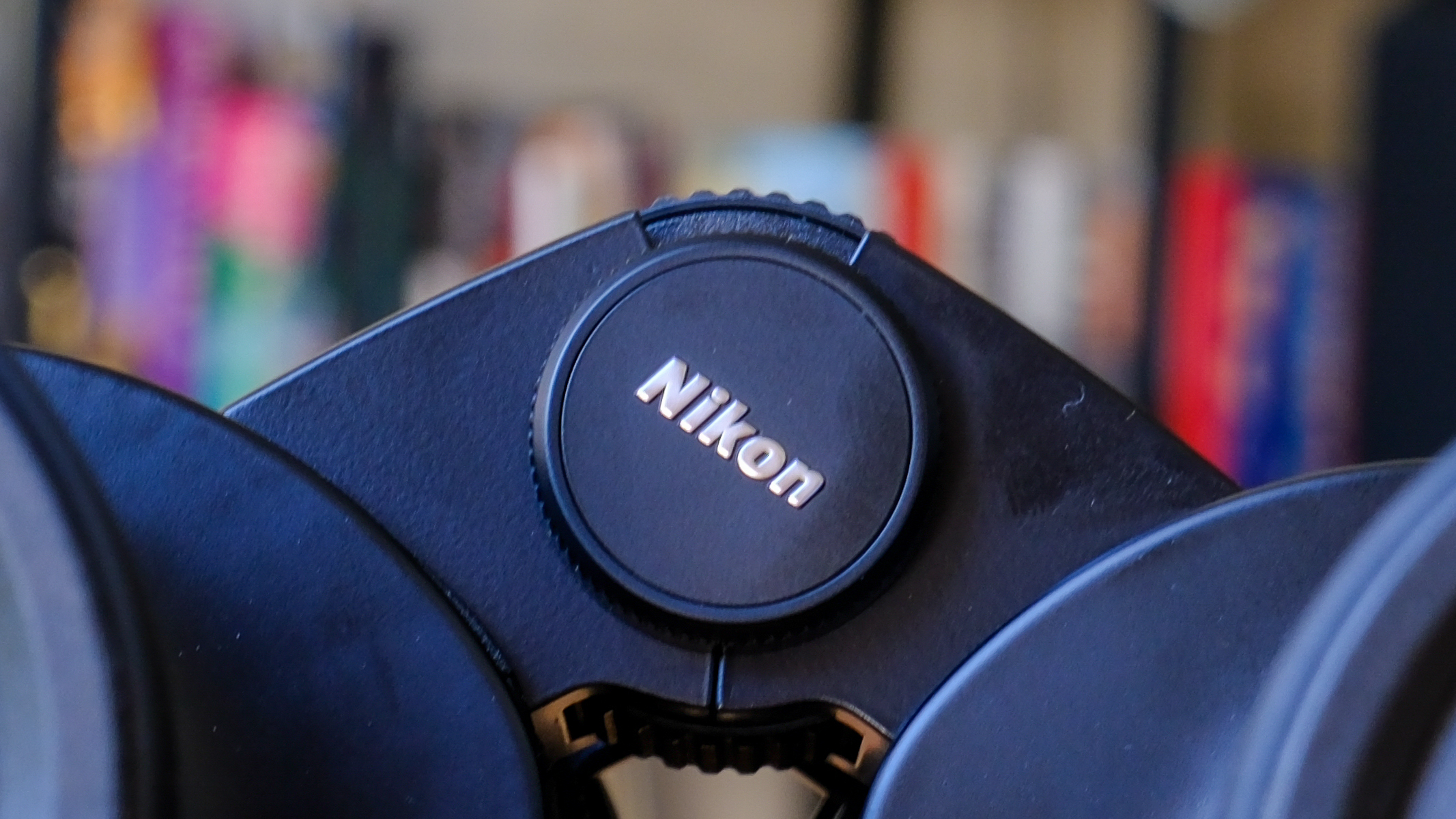
Just like the rest of the new Nikon Action range, the Zoom model has a tripod adapter socket in-between the two barrels, hidden behind a screw-in Nikon logo. If you are planning on using these for a lot of high-magnification observation, we would recommend buying the Nikon 7650 binocular tripod adapter and a budget tripod, like the Manfrotto Element II tripod, to ensure you can get blur-free views of the stars.
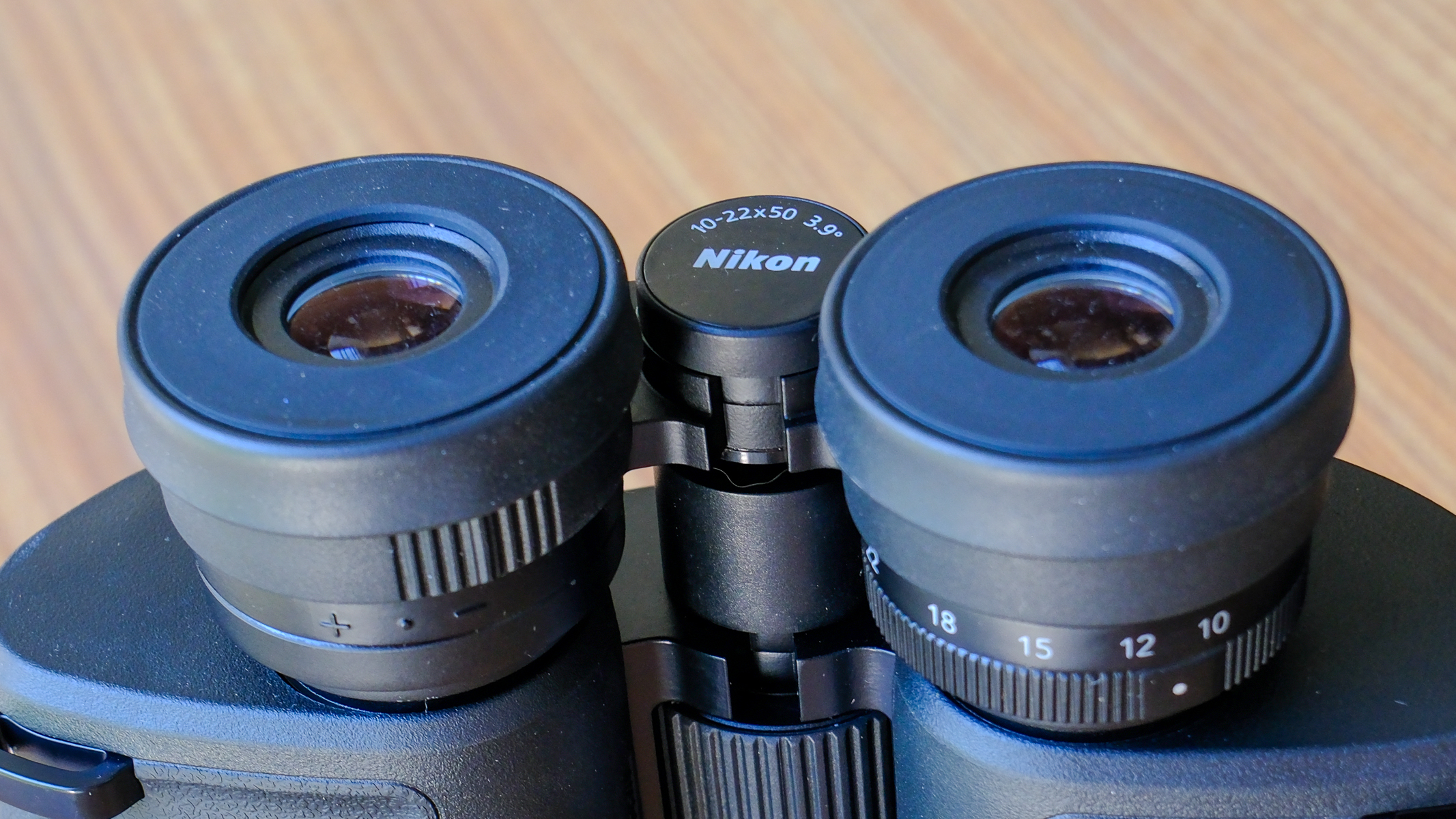
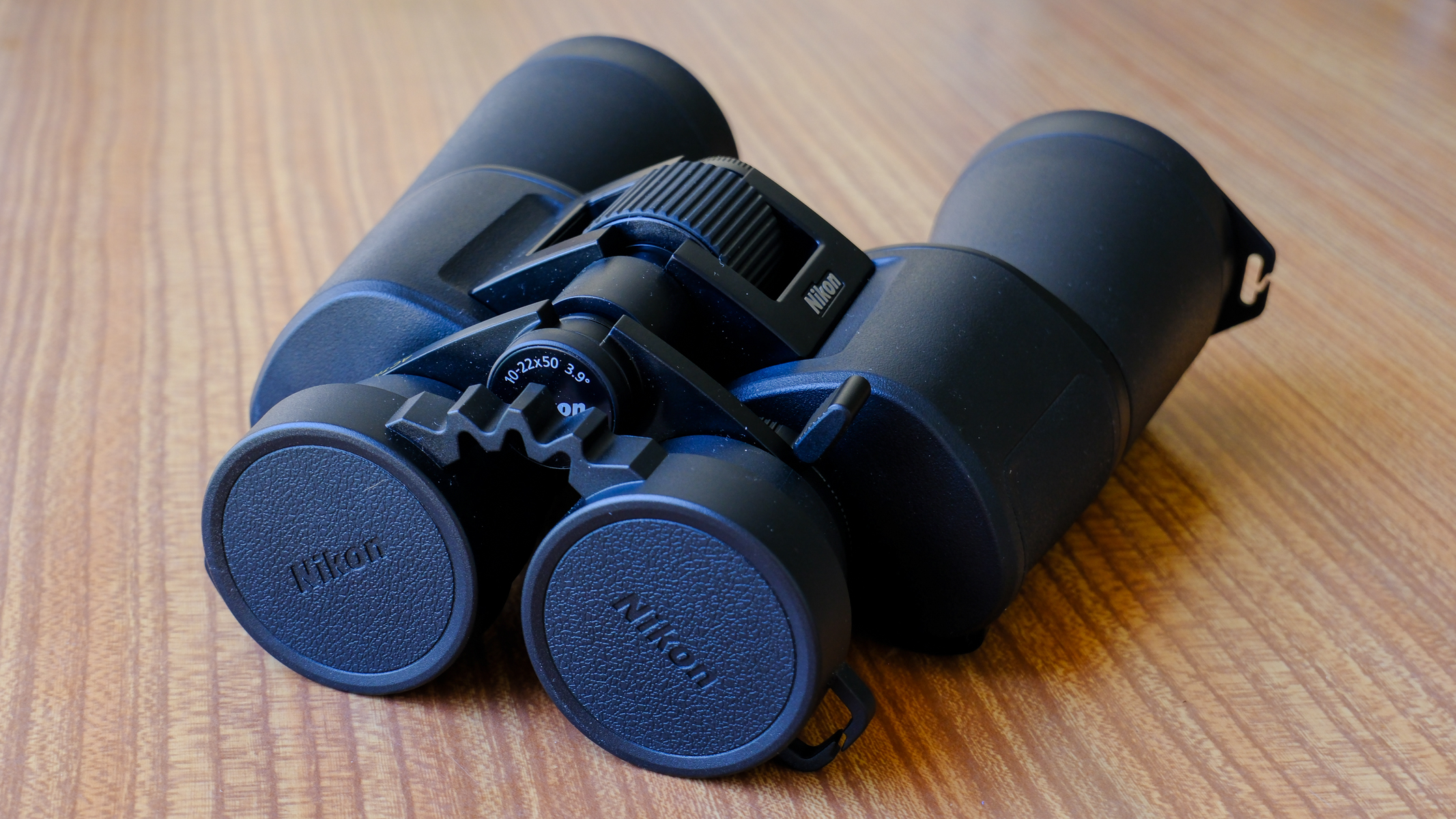
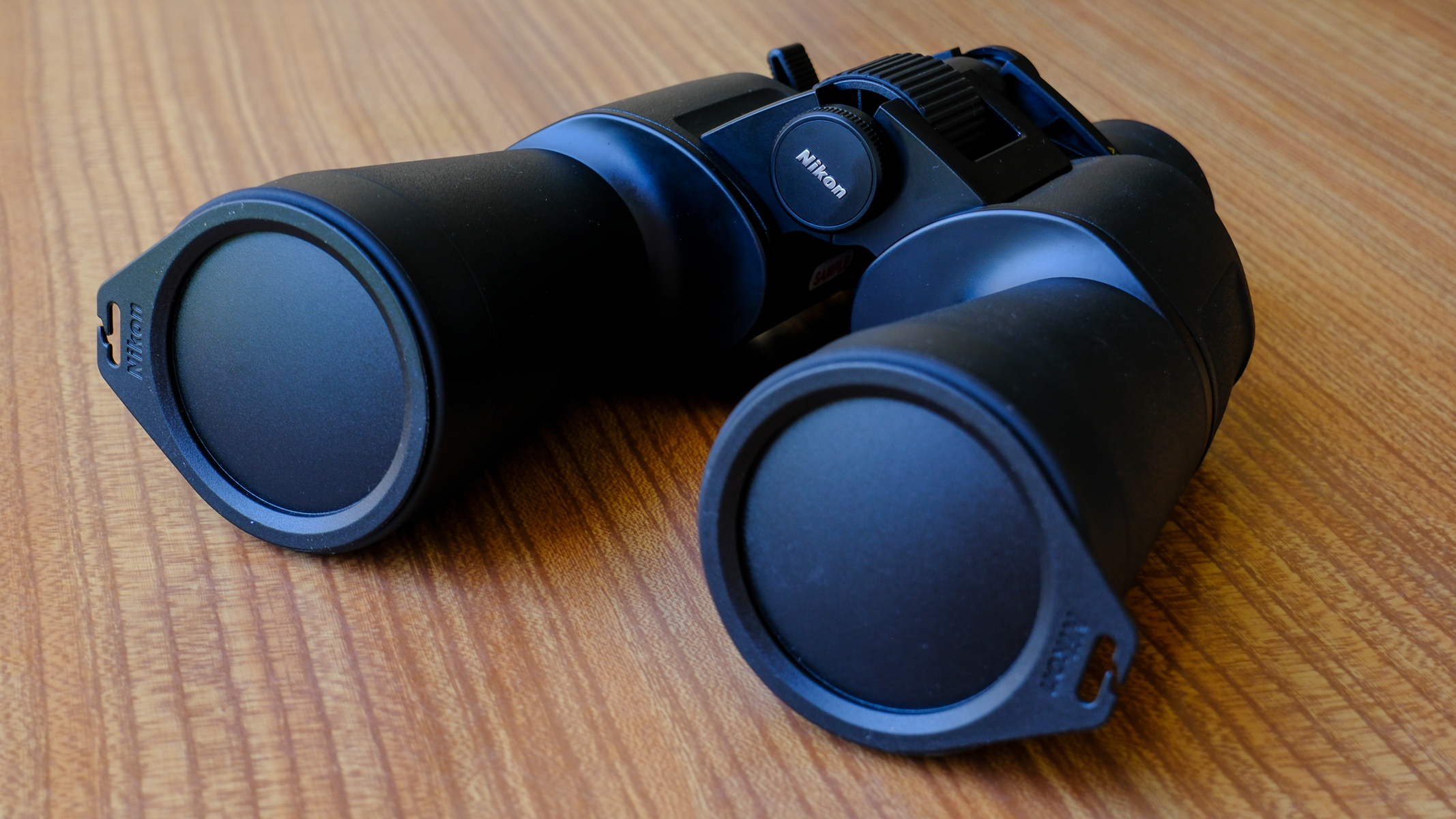
We found the rubber eyecups were really comfortable, and actually preferred them to the hard, twist-up cups that the rest of the Nikon Action range has. They blocked out any light in the environment far better than the twist-up cups and were much more comfortable on the eye sockets. While the binoculars feature 16.3mm of eye relief, stargazers who wear eyeglasses may be disappointed by only having two heights for eye relief, with the rubber eyecups flipped up or flipped down.
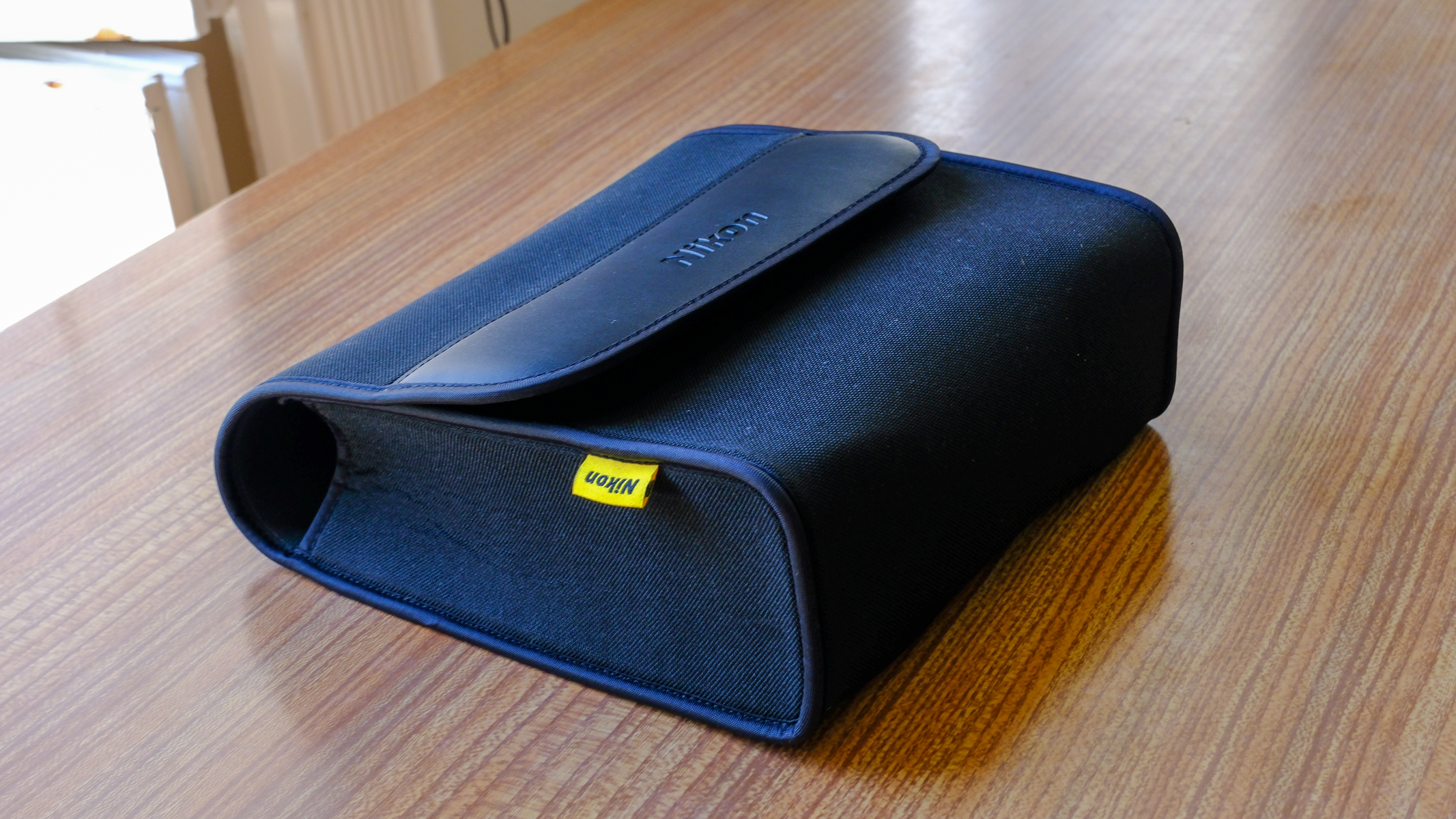
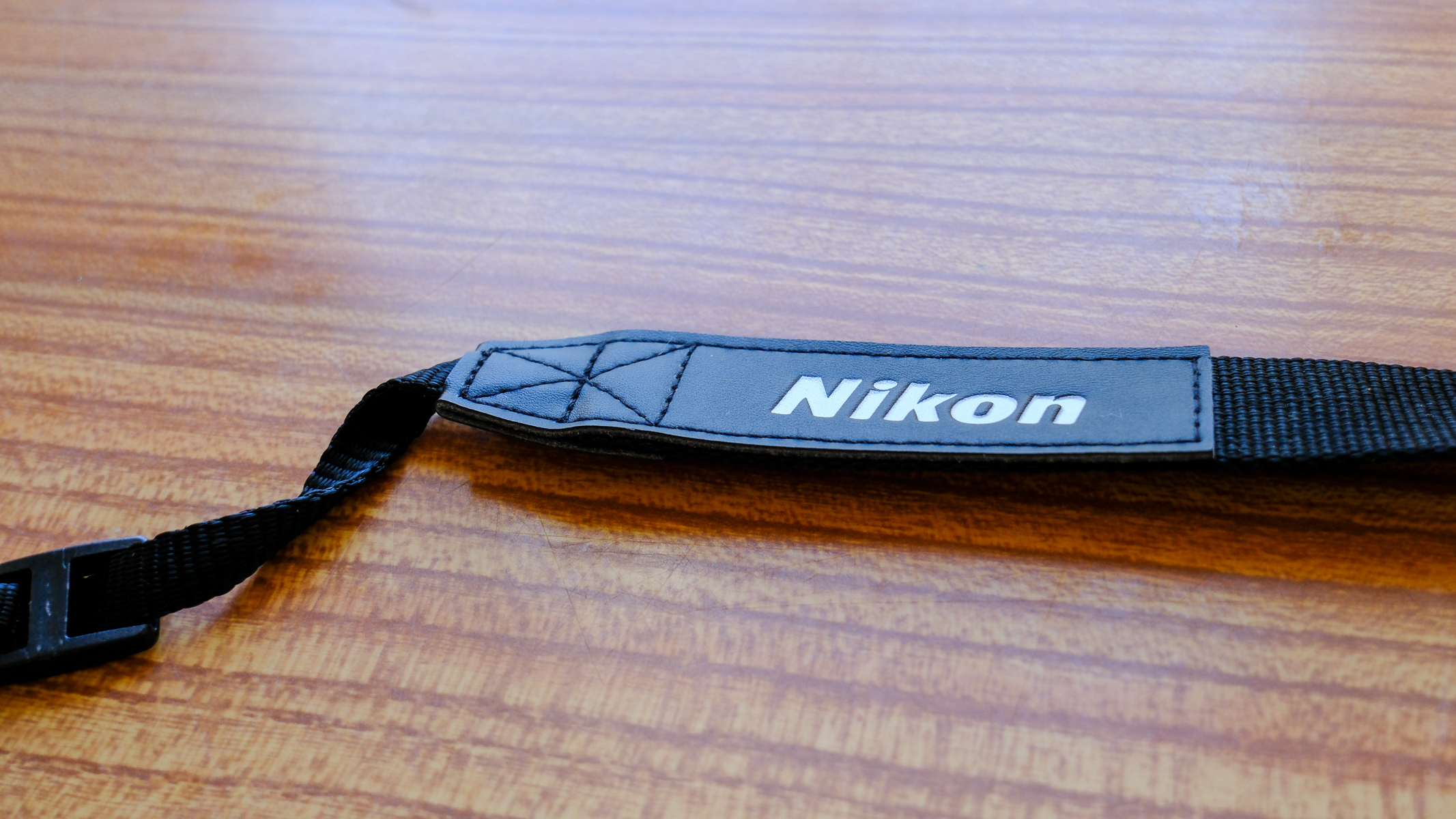
The objective lens caps are easy to remove and replace but they can be quite loose and could get lost easily if not attached to a neck strap. The rubber eyecup covers remain fixed in place during transport and keep the eyepieces clean for observation. Nikon provides a neck strap and soft carry case with these binoculars but the neck strap is pretty thin, so if you are planning on carrying them around for a long time, consider getting a padded neoprene strap for binoculars for only $25.

How we tested the Nikon Action Zoom 10-22×50 binoculars

We tested the Nikon Action Zoom 10-22×50 binoculars in a city park during the day and at night in mid-March in the U.K. For stargazing, we tested them in a city park with a Bortle scale between 5 and 7. Our primary observation targets were Orion’s belt, Sirius, Jupiter, the waxing half moon and the Beehive Cluster in the constellation of Cancer. For terrestrial viewing, we used them for finding birds in a local park and zooming in for up-close observation.
During testing in the U.K., nighttime temperatures were on average between 46 and 54 degrees Fahrenheit (8-12 degrees Celsius). Seeing conditions were clear and during non-lunar viewing, the skies had minimal or no moonlight.
User reviews
At time of writing, reviews for the Nikon Action Zoom 10-22×50 were relatively positive, with users praising the smooth zoom mechanism and agreeing with the quoted 22x magnification on the zoom.
Users also liked the Zoom’s flexible magnification options and the 50mm objective lenses for height views, but the general consensus was that a tripod would vastly improve observation at the maximum magnification.
Should you buy the Nikon Action Zoom 10-22×50 binoculars?
✅ You need one binocular with varied magnification: These binoculars have a variable zoom, from 10x through to 22x
✅ You are a high-magnification beginner: Varying magnification means you can practice higher-magnification viewing without investing in a dedicated pair
❌ You want to look at deep-sky objects with binoculars: The view is much dimmer at 22x than at 10x, which drastically reduces the brightness of nebulas and diffuse deep sky objects.
❌ You need super-still images: Unless you buy a tripod, you are unlikely to get fully stationary images with these binoculars.
If you are a binocular beginner or casual stargazer who wants variable magnification, these are a great purchase. The build quality is solid and the zoom mechanism is very smooth, enabling you to observe from 10x through to 22x.
The zoom function does mean that sacrifices have to be made in terms of light transmission, and at full magnification, the view is noticeably dimmer than at lower magnifications. This reduces the brightness when observing deep space objects like nebulas, but for brighter objects and stars, they performed well.
If you want to observe frequently at 22x magnification, though, we would recommend buying a tripod and binocular tripod adapter, so that you can enjoy these night sky wonders shake-free.
If the Nikon Action Zoom 10-22×50 binoculars aren’t for you
If you need binoculars purely for wide-field observations, we would recommend the Nikon Action 7×50 binoculars or Action 10×50 binoculars. They have fixed lower magnifications and light transmission isn’t sacrificed for the zoom functionality. The build is almost identical to the Action zoom model.
If you need optics for looking at deep sky objects, we would recommend one of the best telescopes, or a pair of binoculars with strong magnification and large objective lenses. Try the Celestron SkyMaster Pro 20×80 or Celestron SkyMaster 25×100 binoculars, both of which have larger objective lenses than the Nikon Action zoom. You will have to use a tripod with these, but the larger objective lenses will give you a brighter view of dim objects.
If you want high-magnification views without needing a tripod, the Fujifilm Fujinon Techno-Stabi TS-L 1640 binoculars are a great choice. The objective lens diameter is only 40mm, but the image stabilization gives you a higher level of detail that makes up for the lower light transmission. For handheld use, the difference is night and day.