
On Aug. 12, 2026, skywatchers across the U.K. will experience a rare astronomical double-header: a deep partial solar eclipse before sunset followed, hours later, by the peak of the annual Perseid meteor shower. Although the path of totality will sweep from Greenland and Iceland to Spain, it will miss Britain entirely. However, the solar eclipse will still be dramatic, with up to 96% of the sun obscured for viewers in the far southwest.
This will be the U.K.’s deepest partial solar eclipse since 2015, and timing will be everything. The eclipse reaches its peak around 7:00-7:16 p.m. BST, with the sun hanging low above the west-northwest horizon as a narrowing crescent shortly before sunset. Because the sun will be relatively low, choosing the right location will matter far more than traveling huge distances. Coastal viewpoints, hilltops and open landscapes with unobstructed western horizons will offer guaranteed views — if the sky is clear.
The locations below prioritize another crucial factor: dark skies. While the eclipse will be visible almost everywhere in the U.K. and most will be happy to see it from close to where they live, the real reward comes after darkness falls, when the Perseids begin flashing across the sky. Find somewhere remote, stay overnight — ideally camp — and this could become one of the most memorable observing sessions of the year.
Eclipse timings and sightlines are from Xavier Jubier’s Interactive Google Maps; cloud cover is from Time and Date, the figures reflect long-term climatological averages for mid-August, not weather forecasts. Bortle and sky quality meter (SQM) data come from the Light Pollution map.
During a partial solar eclipse, it is NEVER safe to look directly at the sun without solar eclipse glasses designed for solar viewing. Read our guide on how to observe the sun safely.
1. Hugh Town
Location: St. Mary’s Island, Isles of Scilly, U.K.
Max eclipse: 96.4% at 7:16 p.m. BST
Sun position: 13° above west-northwest horizon
Eclipse window: 6:19-8:10 p.m. BST
Sunset: 8:49 p.m. BST
Light pollution: 3.2 Bortle/SQM 21.86
Cloud risk: 74%
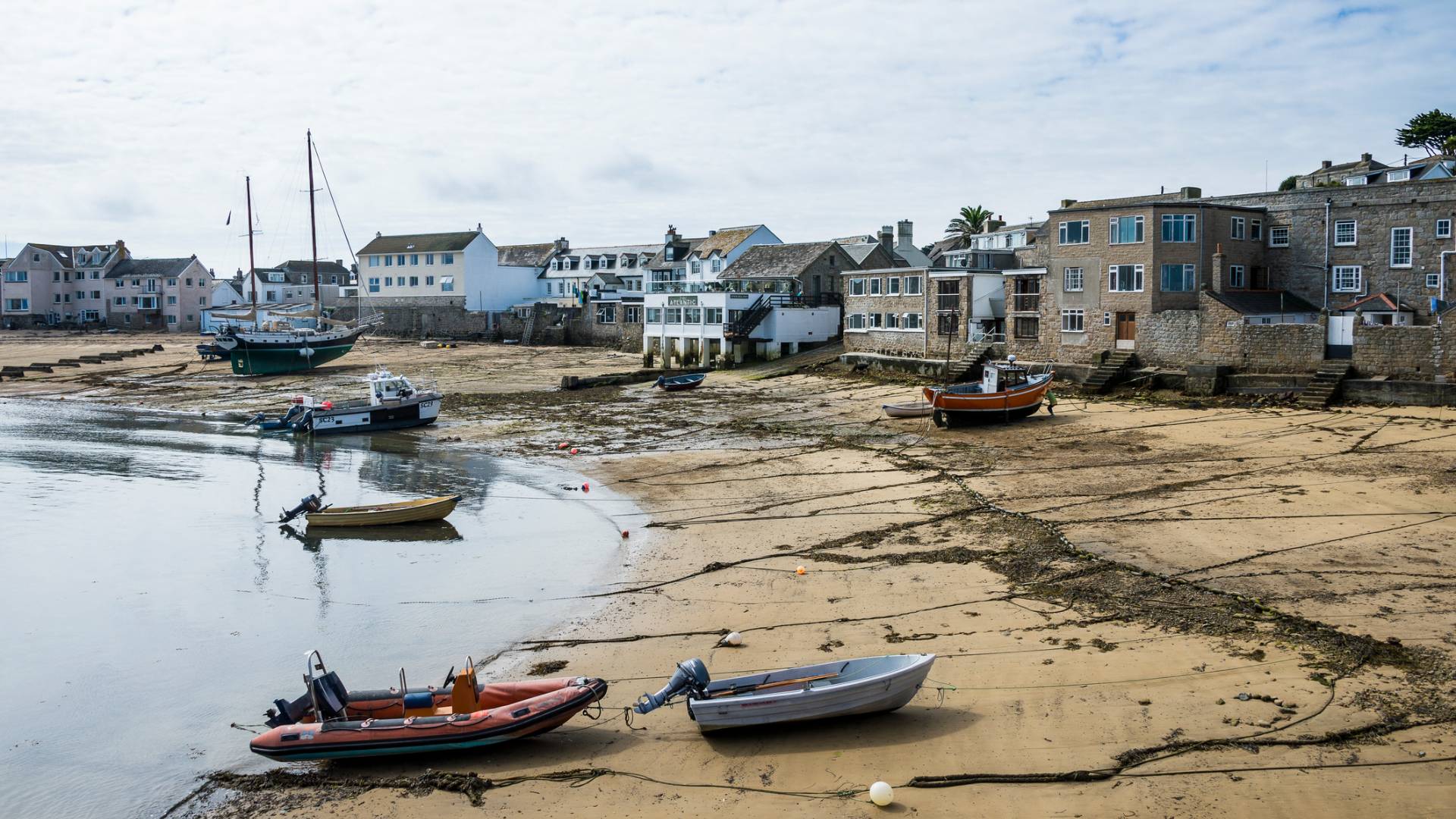
The Isles of Scilly combine Britain’s deepest partial eclipse with some of southern England’s darkest skies. From Hugh Town and nearby west-facing beaches on St Mary’s, the eclipsed sun will hang low above the Atlantic Ocean late in the day. Later that night, with minimal light pollution and broad sea horizons, the islands are an exceptional place to watch the Perseid meteor shower beneath pristine late-summer skies.
2. Land’s End
Location: Sennen, Penzance, England
Max eclipse: 95.9% at 7:16 p.m. BST
Sun position: 13° above west-northwest horizon
Eclipse window: 6:19-8:10 p.m. BST
Sunset: 8:47 p.m. BST
Light pollution: 3.1 Bortle/SQM 21.85
Cloud risk: 71%
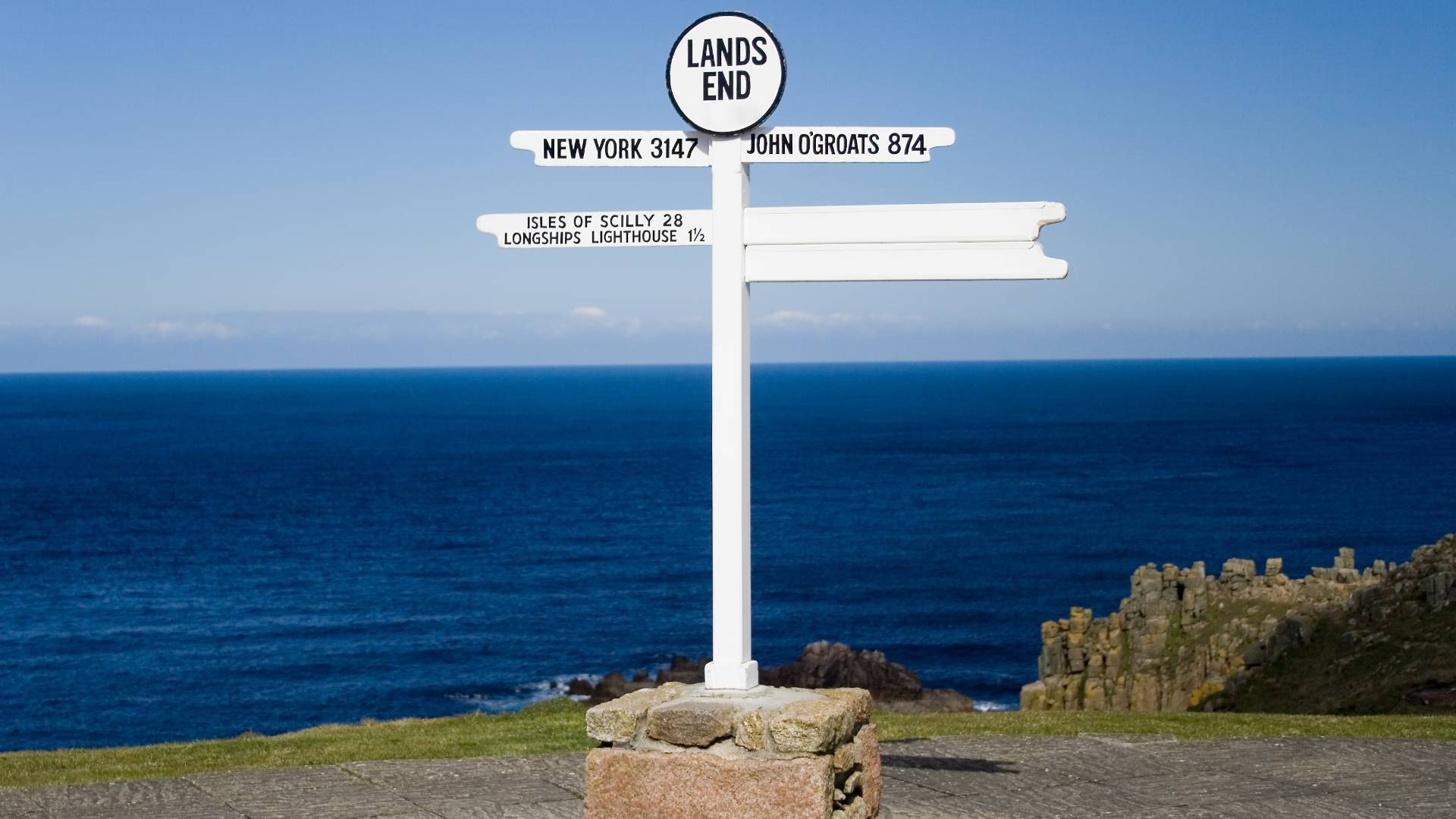
Land’s End is one of the best places on mainland Britain to watch the eclipse because of its vast Atlantic horizon and minimal obstruction toward the west-northwest. The sun will appear heavily eclipsed as it descends toward the ocean before sunset. After dark, the remote far-western location and low levels of artificial light make this region an outstanding destination for viewing the Perseid meteor shower.
3. Boscastle
Location: Cornwall, England
Max eclipse: 94.7% at 7:15 p.m. BST
Sun position: 13° above west-northwest horizon
Eclipse window: 6:18-8:09 p.m. BST
Sunset: 8:45 p.m. BST
Light pollution: 4.0 Bortle/SQM 21.71
Cloud risk: 76%
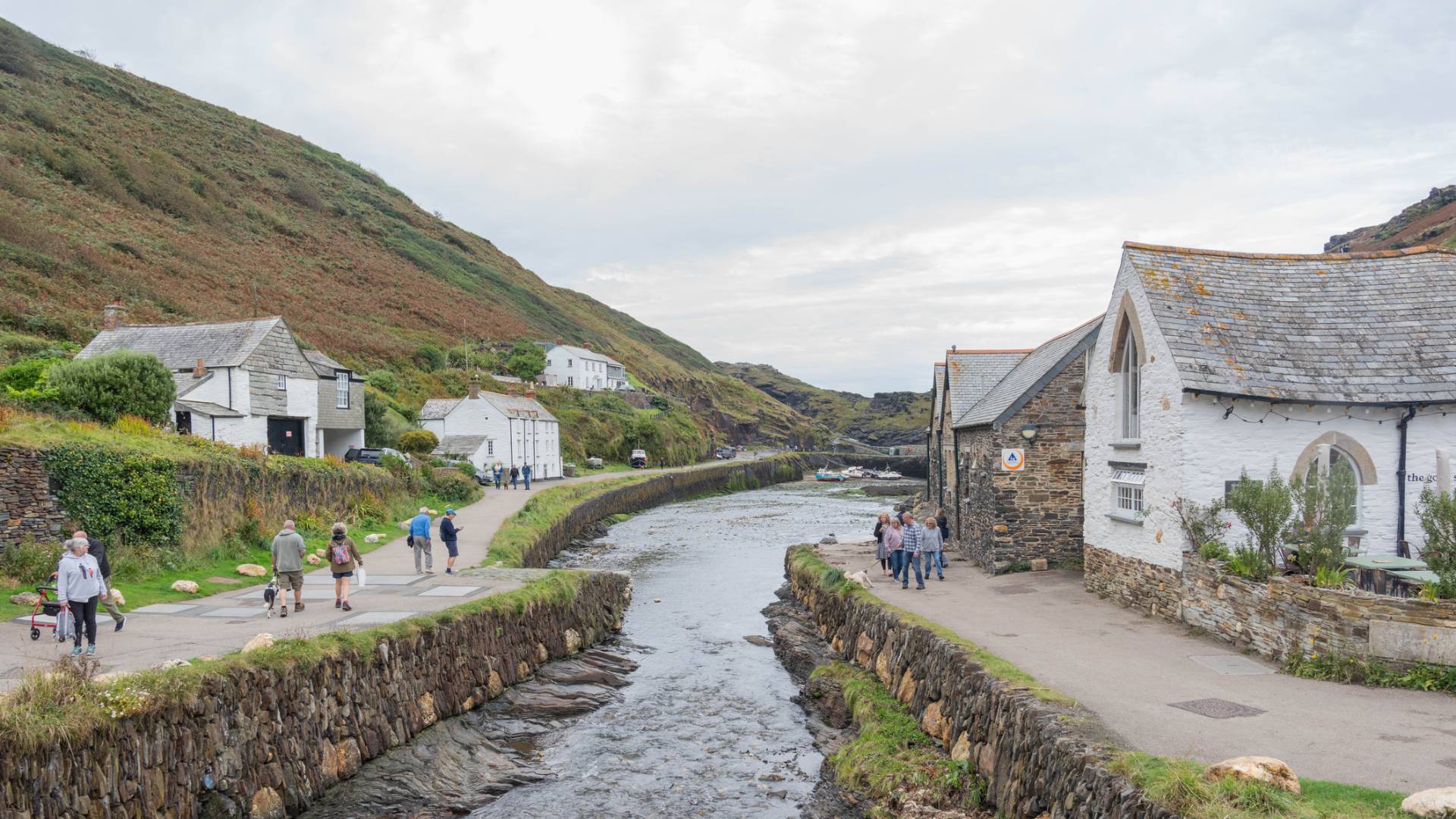
Boscastle’s narrow harbor and dramatic valley may create a natural frame for the eclipsed sun as it sinks toward the Atlantic. The village’s northwest-facing coastline offers clear views toward the low evening eclipse, while the surrounding Cornish countryside remains relatively dark after sunset. Once twilight fades, the cliffs and headlands nearby become excellent places to watch for bright Perseid meteors.
4. Exmoor Dark Sky Reserve
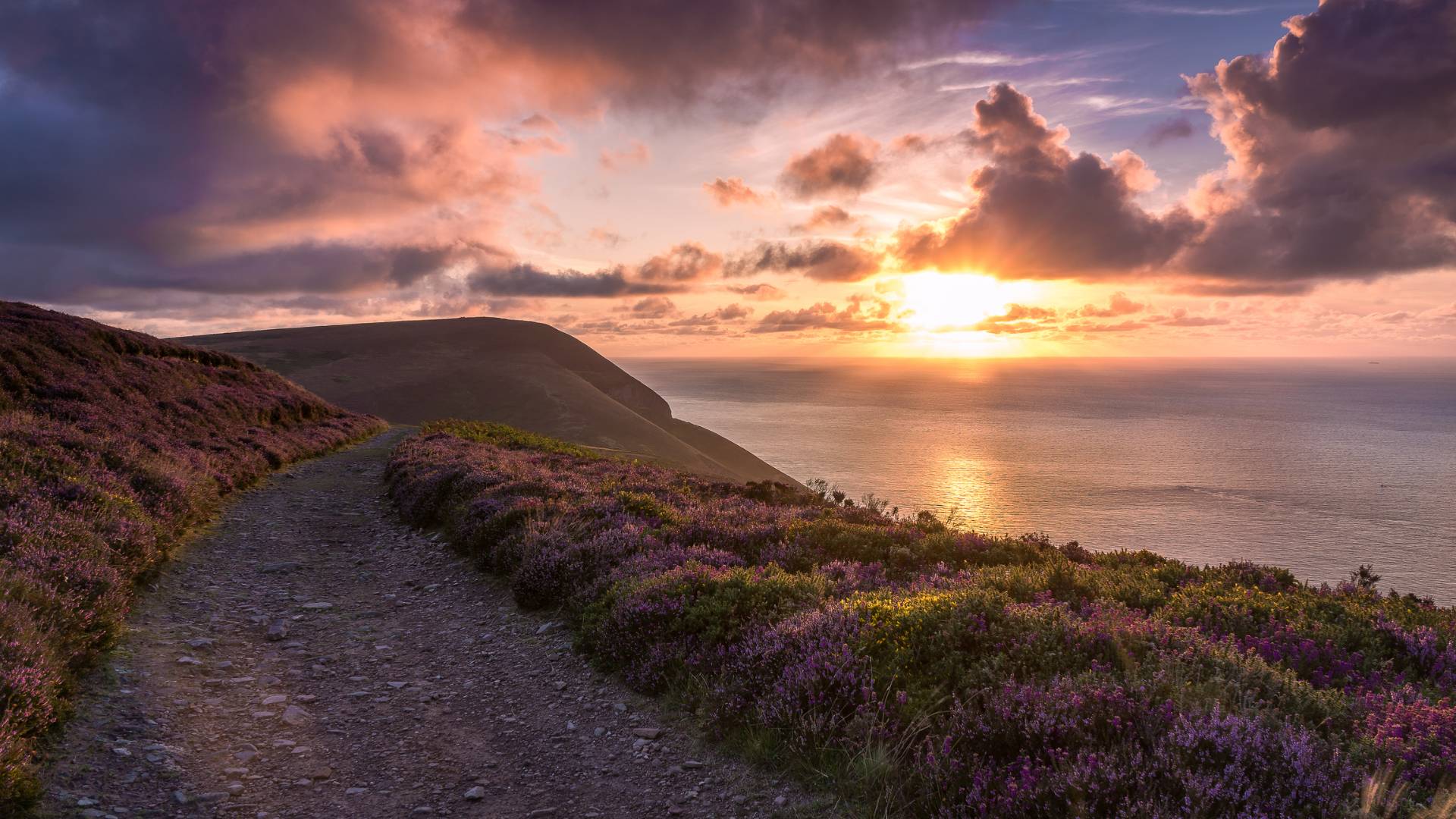
Location: Exmoor National Park, Somerset and north Devon, England
Max eclipse: 93.7% at 7:14 p.m. BST
Sun position: 12° above west-northwest horizon
Eclipse window: 6:17-8:08 p.m. BST
Sunset: 8:42 p.m. BST
Light pollution: 3.9 Bortle/SQM 21.67
Cloud risk: 69%
Exmoor combines elevated moorland, dramatic coastline and protected dark skies, making it ideal for both the eclipse and the Perseids. Coastal viewpoints such as Valley of Rocks and Heddon’s Mouth offer clear west-facing horizons for the low-eclipsed sun before sunset. Later that night, Exmoor’s status as a Dark Sky Reserve makes it perfect for seeing bright Perseid meteors — and the Milky Way.
5. Rhossili Bay
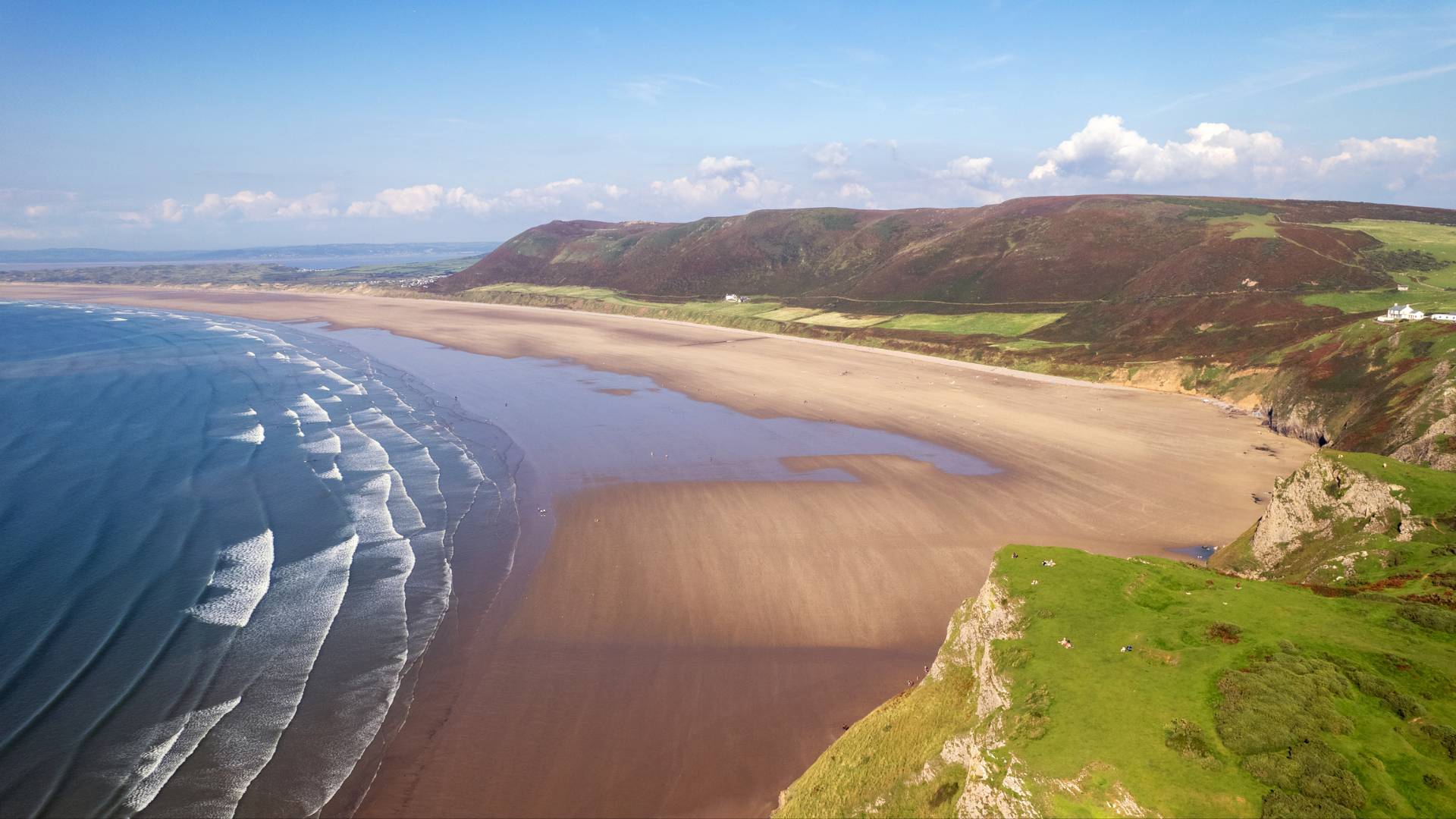
Location: Gower Peninsula, Swansea, Wales
Max eclipse: 93.8% at 7:13 p.m. BST
Sun position: 13° above west-northwest horizon
Eclipse window: 6:16-8:07 p.m. BST
Sunset: 8:46 p.m. BST
Light pollution: 4.0 Bortle/SQM 21.63
Cloud risk: 73%
Rhossili Bay’s enormous west-facing beach and elevated clifftops make it ideal for watching a low eclipse unfold above the sea. Located on the Gower Peninsula, the area is a Dark Sky Community that retains relatively dark skies despite its popularity during the day. As darkness falls later that evening, the open coastal landscape provides excellent visibility for Perseid meteors.
6. Strumble Head
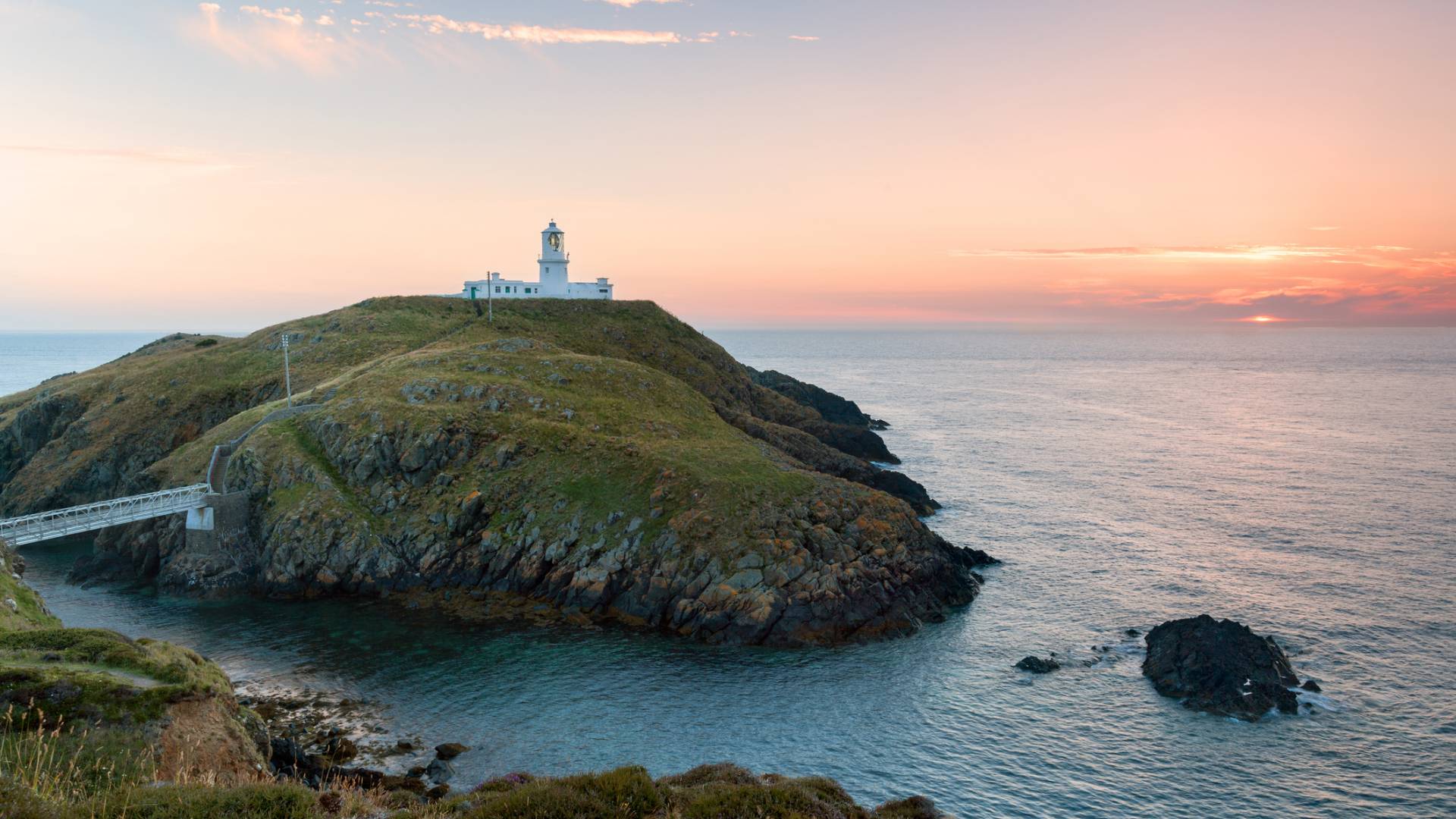
Location: Pencaer, Pembrokeshire, west Wales
Max eclipse: 94.0% at 7:13 p.m. BST
Sun position: 14° above west-northwest horizon
Eclipse window: 6:15-8:07 p.m. BST
Sunset: 8:51 p.m. BST
Light pollution: 3.3 Bortle/SQM 21.84
Cloud risk: 70%
Strumble Head offers one of the clearest west-facing horizons in Wales, with the eclipsed sun appearing above the Irish Sea beside its iconic lighthouse. The remote Pembrokeshire coastline experiences very little artificial light, helping preserve dark skies after sunset. Once the eclipse ends, this rugged headland becomes an excellent place to watch the Perseids, with broad ocean views and little interference from nearby towns.
7. Llŷn Peninsula
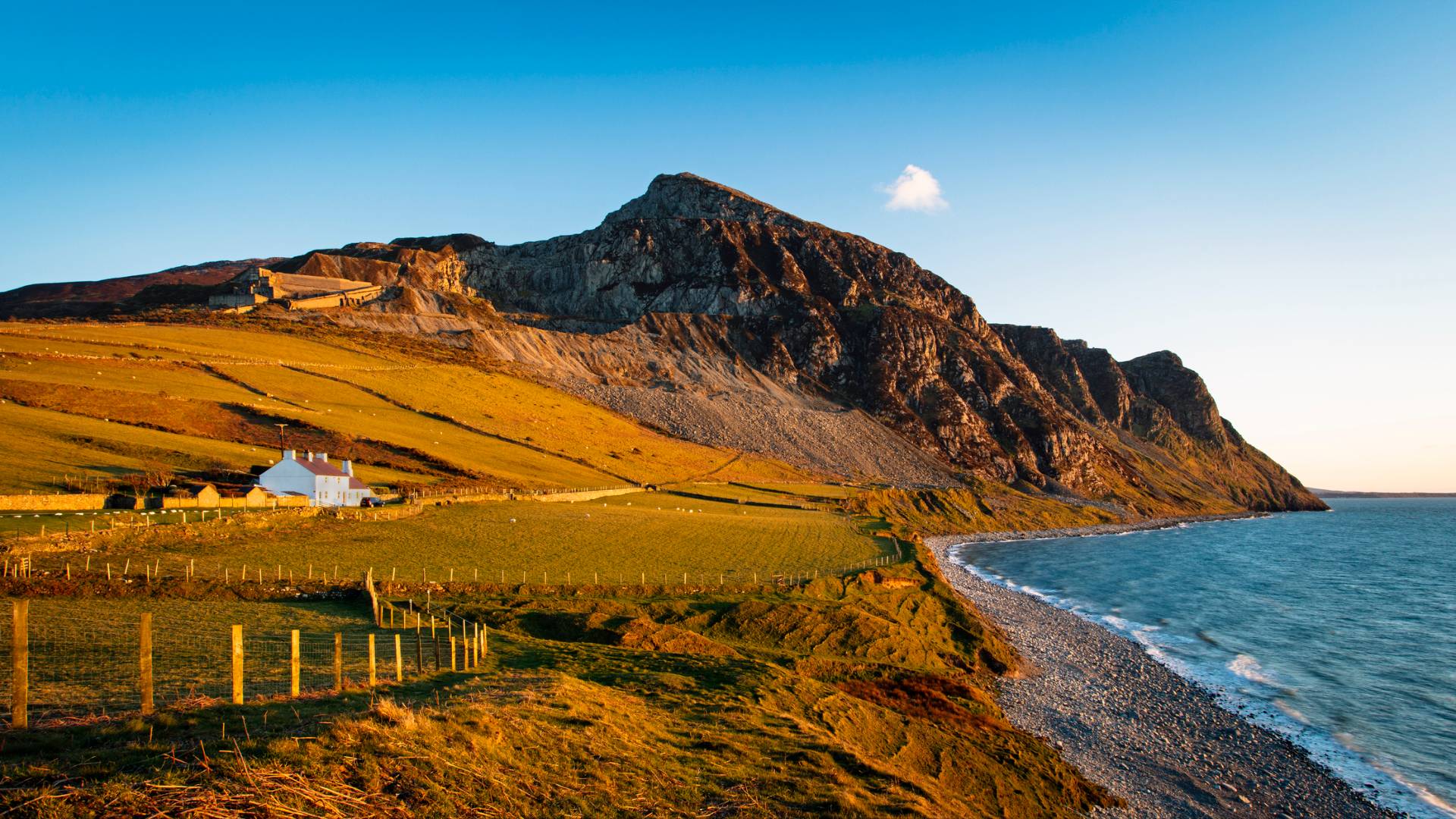
Location: Llŷn Peninsula, Gwynedd, north Wales
Max eclipse: 93.3% at 7:11 p.m. BST
Sun position: 14° above west-northwest horizon
Eclipse window: 6:14-8:05 p.m. BST
Sunset: 8:52 p.m. BST
Light pollution: 2.9 Bortle/SQM 21.91
Cloud risk: 70%
The remote Llŷn Peninsula projects deep into the Irish Sea, offering expansive views toward the west-northwest horizon, where the eclipsed sun will appear before sunset. It is also one of the darkest regions in Wales, lying close to the protected skies of Ynys Enlli (Bardsey Island) Dark Sky Sanctuary. With minimal light pollution and wide rural vistas, the peninsula becomes a superb location for watching Perseid meteors later that same night.
8. Galloway Forest Dark Sky Park
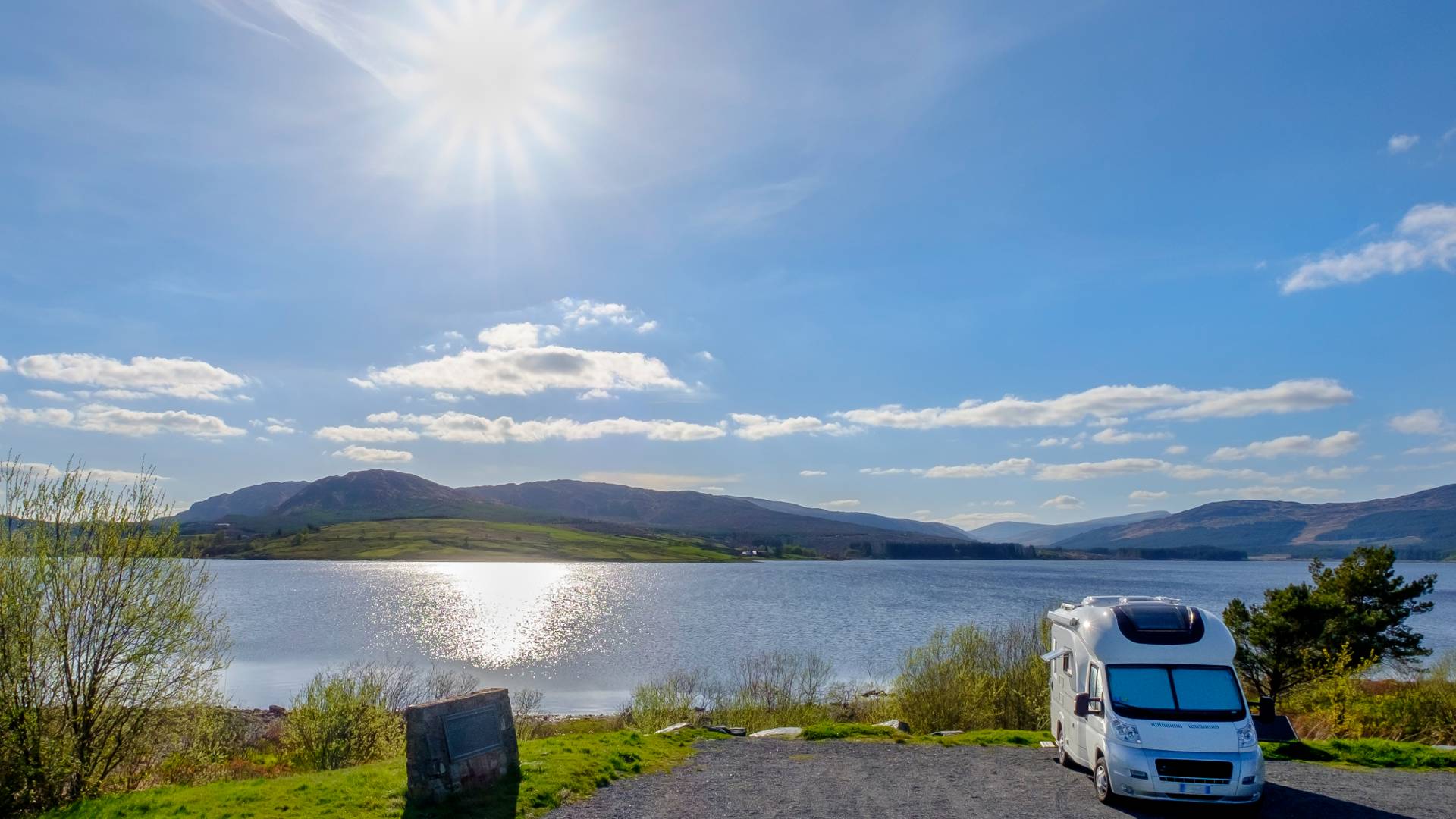
Location: Galloway Forest Park, Dumfries and Galloway, Scotland
Max eclipse: 91.8% at 7:07 p.m. BST
Sun position: 14° above west-northwest horizon
Eclipse window: 6:10—8:01 p.m. BST
Sunset: 8:47 p.m. BST
Cloud risk: 85%
Galloway Forest Park was Britain’s first Dark Sky Park and remains one of the country’s premier stargazing destinations. Open western views around Clatteringshaws Loch, along with other viewpoints away from the forests, make it well-suited to the low evening eclipse. After twilight fades, exceptionally dark skies reveal the Milky Way in striking detail, creating near-perfect conditions for viewing the Perseid meteor shower in the early hours — if the sky is clear.
9. Northumberland Dark Sky Park
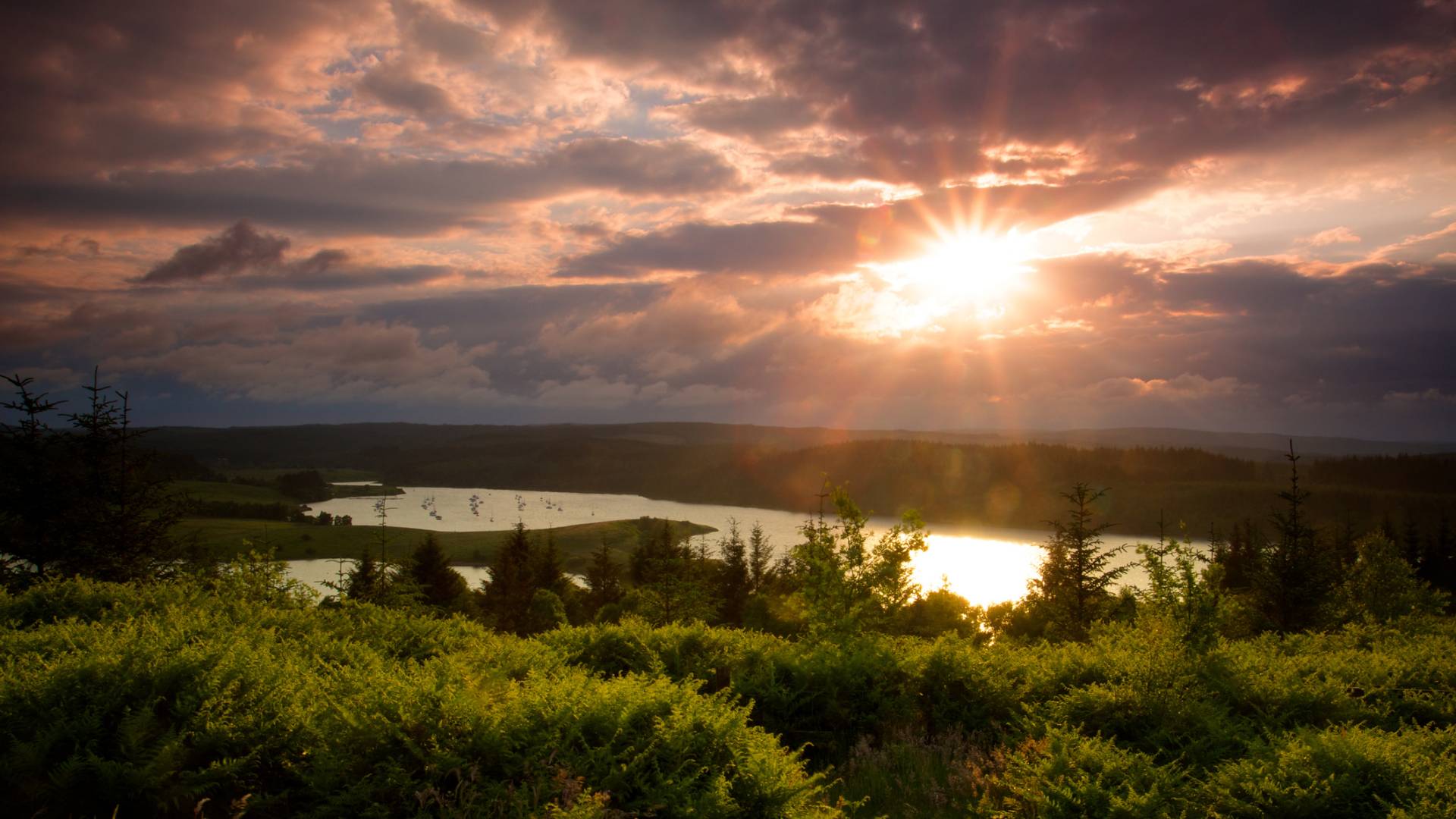
Location: Northumberland National Park and Kielder Water & Forest Park, Northumberland, England
Max eclipse: 90.4% at 7:07 p.m. BST
Sun position: 13° above west-northwest horizon
Eclipse window: 6:10-8:00 p.m. BST
Sunset: 8:49 p.m. BST
Light pollution: 3.3 Bortle/SQM 21.82
Cloud risk: 90%
Northumberland’s Dark Sky Park combines remote landscapes with some of England’s darkest skies. Locations around Kielder Water and Northumberland National Park provide broad views toward the low west-northwest eclipse shortly before sunset. Later that night, the region becomes one of the finest places in Europe to watch the Perseids, with frequent views of the Milky Way and bright meteors overhead. Check for any events at Kielder Observatory.
10. Giant’s Causeway
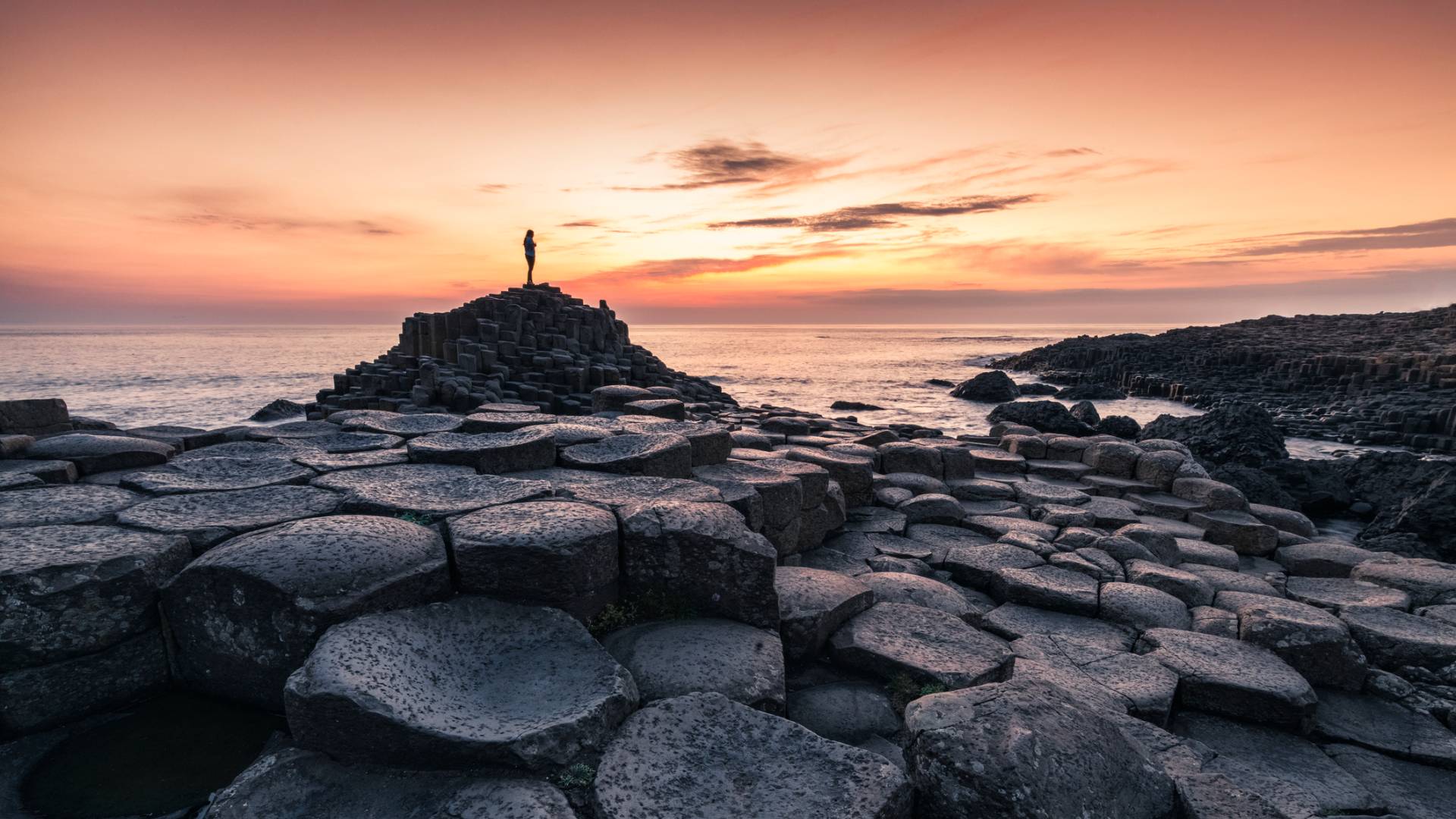
Location: Bushmills, Northern Ireland
Max eclipse: 93.1% at 7:07 p.m. BST
Sun position: 16° above the west horizon
Eclipse window: 6:09-8:02 p.m. BST
Sunset: 9:31 p.m. BST
Light pollution: 4.2 Bortle/SQM 21.52
Cloud risk: 81%
The Giant’s Causeway in Northern Ireland offers a spectacular foreground for the eclipse, with the sun appearing low above the Atlantic beyond the famous basalt columns. Although the skies here are not as dark as in some rural parks, the north Antrim coastline still experiences relatively modest light pollution. Nearby coastal viewpoints and beaches provide good conditions for watching Perseid meteors later that night beneath expansive northern skies.