

‘You think you’re the only ones going to heaven.”
This is part of a series exploring the identity of Churches of Christ. Read more here.
That’s an accusation — merited or not — familiar to many members of today’s Churches of Christ.
But Churches of Christ in the early 19th century American Restoration Movement held a much different notion: “Christians only, but not the only Christians.”
In an informal online survey of 139 church leaders and members from 30 states, most were familiar with that saying. And even if the slogan itself is not in common use, many identified with its ideal — that of Christians who follow Jesus alone, not man-made creeds or labels, while acknowledging sincere disagreements within the Body of Christ.
“I seek to be simply a Christian, wearing Christ’s name and submitting to His authority,” said Bill Robinson, minister for the Upper West Manhattan Church of Christ in New York.
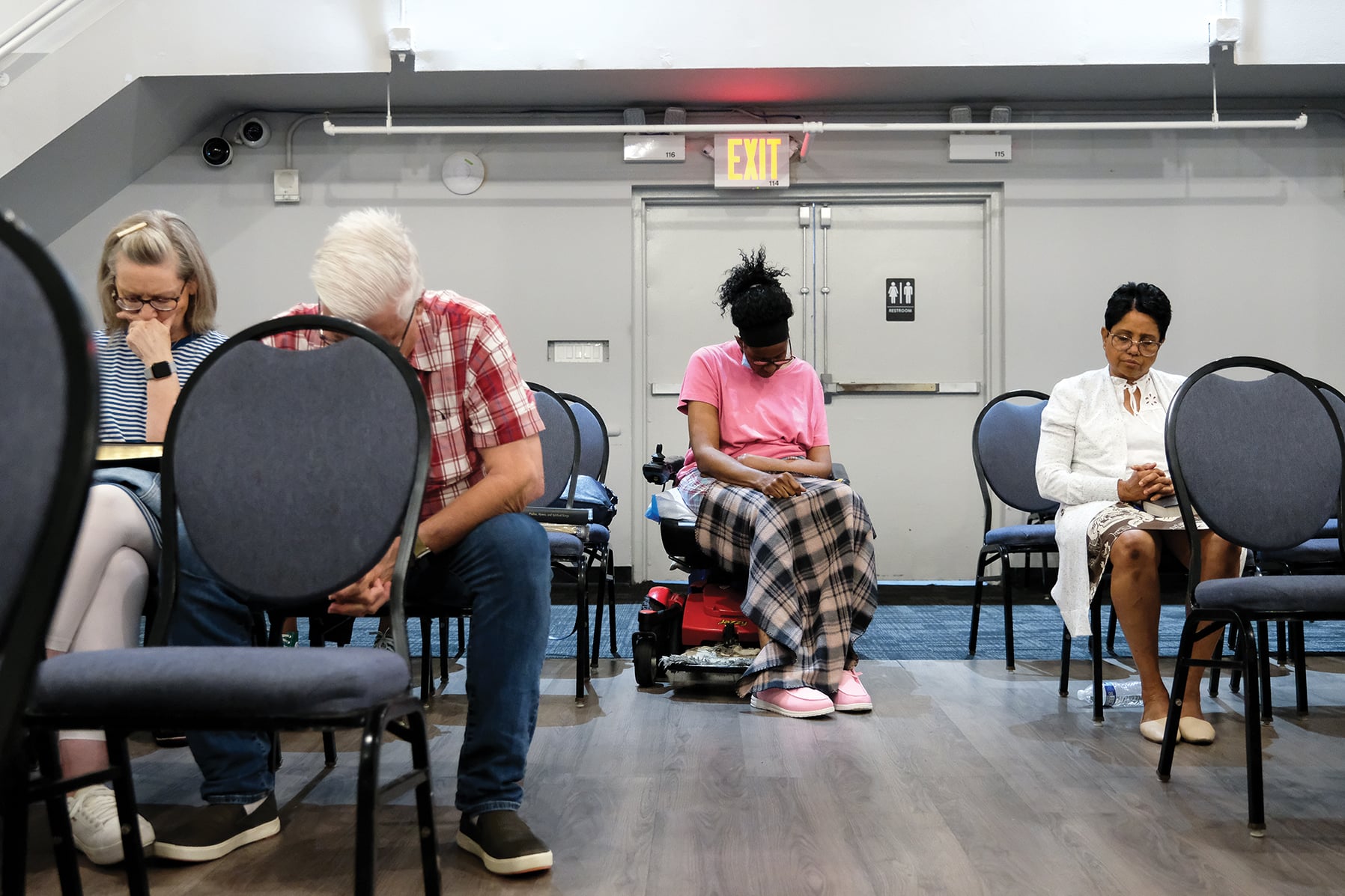
Bill and Judy Robinson, at left, pray during a Tuesday night Bible study.
The phrase “encapsulates the heart of the Restoration,” said Steve Cloer, director of the Harding School of Theology’s Center for Church and City Engagement in Memphis, Tenn. “We seek to be Christians — nothing more, nothing less. And yet, we acknowledge that we do not have everything figured out either.”
“We seek to be Christians — nothing more, nothing less. And yet, we acknowledge that we do not have everything figured out either.”
Some, though, were more familiar with the idea of being the “only Christians.”
“Growing up, being a Church of Christ member was more of a very exclusive faith community — that we were the only ones who ever had a chance of being admitted to heaven,” recalled Bruce Robins, a deacon of the Laurel Church of Christ in Maryland. He was raised in a family of Church of Christ preachers in Searcy, Ark.
Heath Cary, a deacon of the Maryland Heights Church of Christ in Missouri, also remembered a more exclusionary mindset growing up in Churches of Christ in Kansas, Oklahoma and Texas.
Because of that, Cary said, he wants to distance himself from baggage that includes “a desire (at least stereotypically) to legalistically define … who is in and who is out.”

Jay Plank
For Jay Plank, minister for the RiverWalk Church of Christ in Wichita, Kan., experience with other believers has supported the concept of being “not the only Christians.”
“I’ve met too many people not of the Restoration stripe who live and breathe the love of Christ,” Plank said.
“If only Restoration folks are saved,” he added, “what about all who lived between A.D. 33 and the early 1800s? Are they all lost? …
“We have no exclusive claim to eternal life, and dare not be so presumptuous as to believe we can usurp God by saying who is and is not a child of God.”
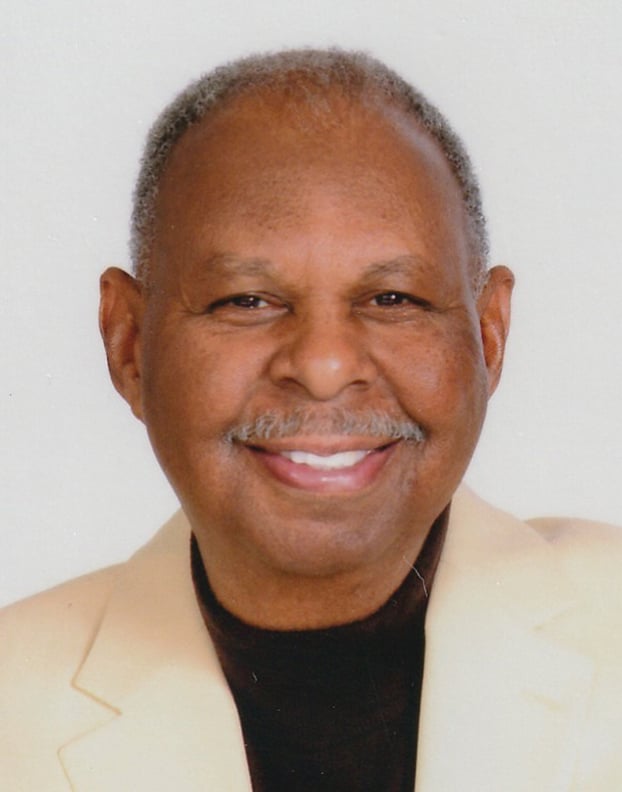
Aaron Sayles
Meanwhile, Black Churches of Christ have viewed the slogan through a different lens, according to Aaron Sayles, a member of the Newport News Church of Christ in Virginia who serves on the Chronicle’s board of trustees.
“The slogan was about survival and dignity, not doctrinal boundary drawing,” he said. “White Restoration leaders used the slogan to fight denominational creeds. Black Christians used it to fight exclusion, segregation and racial humiliation.
“So, for Black Churches of Christ, the slogan meant, ‘We are Christians, even if white Christians refuse to treat us like brothers and sisters.’ It was a declaration of spiritual legitimacy in a world that denied their humanity.”
Criticisms of the slogan
While the idea of avoiding exclusivist attitudes resonates with many members of Churches of Christ, some also cautioned against endorsing error or denominationalism.
“I do not claim to be the final judge of every soul, because the Lord knows those who are His,” said Robinson, the Manhattan minister. “But I do not identify with any use of the phrase that either has an ecumenical intent to fellowship those who practice error or weakens the necessity of obeying the Gospel, abiding in Christ’s Word, or honoring the one body, one faith and one baptism revealed in Scripture.”

Connie Stinnett
“I also think that ecumenism has crept in,” concurred Connie Stinnett, a member of the Grace Point Church of Christ in Jonesboro, Ark., who grew up in a Methodist church.
“And I’m personally not comfortable saying that, basically, anything goes,” she added. “I do believe that God has made it clear what He expects, particularly regarding salvation.”
Some respondents to the Chronicle’s survey, though, challenged part or all of the slogan.
“Christians are only in the church of Christ,” argued Samuell Pounds, minister for the Hilltop Church of Christ in Winter Haven, Fla. “The Lord does not have children in another body.”

Samuell Pounds
“They are plants, which the Lord did not plant — unauthorized religious bodies or groups,” he said of denominations.
Mike Stress, a member of the River Road Church of Christ in New Port Richey, Fla., also disagreed with the “not the only Christians” aspect.
“Anytime someone identifies what ‘kind’ of Christian they are (Baptist, Methodist, Catholic, etc.), it indicates to me that they are not a true Christian because they are saying that they place their trust in what a person said over what Christ said,” Stress wrote.
“I studied my way out of a denominational church,” he added.
J.D. Williams, a retired preacher in Kannapolis, N.C., was also raised in a denominational Missionary Baptist church.
He warned against the phrase: “Basically, it says, ‘Although you are in a denomination, I believe you are a Christian like me!’ How can you teach anyone the truth when you are saying they don’t need it?”
“Basically, it says, ‘Although you are in a denomination, I believe you are a Christian like me!’ How can you teach anyone the truth when you are saying they don’t need it?”
Others had a very different objection to the slogan, concerned that it may inadvertently encourage division.
“I think the ‘Christians only’ part ends up being self-defeating,” said Dominic Venuso, minister for Rochelle Church of Christ in Illinois. “It essentially is a slogan for a group which is saying, ‘We are Christians only.’ But who are ‘we’? As a slogan, it ends up reinforcing a sectarian group identity.”
“I don’t think it’s possible to be a ‘Christian only’ in the strictest sense,” opined Clay McFerrin, a member of the Chisholm Hills Church of Christ in Florence, Ala. “Even without doctrinal differences, an individual’s Christian identity and practice are almost inevitably influenced by their gender, nationality, ethnicity, language, socioeconomic status and/or politics.”
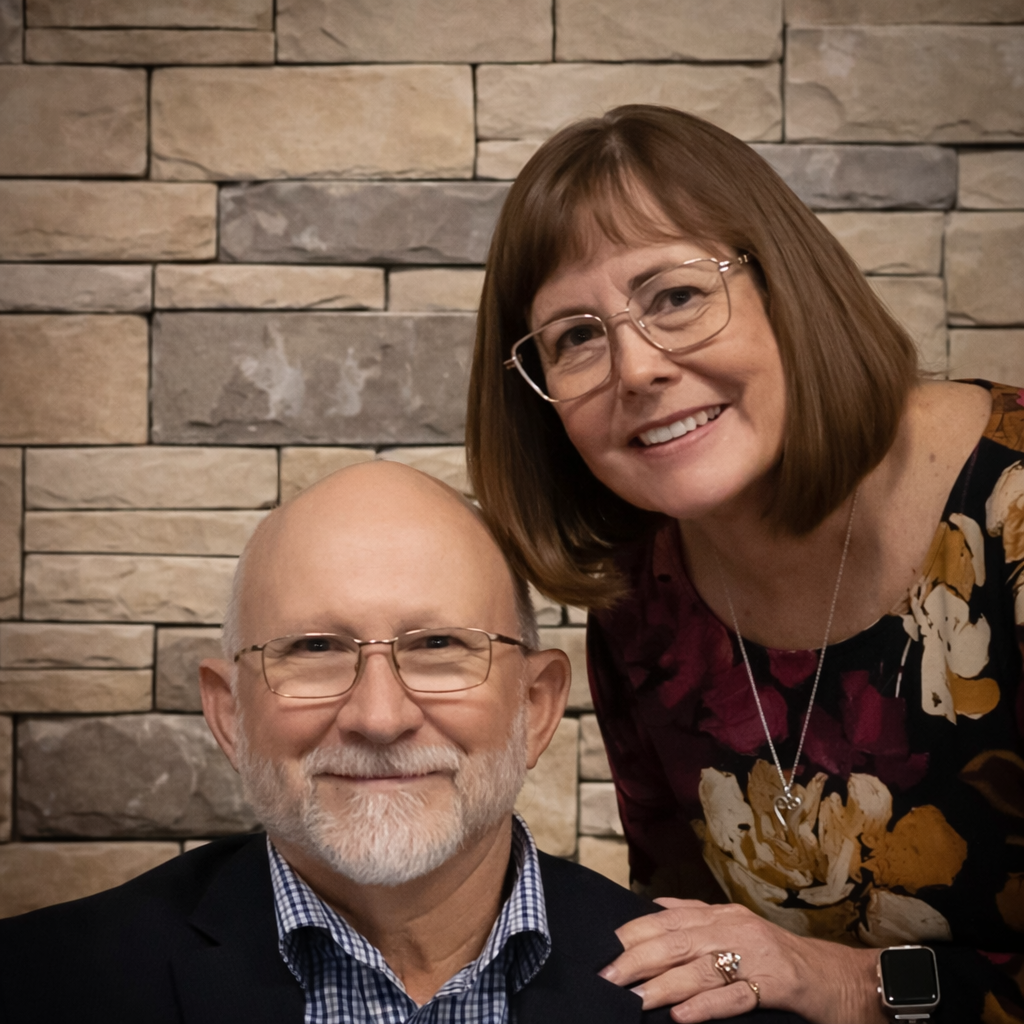
James and Kim Koenig
The slogan “has become the very thing it tried to fight against,” added Rich Gould, who preaches for the Riverside Church of Christ in North Augusta, S.C. “It is now used especially by some in the Churches of Christ to say that if you have a denominational name on the sign of your building then you are not a Christian in the first place. … We must understand that if we are asking for everyone to believe everything the exact same way, then we are asking for uniformity, not unity.”
For James Koenig, an elder of the Northside Church of Christ in Temple, Texas, the slogan is effectively a creed itself.
“Our guiding principle is the Gospel, not a man-made cliche or mantra,” the elder said. “If this phrase is the church’s guiding principle, then the bigger message of Christ’s salvation is being missed.”
Cooperation or condemnation?
Most of the respondents to the Chronicle’s survey believed the average church member is unfamiliar with the slogan — and with Restoration Movement history generally.
When it comes to the idea behind the phrase, Churches of Christ seem to be split.
“We have in place a divide between what I call the Conservative Mainstream Churches of Christ and the Moderate Mainstream Churches of Christ,” said Leonard Allen, dean of the Bible college at Lipscomb University in Nashville, Tenn. “The Conservative stream … tends to hold that there are not ‘Christians in the sects’ (denominations). The Moderate stream tends to hold that there are.”
The more exclusivist view, he added, became dominant among Churches of Christ as they separated from the Disciples of Christ in the late 19th century.
“I have seen tension in two ways,” said Steve Cloer. “One is that the movement at times has crystallized, and we have thought that ‘we have figured things out’ and we ‘are the only ones’ faithful.

Kyle and Sarah Heffley
“On the other side, we have become denominational in our thinking, where we are simply ‘Church of Christ,’ and we acknowledge that we are simply another brand among others. I think it is important to navigate both of these cautiously.”
At the same time, several felt the acceptance of Christians among other groups has increased in recent years.
“My generation may be the last one that still remembers the sectarian attitude that church of Christ members were the only ‘true’ Christians,” said Kyle Heffley, an elder of the Southside Church of Christ in Rogers, Ark. “However, I also think that attitude was already dying then and has almost completely died today. As it should.”
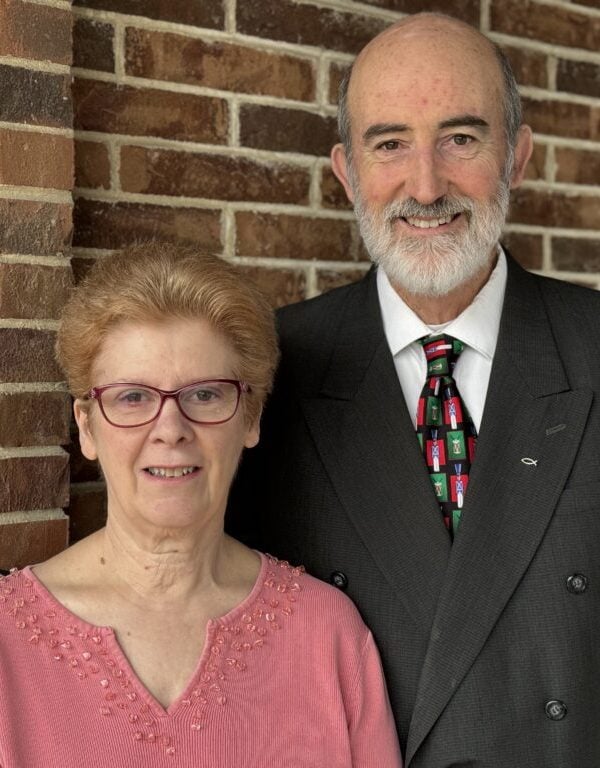
Roger and Glenda Woods
The Greenville Oaks Church of Christ in Allen, Texas, teaches that belonging to a Church of Christ “is not a test for faithfulness to God, dependence on Jesus and living with the Holy Spirit,” said member Mike Stoniecki.
Many respondents also expressed an openness to cooperation with groups outside Churches of Christ — particularly for benevolence and community activities.
At the Walled Lake Church of Christ in Michigan, “our benevolence program collaborates with Jewish, Catholic, Lutheran and community organizations to serve the community,” said elder Roger Woods.
“Let the Bible speak and do so with love, and bridges will be built that will ultimately plant seeds that will grow,” he added.
Tim Tripp, senior minister for the West Side Church of Christ in Russellville, Ark., offered an especially conciliatory approach.
“If they believe that Jesus is the son of God and have faith in his name, I generally consider them to be brothers/sisters in Christ and on the mission of Christ,” Tripp wrote. “I seek to build relationships with them and partner with them in activities where we both can participate in good conscience.”
But most respondents were equally wary of cooperating with denominations in a way that could be seen as supportive of doctrines they disagree with.
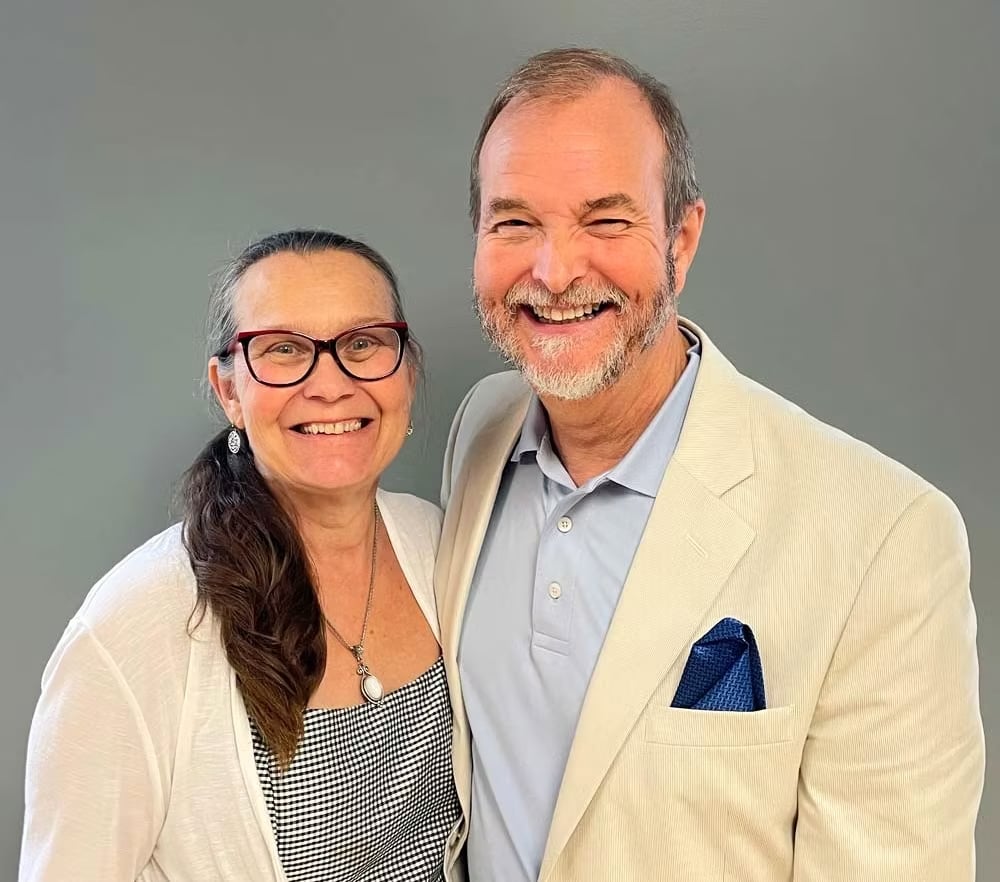
Martin and Rachel Pyle
Martin Pyle, who ministers for the Riverwood Church of Christ in Nashville, Tenn., said his congregation will “gladly engage” with denominational churches in activities that don’t involve worship — such as a homeless ministry or an Easter egg hunt.
“We cooperate to the extent possible without compromising our core identity/doctrines,” Pyle said. “Would we join with a Muslim congregation for shared prayer? No. Would we cooperate in picking up trash in our community? Yes. Would we cooperate with a local Baptist church in a prayer service? Yes.”
“I don’t believe we can cooperate in areas in which we would be teaching the Bible,” echoed Kenneth Mills, a member of the College Church of Christ in Searcy, Ark. “I believe we need to be respectful and cautious.”
“There are doctrinal differences within our congregation. … If getting everything right were the basis of our fellowship, there would be none.”
For Rob Sparks, minister for the Fernvale Church of Christ in Tennessee, being “not the only Christians” is more about having the humility to recognize that no one is a perfect follower of Christ.
“I mean, there are doctrinal differences within our congregation, and we cooperate internally. Why would that stop at the doors of our church?” he asked.
“When we disagree, we disagree as sisters and brothers in Christ, not as Christians and non-Christians. … If getting everything right were the basis of our fellowship, there would be none. Hence, the importance of the Restoration Movement’s call to move toward Jesus wherever we start from.”
CALVIN COCKRELL is Managing Editor for The Christian Chronicle and serves as the young adult minister for the North Tuscaloosa Church of Christ in Alabama. Reach him at calvin@christianchronicle.org.