
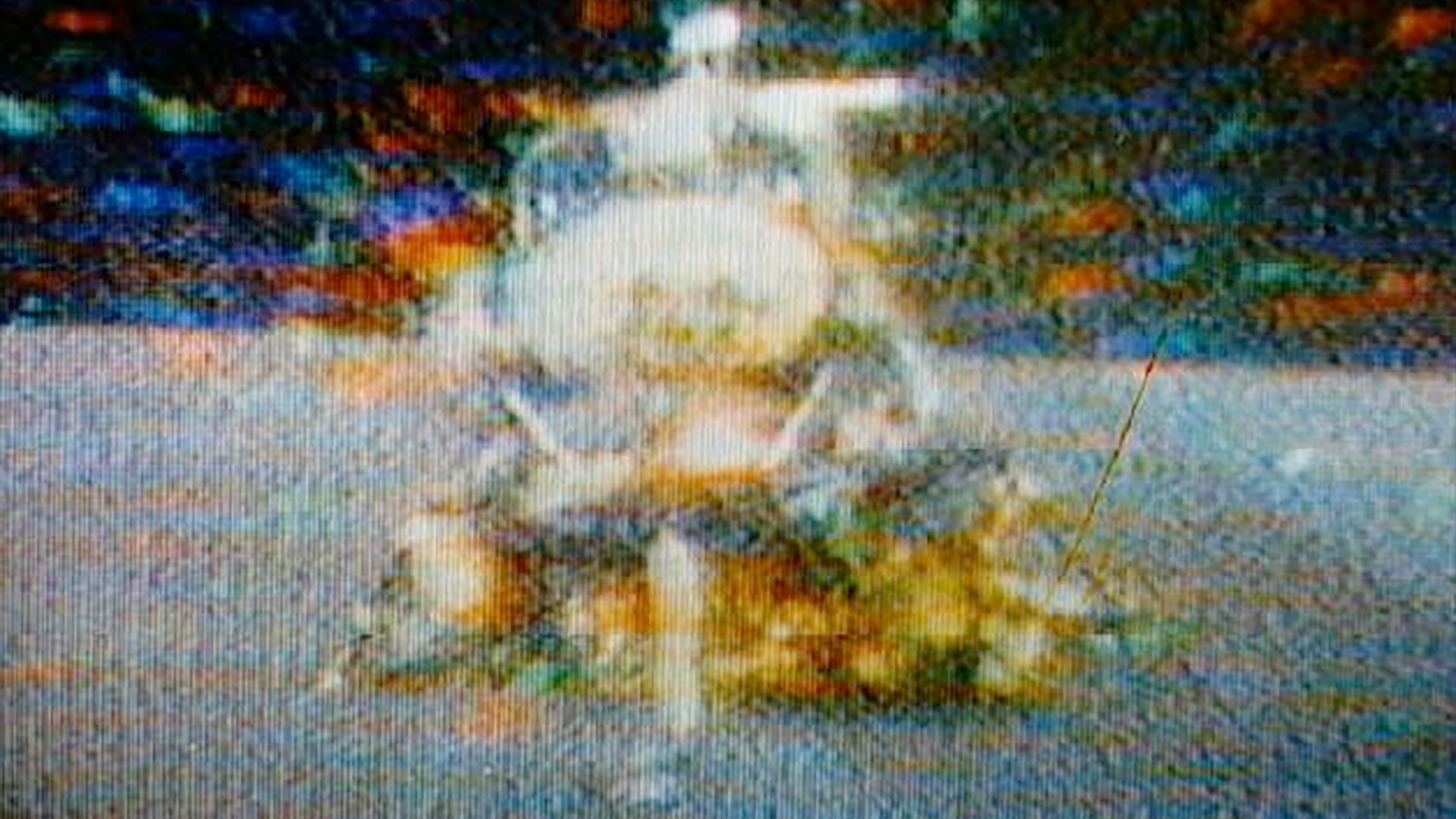
On Aug. 2, 1971, a lunar liftoff was televised for the first time. Apollo 15 astronauts David Scott and James Irwin spent three days on the moon before departing in the lunar module, named “Falcon.”
An RCA TV camera was mounted onto their lunar rover, which Scott parked about 300 feet away with the camera pointed at Falcon. Flight controllers in Mission Control Houston had the option to move the camera, but because of some technical difficulties, they opted to leave the camera pointed in the same direction during liftoff. from the moon. Following a quick pop and a bunch of sparks, Falcon quickly disappeared from sight. Shortly afterward, Falcon joined the command module “Endeavour,” and Apollo 15 began its journey back to Earth.
The Apollo 15 mission launched to the moon on July 26, 1971. The mission was commanded by David Scott, with James Irwin as lunar module pilot. Astronaut Al Worden served as command module pilot and remained aboard Endeavour as Scott and Irwin explored the moon’s surface. The Apollo 15’s Falcon lunar lander touched down on the moon on July 30. Orwin and Scott performed three moonwalks and test drove NASA’s new lunar rover before lifting off on Aug. 2.
The Apollo 15 crew remained in lunar orbit until Aug. 4, when they departed for Earth. The mission ended with a splashdown landing in the Pacific Ocean on Aug. 7.
Why it mattered
When Apollo 11 astronauts Neil Armstrong and Buzz Aldrin first walked on the moon, their first lunar steps were broadcast to the world live. But their liftoff, not so much.
But capturing a liftoff live from the moon was the next logical step to chronicle NASA’s lunar exploration in real-time. The TV camera mounted on Apollo 15 Lunar Roving Vehicle, which also made a moon debut on this mission, and was remote controlled by flight controllers on Earth, pioneering a process that is commonplace today on the International Space Station. It also allowed engineers to see how a lunar module actually behaved during liftoff in the moon’s one-sixth gravity.
That legacy of live video from the moon took center stage in April 2026 during NASA’s Artemis II mission, which sent the first astronaut to visit the moon since the Apollo 17 mission in 1972. The Artemis II Orion spacecraft was covered in cameras, both inside and out, allowing NASA to livestream the entire voyage to the moon and back, nonstop.