

‘Church of Christ. Established A.D. 33.”
Most of us have seen such a sign outside a building where the Lord’s church meets.
We know what it means: God established the Church of Christ when Peter preached on the Day of Pentecost, and 3,000 responded to the Gospel and were baptized.
This is part of a series exploring the identity of Churches of Christ. Read more here.
Why then does The Christian Chronicle insist on talking about the Restoration Movement?
Shouldn’t our focus as Christians be on the first century church that our Lord created — and not on later events?
In some respects, yes.
But in others, no.
History helps us understand where we’ve been and where we’re going.
Restoration Movement scholar Edward J. Robinson made an important point in a Chronicle interview earlier this year.
“We definitely miss out on so much information when we just focus on Acts 2:38 and just skip all the way to the present,” said Robinson, minister for the North Tenneha Church of Christ in Tyler, Texas. “There are intervening years and centuries that we must give attention to, because whether we realize it or not, we’re all indebted to our spiritual foremothers and forefathers.”
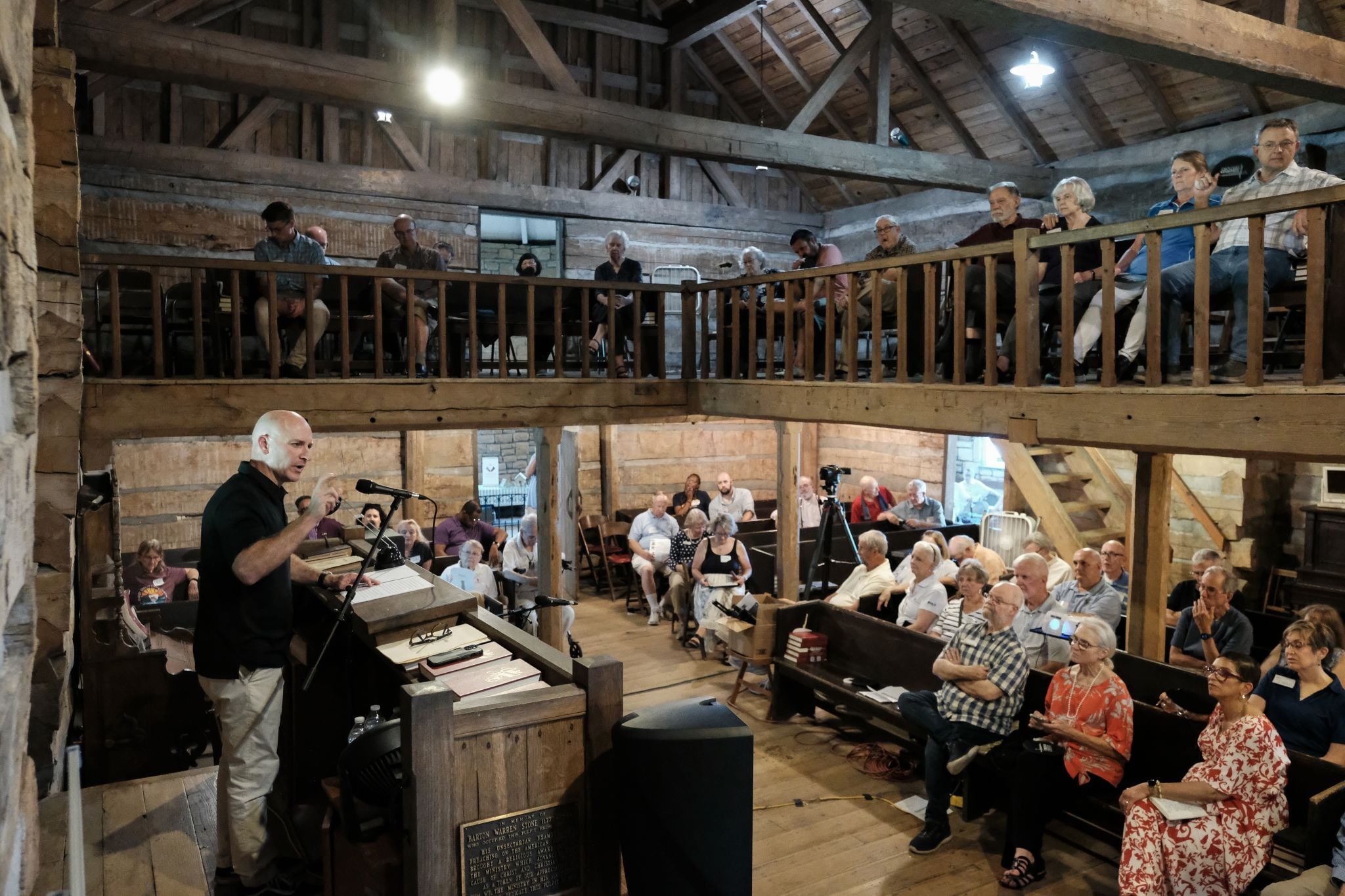
James L. Gorman, director of the Center for Restoration Studies at Abilene Christian University, gives a lecture on interracial revivalism and women exhorters at the 225th anniversary celebration of the Cane Ridge Revival in Bourbon County, Ky.
That’s one reason why the Cane Ridge Revival of 1801 — which occurred 225 years ago, as our related news story notes — still matters.
“The Cane Ridge Revival is significant because Black and White men, women and children sang, spoke, listened and worshiped together,” said Carisse Berryhill, co-editor with Leonard Allen of the 2021 book “Answered by Fire: The Cane Ridge Revival Reconsidered.”
“While formerly they had been taught that only the elect would be enabled to believe,” Berryhill said of the Cane Ridge attendees, “the idea that people could choose to accept the good news of the gospel galvanized the worship at these meetings, thrilled the participants and propelled the proclamation of a gospel free to all.”
What took place at Cane Ridge was an act of courage in the face of strong denominational control. That’s crucial to remember, even two-plus centuries later.
At Cane Ridge, 28-year-old Barton W. Stone helped lead a revival that challenged the culture of Calvinism and the sectarian control of his own Presbyterian tribe.
Rather than seeing the Gospel as reserved for a select or chosen few, those who took part in the revival were from a wide range of social, ethnic and religious backgrounds. And, instead of appealing to sectarian doctrines, traditions or church councils, Stone and other preachers chose to set such things aside and preach Christ.
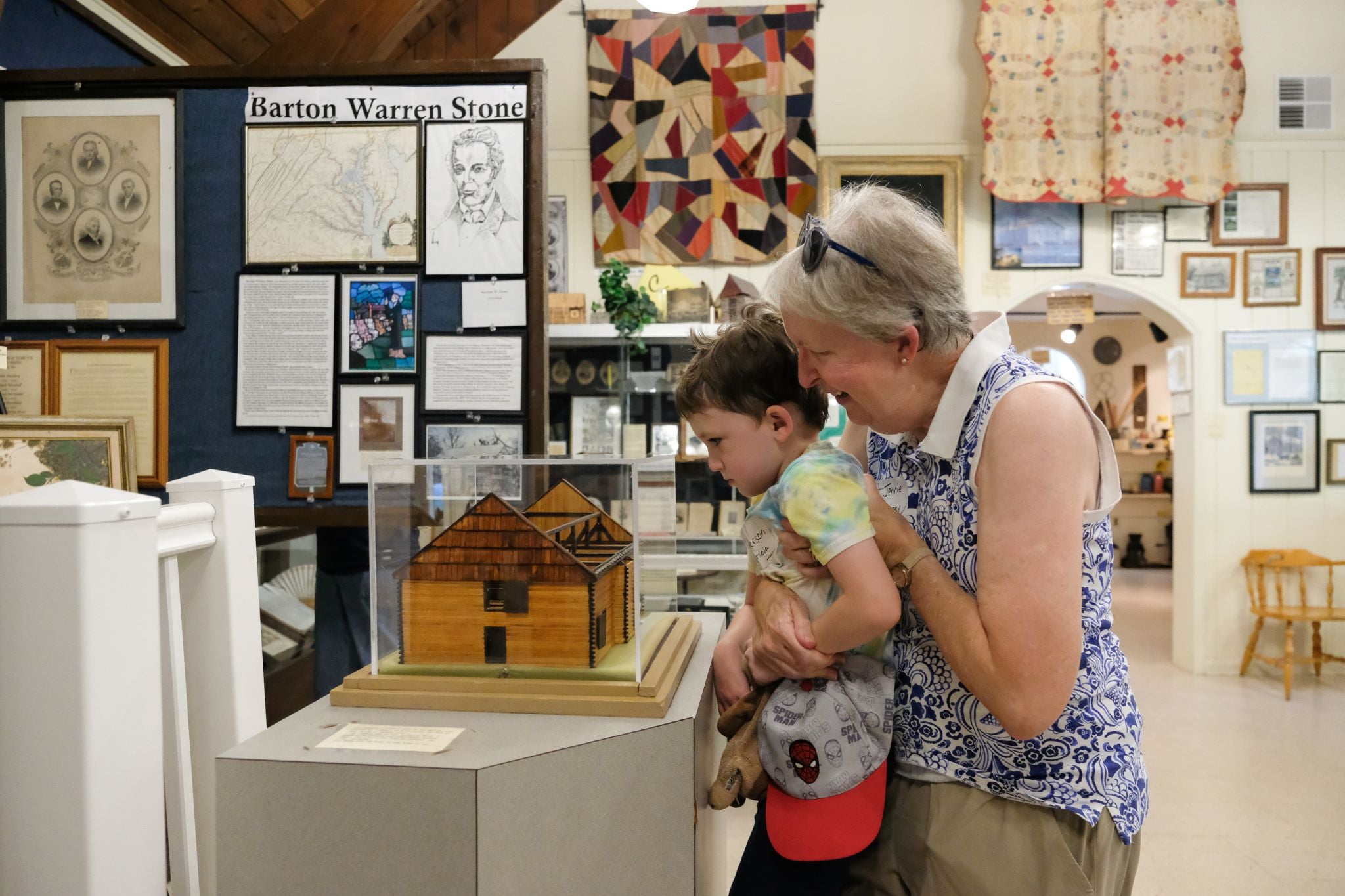
Jennie Shirey lifts Emerson Marsala, her 4-year-old grandson, so he can view a miniature replica of the Cane Ridge Meeting House in the Barton Warren Stone Museum in Bourbon County, Ky.
The novelty of inviting people to respond to the simple message of Christ and him crucified, rather than focusing on the issues that divide us, was central to the original ideas of the Restoration Movement.
For Stone and others present, Cane Ridge was the beginning of a conversation. But the appetite for conversation often shifted to a demand for preconditions to be met before we’d even sit at the table to talk.
We’d do well to reconsider that approach. Surely we can engage in meaningful dialogue — without compromising our beliefs — as we work to pave the way for unity.
BOBBY ROSS JR. is Editor-in-Chief of The Christian Chronicle. Reach him at bobby@christianchronicle.org.
JEREMIE BELLER is a contributing editor for The Christian Chronicle. He is dean of Bible and director of church relations for Oklahoma Christian University. He serves as the congregational minister for the Wilshire Church of Christ in Oklahoma City.