
This piece was adapted from CT’s books newsletter. Subscribe here.
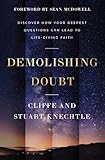
Cliffe Knechtle and Stuart Knechtle, Demolishing Doubt: Discover How Your Deepest Questions Can Lead to Life-Giving Faith (Zondervan, 2026)
For many, the beginning of a faith journey is marked by certainty. We may not have a full grasp on every theological detail, but we are certain that Jesus is the only way to eternal life. Then something intersects our path that leads us to start asking questions. It could be a season of suffering or an unexpected conversation with a skeptic. Either way, what once seemed clear is now cloudy. Where we were so certain, we now are struggling with doubt.
The real issue, though, is not the doubt itself—it is how we handle it. As tempting as it might be to avoid anxious thoughts, if we choose to actively engage our doubt, we are bound to find a deeper, more radiant faith on the other side.
Cliffe and Stuart Knechtle’s new devotional directs us into this type of honest engagement. They begin by reframing doubt as an inevitable tunnel we’ll walk through on our journey to truth. “I don’t understand how any person could express deep and authentic belief in God and somehow make it through this life without encountering skepticism at some point,” the father-son duo write. “There’s so, so much we as human beings will never know. There’s always room for humility. There’s always room for doubt.”
But the Knechtles don’t leave the reader swimming in uncertainty. With winsome clarity, they walk through the most common questions our skepticism might lead us to ask, including ones about the existence of God, the trustworthiness of Scripture, and the resurrection of Jesus.
While they provide evidence grounded in research, the Knechtles also invite the reader to challenge the validity of their questions. Our doubts, they suggest, can sometimes be our attempt to “reshape Jesus to fit our naturalistic presuppositions or culturally conditioned skepticism.” It’s easy to believe that human progress has made us wiser than those who have come before us. I am grateful for how they answered common questions while graciously critiquing their roots.
Uche Anizor, The Goodness of God in The Gift of Scripture (Crossway, 2026)

Where the Knechtles’ book addresses the rational validity of our faith, Uche Anizor addresses the question of whether life with God is actually good. Eventually in our spiritual walk, most of us will quietly wrestle with whether the instructions, promises, and truth God has expressed through Scripture lead to the flourishing life we long for.
Rooted in Psalm 119, Anizor’s book answers this question by offering meditative reflections on the multifaceted ways God’s Word is “a gift given for our earthly and eternal happiness.” In each chapter, the reader will see how the blessings we receive through God’s Word connect to the longings we have as humans. Whether it is peace, hope, joy, or wisdom, the Scriptures point us to the truth that what our hearts desire can only be found in God.
The compounding nature of this book left me rejoicing that God was gracious enough to speak to us through his Word to show us this truth. As Anizor writes, “This book of meditations is meant to be just that: meditations, reflections on God’s many-splendored kindness in giving his word. The goal is to simply fuel our love and appreciation for all that God’s word is to us and all that God wants to be for us through his word.”
Dietrich Bonhoeffer, Psalms: The Prayer Book of the Bible (1940)
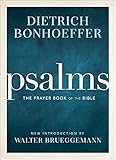
Dietrich Bonhoeffer’s book addresses a final important question—how we can experience more of God. Using the Psalter as a guide, it provides time-tested wisdom, showing how we can deepen our intimacy with God in the way he desires.
Each brief chapter covers a specific type of psalm, showing how they uniquely train us to pray according to the way God speaks, thereby transforming our hearts to align with his. With each reflection, we are invited to linger in a space of remembrance, confession, and exhalation for the riches that God bestows on us through Christ.
Bonhoeffer writes, “Prayer does not mean simply to pour out one’s heart. It means rather to find the way to God and to speak with him, whether the heart is full or empty. No one can do that on one’s own. For that, one needs Jesus Christ.” His book leaves readers with a refreshed imagination for how the Psalms teach us to pray like Jesus and, in doing so, draw us into deeper fellowship with God.
For readers in a season of spiritual doubt, these three books offer a space to wrestle without shame. Designed to be read slowly, each one meets people in their skepticism, disappointment, or disillusionment and guides them to the other side, where a deeper faith and anchored truth reside.
Elizabeth Woodson is a Bible teacher, a theologian, an author, and the founder of The Woodson Institute, an organization that equips Christians to understand and grow in their faith.
The post When Faith Feels Cloudy appeared first on Christianity Today.