


Vaccination rates across the US continue to drop, along with other basic interventions like Vitamin K injections for newborns. What’s worse is that debates about vaccines are becoming less a matter of scientific or moral debate and more a focal point for ideological and political affiliation. Experts are wondering if there’s a way to turn back the tide.
Complicating matters is the tendency of the vaccine hesitant to push back on any attempts to bridge the communication gap. Peer-reviewed studies, official recommendations, and carefully tailored messaging only feel like greater evidence to them of science’s blind hubris or a grand conspiracy. For those of us who would like to see vaccination rates go back up, what can be done?
Kira Ganga Kieffer, a religious studies professor at Fairfield University, suggests we need to understand vaccine hesitancy as a religious phenomenon. In her new book, Unvaccinated Under God: Religion and Vaccine Hesitancy in Modern America, Kieffer describes the history of vaccine hesitancy as a kind of religious practice. While it is easy to see a great deal of spirituality and spiritual concern in vaccine hesitancy, Kieffer’s attempts to pin the label on religion and extrapolate Christian beliefs into beliefs about vaccines are far less convincing.
While opposition to vaccines dates back as far as the cowpox inoculation in the 1700s, Kieffer argues that modern vaccine hesitancy can be traced back to the 1970s and ’80s with a popular reaction against pertussis (whooping cough) vaccines. After a 1974 television program in the UK featured a neurologist who argued that several dozen children had developed severe brain damage as the result of the vaccine, pertussis vaccination rates dropped precipitously. In the US, several TV specials featured American families who alleged that their children had also developed a reaction to the vaccine, prompting the formation of an advocacy organization called Dissatisfied Parents Together. (It was primarily concerned about the diphtheria-pertussis-tetanus vaccine, commonly called DPT.)
DPT focused initial efforts on finding a safer vaccine, but parents whose children had suffered severe illness because of the vaccine began suing manufacturers. Congress passed the National Childhood Vaccine Injury Act in 1986, forcing all vaccine-injury claims to go through a no-fault system that compensated families while allowing vaccine manufacturers to continue their work. However, public suspicion surrounding vaccines contributed to a growing movement beyond DPT.
Unvaccinated Under God suggests that families (especially mothers) who blamed the pertussis vaccine for their children’s severe neurological injuries underwent a sort of “conversion experience” like that of evangelical Christians whose dramatic personal transformations were at that time being broadcast on televangelist shows. Kieffer uses the language of religious conversion to explain how parents were “endowed … with prophetic authority” after they realized their children had been harmed by vaccines and they now were meant to enlighten others. While this mimics certain aspects of religious conversion, it’s a flat comparison and denigrates religious experience.
The book traces the next phase that emerged as a battle of the measles, mumps, and rubella (MMR) vaccine—which was blamed for autism—in the early 2000s. Here, Kieffer highlights how a movement of individualistic spirituality was taking hold across the Western world, dovetailing with alternative medicine and a newfound passion for all things “natural.”

Many religions hold ideas about ritual purity and contamination as fundamental, so while organized religion began to wane over the last few decades, it comes as no surprise that these impulses migrated into an obsession with restricting toxins and only eating “clean” foods.
The book highlights how “extra-theistic” intuition about spiritual matters was central to mothers’ stories. One key example is Jenny McCarthy, who was totally confident that her child had been harmed by the MMR shot and then discerned various rituals of cleansing to heal their children (mostly through controlling her child’s diet).
This is where Unvaccinated Under God draws the clearest distinction between religion and spirituality, with self-determined spiritual beliefs eclipsing or replacing traditional religious ones. Religions have creeds, dogmas, traditions, and hierarchies that provide a structure for growth, while spirituality is far broader and more individualized. The book intentionally takes an expansive view of religion, which is acceptable until it becomes clear that the “spiritual, but not religious” people Kieffer cites seem more susceptible to vaccine hesitancy than adherents to established religious traditions.
The Gardasil vaccine is an interesting case study because its development conflicts directly with traditional religious beliefs. Since the human papilloma viruses that cause cervical cancer can only be spread by sexual activity, many Christian parents were torn about whether vaccinating their teenage daughters might be subtly encouraging them to engage in promiscuity. At the same time, Christians launched campaigns like True Love Waits to promote sexual purity in reaction to an increasingly sleazy popular culture. Religious objections to a Gardasil vaccine are far more consistent with Christian moral logic, even if many Christians disagree with that logic. But this makes objections to Gardasil different from any other vaccination.
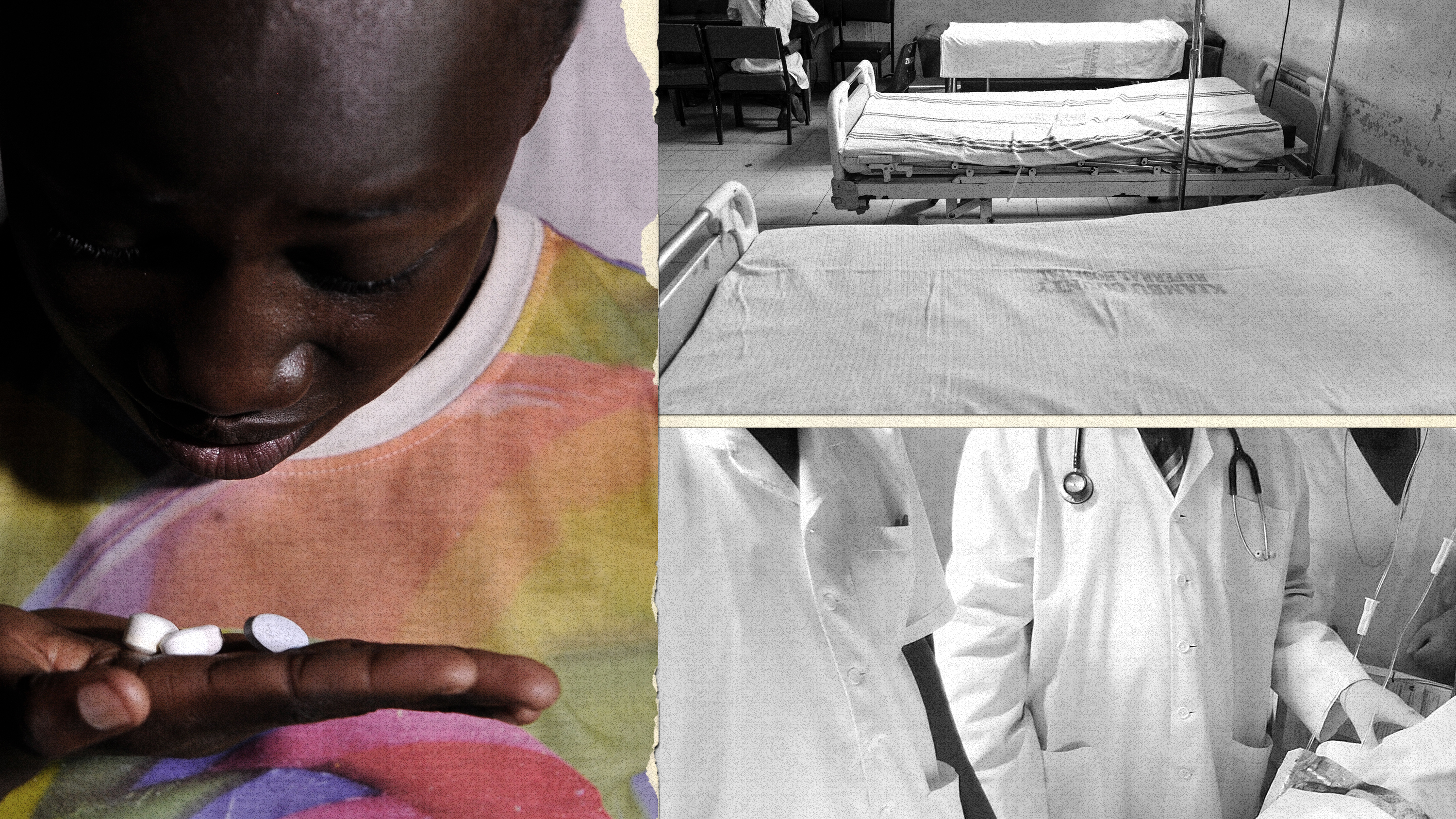
By the time Kieffer writes her final chapters on growing vaccine hesitancy and COVID-19 vaccines, Unvaccinated Under God feels as though it has a major axe to grind against conservatives, especially white evangelicals. Kieffer describes vaccines’ political polarization in the past decade but can’t avoid falling into partisanship herself. Just a few of the exaggerated or tenuous claims include:
- “Russia’s misinformation campaign in 2015-2016 had a profound impact on American vaccine culture.”
- “Anti-vaccine advocates and spreaders of vaccine misinformation frequently asserted sex and gender essentialism … This content promoted the idea that vaccines were causing queer behavior, which they saw as morally anti-family and demographically perilous.”
- “[The MAGA community] crafted narratives in which masking would demean them to a social status like that of historically oppressed groups who they viewed as undeniably lesser than themselves.”
Kieffer also grants white evangelical Christians far less grace than she does to any other vaccine-hesitant group she profiles. White conservatives’ and Christians’ views are “extreme” and “angry,” and they “preached apocalypticism” while they “fostered fertility panic.” There is no mention that COVID-19 skeptics may have legitimate concerns like mixed messaging about masks in the early days of the pandemic or the fact that liquor stores were considered “essential” businesses while churches were not. Nor does Unvaccinated Under God mention that some protestors were proved right about the dangers of extended lockdowns.
In Kieffer’s conclusion, she intends to be “neutral” and even help to “respect … those who are skeptical of biomedical institutions” because doing so “is critical public health work.” This is an admirable aim, but she neglects to follow her own advice by making her disdain for white conservative Christians palpable.
It is difficult to assess Unvaccinated Under God, as its strengths are matched by its weaknesses. It does provide a fresh lens to engage the challenge of vaccine hesitancy, but it still repeats common tropes about the evils of white Christian nationalism. It gives a detailed and fascinating history of vaccine hesitancy in the past several decades, but oftentimes the religious analysis is stretched. It advocates for a richer understanding of people who are vaccine hesitant, but I cannot imagine that someone who is suspicious of vaccines could walk away feeling understood by this book.


While the partisan nature of vaccine politics and the deployment of Christianity as a political prop are both lamentable, Kieffer does not provide enough evidence to prove that they are anything but strange bedfellows. Casey Means, Trump’s former nominee for the surgeon general, has embraced all sorts of bizarre spiritual practices, including necromancy and full moon ceremonies. Her DIY spirituality makes her a far better standard-bearer for vaccine hesitancy than your average evangelical Christian.
This is biggest piece missing in Unvaccinated Under God: There is no clarity between religious adherence and individualized, de-institutionalized spirituality. While Kieffer explains the distinction in her second chapter, she never allows that insight to guide her analysis.
Because we now live in a culture where “spiritual, but not religious” is a feasible lifestyle option, adherence to mainstream religions has weakened. Just as people who might identify as Christian could get their sexual ethics from HBO and their political priorities from Mar-A-Lago, so too there are Christians who get their information about vaccines from Facebook memes. There are many ways in which right-wing politics have been at cross purposes with Christian ethics as Republican voters have chosen a promiscuous fraudster to be president. Vaccine hesitancy (especially since it was and is still closely tied to non-Christian worldviews) is just another instance of self-directed spirituality trumping all.
Finally, the book remains theoretical about the possibility of discussing vaccine hesitancy as a religious phenomenon. There isn’t even one suggestion for how a discussion might go or what a public messaging campaign oriented toward the vaccine-hesitant-as-religious-adherents could look like. Given the many attempts to frame an obligation to vaccinate as a religious or moral good that have had mixed successes, the book fails to provide any meaningful action steps.
Mark Clavier describes “post-Christian Christianity” thusly: “Unmoored from its historical claims, Christianity becomes something like [a] floating signifier—a label that still carries emotional and cultural force, but no longer points to anything shared or settled.” Unvaccinated Under God makes some astute observations about what we can see, but when it comes to perceiving, the book confuses this post-Christian cultural force for the real thing. We do need to have robust conversations about vaccination and religion, but unfortunately this book is better at sharing facts than guiding what that conversation should look like.
The post Vaccine Hesitancy Comes from Vague Spirituality, Not Evangelicalism appeared first on Christianity Today.