

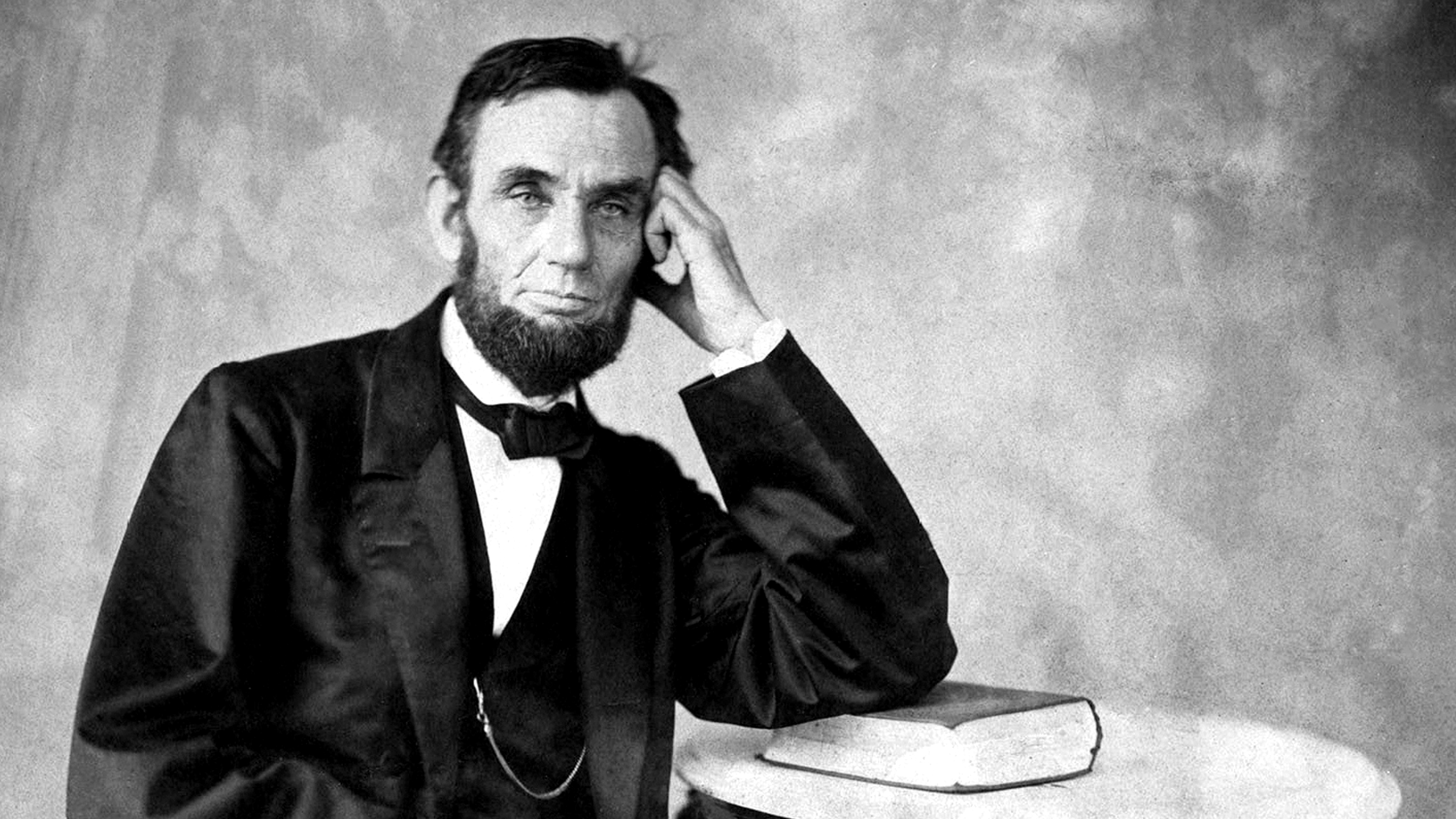
Abraham Lincoln looms large on Memorial Day.
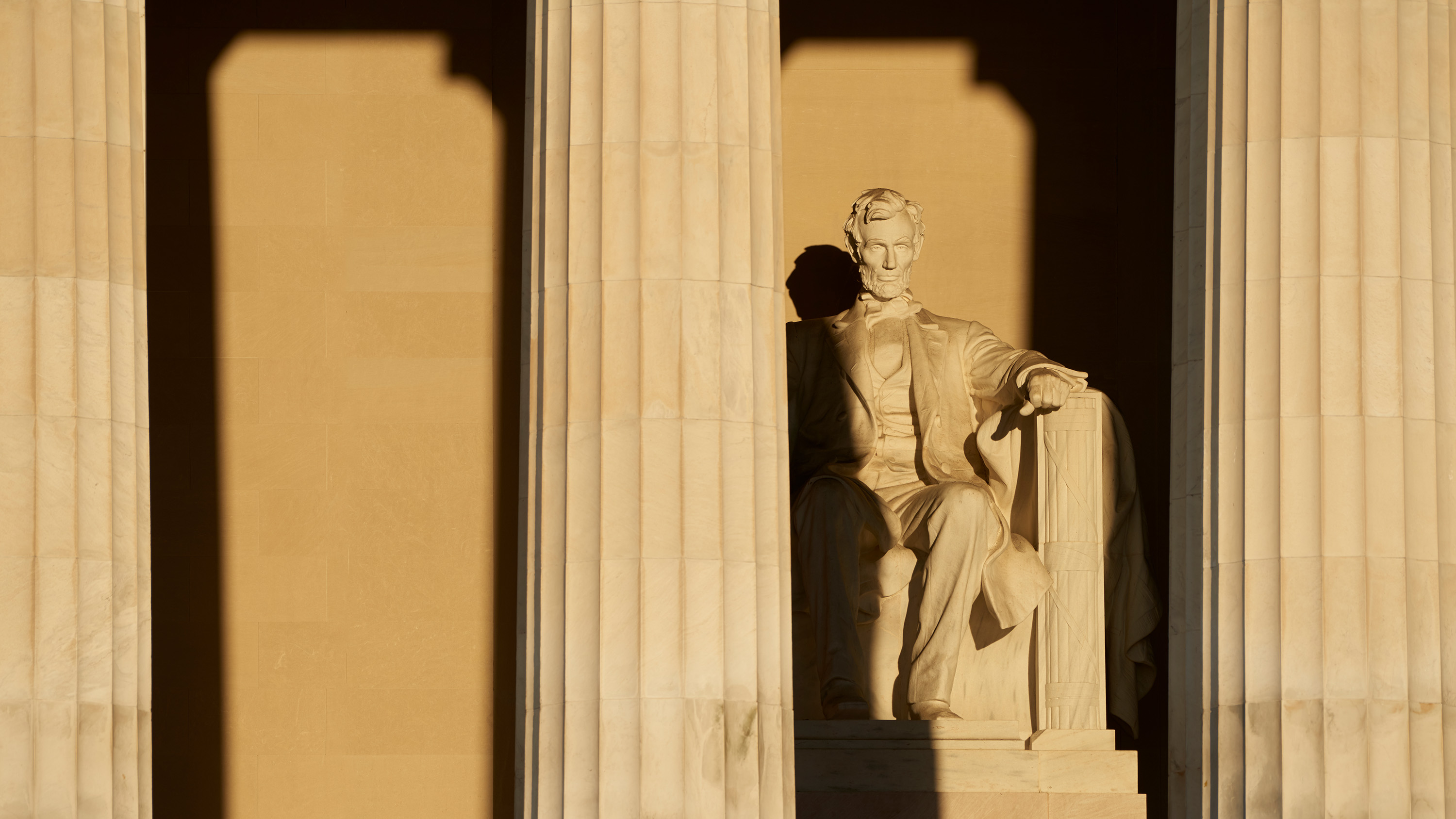
Physically, the Lincoln Memorial in Washington sits opposite Arlington National Cemetery and acts as a gateway to the hallowed grounds. You can visit at any point, day or night, and feel in Lincoln’s presence a call to remember the courage and selflessness of those who rest across the Potomac. It is Lincoln’s words whose weight we feel this day: “the last full measure of devotion.”
Carved in stone in the south wall of the memorial and etched forever in the hearts of all who have worn the cloth of our nation, these words come from the Gettysburg Address. Lincoln was in Gettysburg simply to dedicate a new cemetery and was not the main speaker at the event. Yet in just three minutes, he reframed the Civil War and America’s national purpose and offered a lasting meditation on the meaning of sacrifice.
For Lincoln, there were two dimensions to sacrifice. The first was the magnitude of loss, which, at Gettysburg, included death: “those who here gave their lives.” But it was not just the depth of hardship that characterized sacrifice. What mattered even more was its purpose, and the loss at Gettysburg came in service to a greater good. This is why Lincoln spoke of “devotion,” a word that conveys duty, faithfulness, and subservience.
The Union soldiers gave their lives so America could experience a “new birth of freedom.” As historian Garry Wills notes in his Lincoln at Gettysburg: The Words That Remade America, prior to this speech, it was common to refer to the United States in the plural, as in “these United States.” But after Lincoln’s remarks, America “became singular.” Lincoln might have made this new national identity possible with his rhetoric, but it was forged through the sacrifices of the fallen.
Though steeped in religious rhetoric, the Gettysburg Address is a secular hymn. Lincoln’s call is for patriotism, not faith, a distinction important to name at a time when our polarized national discourse often conflates the two.
Yet when I consider what “the last full measure of devotion” means, it brings to mind Paul’s letter to the Philippians, where he says, “For it has been granted to you that for the sake of Christ you should not only believe in him but also suffer for his sake” (Phil. 1:29, ESV throughout). For Christians, our understanding of sacrifice always begins with Christ.
Few people have articulated this point as powerfully as Dietrich Bonhoeffer did in his book The Cost of Discipleship. A pastor and theologian who resisted and was killed by the Nazis during World War II, Bonhoeffer put it simply: “When Christ calls a man, he bids him come and die.”
The call to Christ is a continuous struggle to make this sacrifice, to die for our sins and those of our brothers and sisters and, in so doing, receive the grace that Bonhoeffer calls our “only true life.”
When as Christians we consider sacrifice, we, too, must attend to both the magnitude and purpose. As Jesus said to the disciples, “If anyone would come after me, let him deny himself and take up his cross and follow me” (Matt. 16:24). We are to both deny ourselves and obey Christ.


The two dimensions are not equal; the essential act is to receive Jesus’ call to follow him. But because we are flawed human beings, it is impossible to follow Christ without suffering hardship.
Attempting to do so leads to what Bonhoeffer called “cheap grace,” where we live according to the “world’s standards” and do not “aspire to live a different life under grace.” Instead, Bonhoeffer said, we must reach for “costly grace,” which he described as “the gospel which must be sought again and again, the gift which must be asked for, the door at which a man must knock.” This is the grace that requires us to leave behind the life we know and “fix our eyes not on the work we do, but on the word with which Jesus calls us to do it.”
Consider what it demands of us to obey Jesus when he says, “Love your enemies, do good to those who hate you, bless those who curse you, pray for those who abuse you” (Luke 6:27–28). How often do we instead meet hate with hate, curse with curse, and abuse with abuse rather than suffer the attack and come back with love? More difficult still may be the temporal pain required to relinquish our ego, desire for control, and yearning for acceptance and praise from this world.
At a time when the concept of sacrifice feels so absent from our public discourse, it’s tempting to fuse Lincoln and Bonhoeffer together and emphasize a common appeal to serve a greater good. Yet we must acknowledge the profound difference between their messages.
Lincoln at Gettysburg speaks to us as Americans about America. Bonhoeffer speaks to us as Christians about Christ’s call to discipleship, something that transcends all other relationships and roles. In his words, Christ’s “followers have no more immediate realities of their own, not in their family relationships nor in the ties with their nation.” When we recognize the first-order implications of this distinction, we can appreciate the unique urgency of these words.
related

Lincoln reminds us of the inherent fragility of the American experiment, a theme pertinent at a time when Americans’ confidence about the future is at a two-decade low. Yet in contrast to the dominant narratives in politics today, where we hear different versions of what our political sides can extract from the nation, Lincoln says the only path forward is sacrifice. In times of trial, our country depends on our willingness to subordinate our individual wants and give—potentially, even if unlikely—the last full measure of earthly presence to the nation. Memorial Day is an appropriate moment to ask ourselves how well we are honoring his appeal in our relationships with other Americans.
At the same time, the only way as Christians that we can strive for a more service-oriented relationship with the nation is to first center our relationship with Christ, albeit again through sacrifice. As Bonhoeffer writes, Jesus must “come between us and the world.”
This is a timeless truth with new relevance as we experience a surge of interest in faith among young Americans. We can debate the extent to which vibes are running ahead of hard data confirming an increase in religiosity, but there’s little doubt that religion is receiving more attention in mass culture than it has in decades. This presents an opportunity to visit anew how we approach our faith.
Rabbi Jonathan Sacks wrote in The Persistence of Faith that for much of recent history, there have been two dominant religious stances in modern societies: “a diffuse liberalism on the one hand, sanctifying secular trends after the event; and a reactive extremism on the other, willing us back into a golden age that neither was nor will be again.” We have a chance to elevate a third option: faith rooted in costly grace.
Costly grace requires a discipleship that is deeply countercultural. It rejects both the identitarianism and materialismso prominent today, and at a moment of peak convenience culture, it demands denial, restraint, and commitment. Yet core to this discipleship is not reactionary judgment but joy and love: “These things I have spoken to you, that my joy may be in you, and that your joy may be full” (John 15:11), Jesus said, and Paul explained that “the one who loves another has fulfilled the law” (Rom. 13:8).

This would not be the first time the words of Lincoln and Bonhoeffer spoke powerfully to the moment. In 1942, as he narrated a national broadcast of Aaron Copland’s Lincoln Portrait, Carl Sandburg cited the Gettysburg Address and reflected on “how closely Lincoln’s words sometimes fit our own war years now.” That same year, Bonhoeffer wrote a letter where he said, “The joy of God goes through the poverty of the manger and the agony of the cross. … It does not deny the anguish, when it is there, but finds God in the midst of it.”
We are not challenged by a world war, but nevertheless, this Memorial Day, we can return to Lincoln and Bonhoeffer to retrieve the calls to sacrifice they issued with such clarity and force. We can, as Americans, take up what Lincoln called “the unfinished work” of building a better country together. And as Christians, we can heed Bonhoeffer’s call to “stand in the path of true discipleship” and bear witness to a living Christ who gave his life so we could receive eternal salvation.
Dan Vallone is an Army veteran and serves as the senior director for strategic initiatives at the Carnegie Corporation of New York. The views expressed in this piece are his own.
The post The Last Full Measure of Devotion appeared first on Christianity Today.