
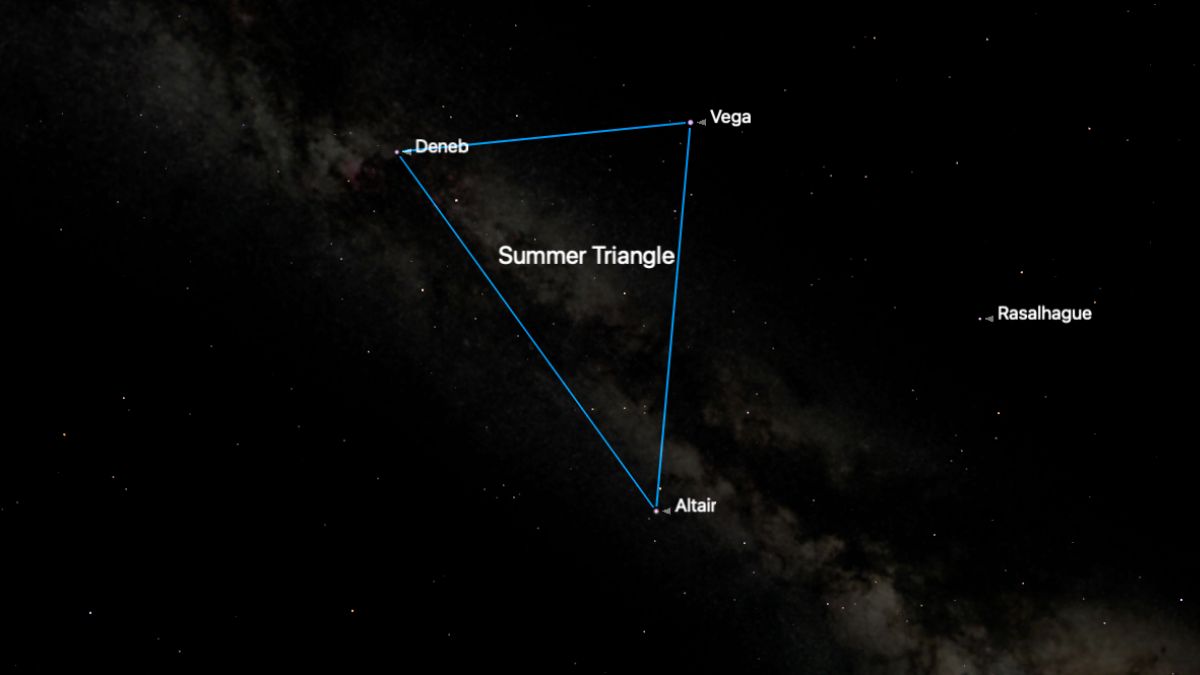
There is a particular moment every July when the night sky makes perfect sense to me. Every time I step outside at night, I instinctively look overhead for the Summer Triangle. Not because it’s the most spectacular sight in the sky. In fact, the vast asterism is almost suspiciously simple: three bright stars, large enough to cut through twilight and light pollution without much effort.
Experienced stargazers quietly depend on the Summer Triangle more than we admit. People imagine astronomy involves memorizing the entire sky at once, knowing exactly where each star is and what it’s called. Everyone navigates differently, but we all rely on familiar anchor points because the night sky changes quickly with the seasons.
The Summer Triangle is one of the best anchors because it appears exactly when the northern sky can otherwise feel vague and washed out during late twilight. Once those three stars appear, I immediately know where everything else is. The Milky Way becomes easier to trace. The darker regions of the sky reveal themselves. Constellations stop looking random. Suddenly, I know where the Perseids will emerge from later in the night and where to point binoculars to find summer’s dense star fields without even thinking about it.
The Summer Triangle also teaches you how to see the night sky. To the untrained eye, the night sky appears as a flat backdrop of stars — hence the “blanket of stars” saying. Every time I hear that cliche, I wince. There is no blanket! The night sky has incredible depth, and there’s nowhere better to learn how to appreciate that than when gazing at the Summer Triangle.
Take Altair, the lowest star. It’s relatively nearby at about 17 light-years away. It shines brightly largely because it is close to us. Vega lies slightly farther away at roughly 25 light-years, but it is intrinsically far more luminous. It once served as Earth’s North Star thousands of years ago and, thanks to our planet’s slow axial wobble, will become the North Star again many millennia from now. So far, so local — we’re in the sun‘s backyard with these two stars. The light from both of them began its journey to us this century.
Then there’s Deneb. Deneb is so distant — roughly 2,600 light-years away — that the fact it appears this bright at all becomes genuinely difficult to process. Its light began traveling toward Earth while the Roman Empire was still in existence. The only reason it remains prominent in our sky is that Deneb is an enormously luminous supergiant radiating tens of thousands of times more energy than the sun.
Knowing this about Deneb transforms the Summer Triangle into a three-dimensional shape. Here are three stars that appear neatly connected overhead, but in reality, one is separated by an incomprehensible distance. So next time you look at the Summer Triangle, keep Altair and Vega at the front and push Deneb way, way back. It’s not a triangle anymore — it’s an arrow pointing far into the distance, thousands of light-years away into the starfields of the distant Milky Way.
What’s happening and when to look
This week is the perfect time to reacquaint yourself with the Summer Triangle using just your naked eyes. Around 11 p.m. local time at mid-latitudes of the Northern Hemisphere, look high in the southeast. Vega is usually the first to appear, high and brilliant with a slightly blue-white color. To its lower left sits Deneb. Farther south is Altair. By midnight, the entire Summer Triangle stands high overhead and remains one of the defining features of the northern summer sky through October.
Stretching directly through it is our view into the Orion Arm of the Milky Way — the spiral arm of the galaxy containing the solar system itself — while farther south, the glowing river of starlight continues toward the galactic core near the constellations Sagittarius and Scorpius, low on the horizon. Under dark skies, the Milky Way visibly streams behind Deneb and through Altair like a river of stars.
How and when I’m watching it
Once I start slowly sweeping binoculars through the Summer Triangle, I usually lose all sense of structure and planning. Dense star clouds spill into view everywhere. Dark lanes slice through the Milky Way. Tiny clusters appear almost accidentally. The region between Deneb and Altair may be my favorite casual binocular territory in the entire sky.
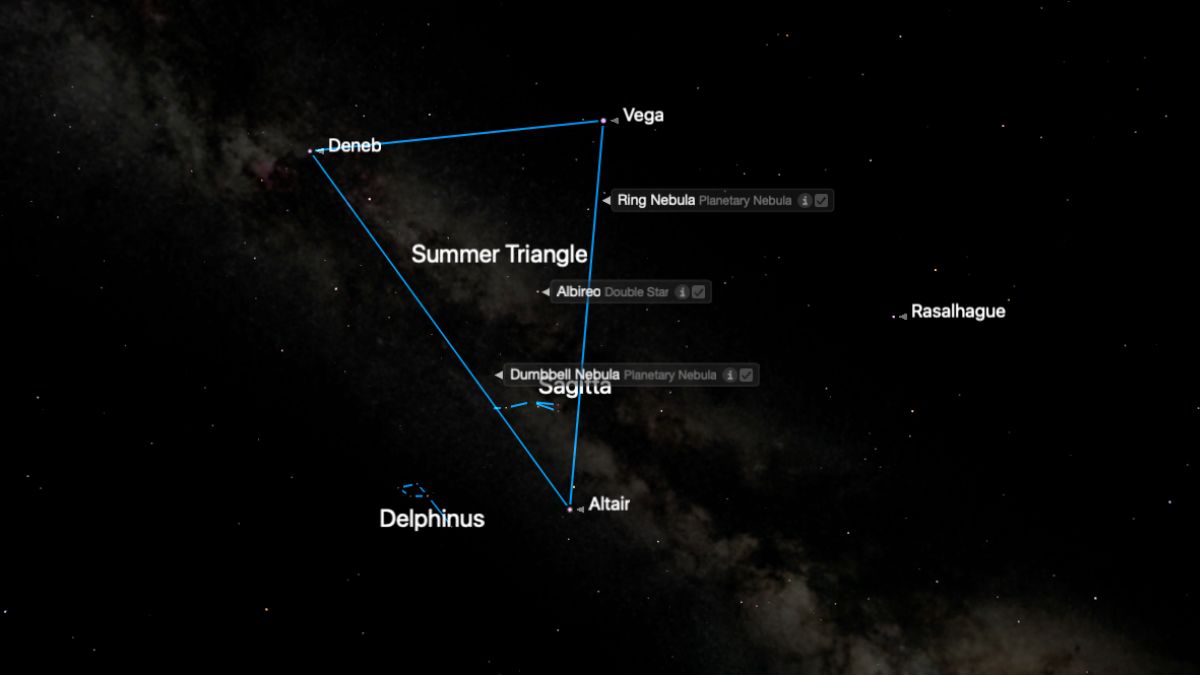
Inside the Summer Triangle itself lies the Cygnus Star Cloud, one of the richest naked-eye sections of the Milky Way visible from northern latitudes. Nearby are the Ring Nebula and the Dumbbell Nebula. The beautiful double star Albireo — one bright yellow and the other a fainter blue — sits at the beak of Cygnus, the Swan.
I’ll also look for a couple of smaller constellations within and around the Summer Triangle — Delphinus, the Dolphin, hovers to the left of Altair, while tiny Sagitta, the Arrow, hangs above Altair, looking improbably compact.
That’s another thing the Summer Triangle taught me — astronomy improves dramatically once you stop hunting objects individually and start exploring regions instead. It’s armchair travel of the grandest kind.
If you’re looking for a telescope or binoculars to observe the night sky, our guides for the best binocular deals and the best telescope deals can help. Our best cameras for astrophotography and best lenses for astrophotography can help you get ready to capture the next stunning skywatching event.
Stargazer’s corner: July 24-31, 2026
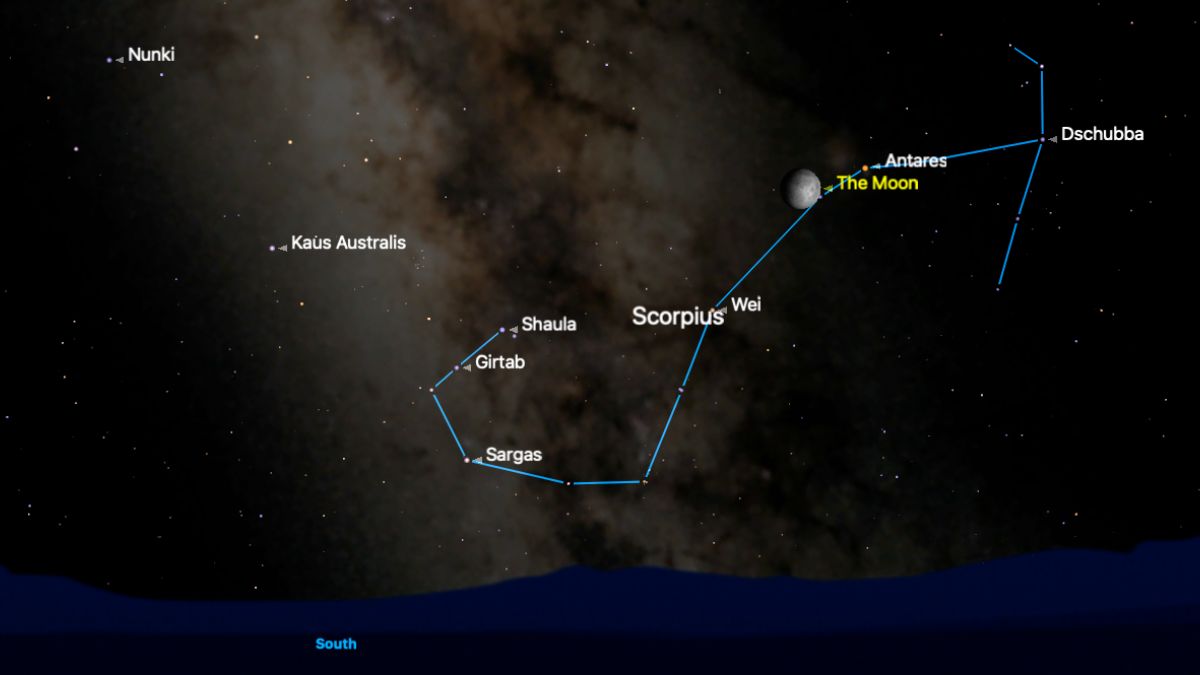
The moon will move beneath the Summer Triangle this week, appearing as an 81%-illuminated waxing gibbous moon as it shines close to supergiant star Antares in the constellation Scorpius, on Friday, July 24. By now, the moon is dominating the night sky, albeit low on the horizon, and on Wednesday, July 29 — the night before the full Buck Moon — the Summer Triangle will appear to point straight at it. Late July also marks the gradual strengthening of the Perseid meteor shower, with occasional early meteors now appearing after midnight. The Southern Delta Aquariids and Alpha Capricornids peak around Thursday-Friday, July 30-31, though the full moon will reduce visibility of fainter meteors considerably.
Constellation of the week: Sagitta
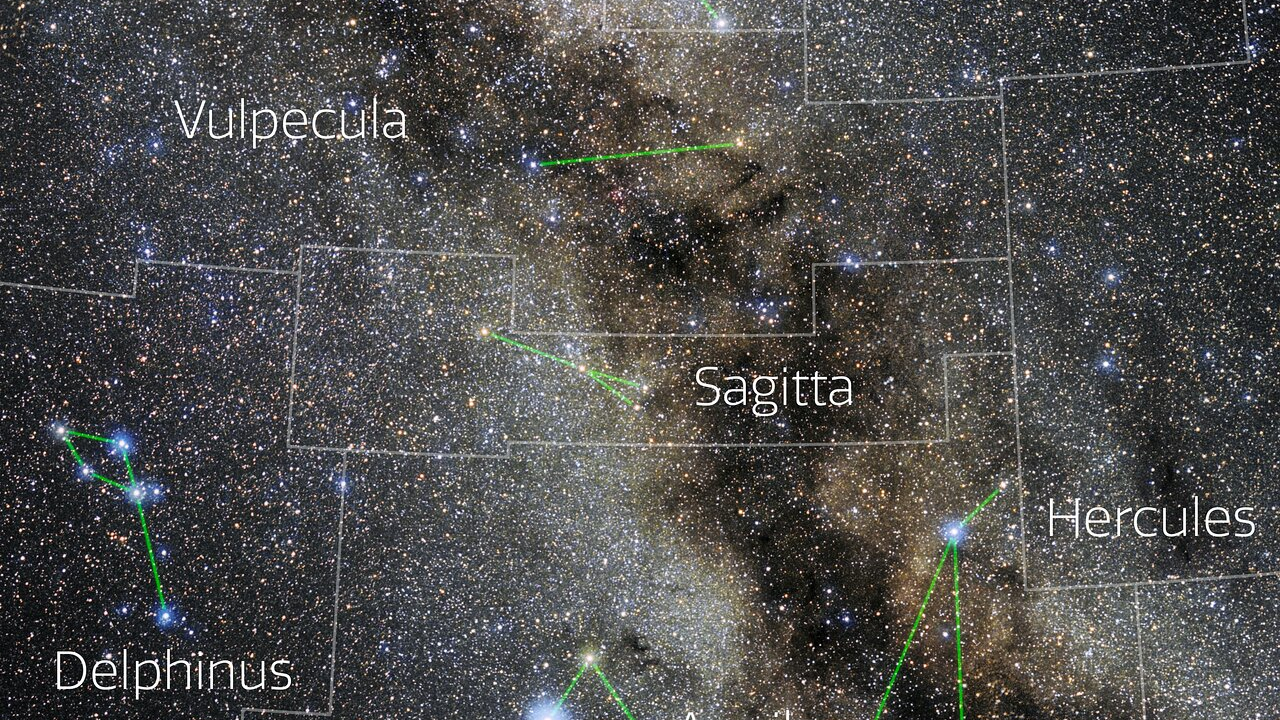
Sagitta, the Arrow, is one of the smallest constellations, but also one of the easiest to recognize once you’ve found it. It appears as a short line of five stars — all between 450-650 light-years distant — with an arrowhead, shaft and two stars as the fletchings. It’s between Cygnus and Aquila.
It’s not bright, but it’s well-defined, and once you spot it, it becomes a reliable reference point. Learning these smaller constellations helps fill in the gaps between the more obvious patterns.