

This piece was adapted from CT’s books newsletter. Subscribe here.
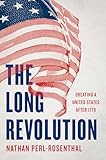
Nathan Perl-Rosenthal, The Long Revolution: Creating a United States After 1776 (Basic Books, 2026)
Is the American Revolution over? As we celebrate the 250th anniversary of the United States this year, public commentators will answer this question differently. For some, the Revolution was an event that happened in the distant past. They will celebrate the 250th with three-cornered hats, battle reenactments, and visits to historic sites. Others may try to “reclaim” the Revolution, as if the beliefs of the founding fathers froze in the 18th century and just need thawing and application in the 21st, as if little has changed since 1776.
Still others see the Revolution as ongoing. This latter view, Nathan Perl-Rosenthal argues in The Long Revolution, is the way most Americans living before the Civil War understood the Revolution.
After examining thousands of July 4 orations delivered between 1777 and 1876, Perl-Rosenthal concludes that the meaning of the Revolution was never “settled and agreed upon” during this era. Independence Day orators worried whether the American republic would survive amid the people’s individualistic impulses, global challenges to American security, and Indigenous threats on the frontier. Abolitionist and Black Independence Day orators used the Revolution to critique slavery. Working-class orators demanded that the ideals of 1776 be applied to them.
It was not until the 1876 centennial that Americans started to see the American Revolution as “over”—a “string of events that had taken place in the distance past.” Perl-Rosenthal suggests this was a mistake. We must continue to work out the implications of the Revolution, perhaps now more than ever.
Yii-Jan Lin, Immigration and Apocalypse: How the Book of Revelation Shaped American Immigration (Yale University Press, 2024)

Immigration and Apocalypse: How the Book of Revelation Shaped American Immigration
Yale University Press
296 pages
While Perl-Rosenthal sees the ideals of the Revolution at the center of the American story, Yii-Jan Lin puts the Book of Revelation, specifically the New Jerusalem described in chapters 21 and 22, at the center. She is interested in the ways Americans, drawing on this New Jerusalem metaphor, thought about immigration.
When I first picked up Immigration and Apocalypse, I was expecting to read about how Americans quoted from Revelation or used specific references to the book as an inspiration for immigration policy. Instead, I found vague references linking the New Jerusalem of Revelation to nativism. Lin calls these links “shared discourse” and “underlying conceptualizations.”
Consequently, Lin claims Americans compared late 19th-century Chinese immigrants to “the great dragon” of Revelation and thought of them in the same way the New Testament apocalyptic book describes the “dogs” and “murderers” (22:15) left outside the gates of the New Jerusalem. She compares the “book of life” in Revelation 20:12 to what she describes as the “Book of White Life” (her own literary invention) that prevents immigrants from entering the United States. Lin compares the Israelites’ building of the walls of Jerusalem following the Babylonian and Persian exile to Donald Trump’s wall on the Southern border.
This is an interesting intellectual exercise, but rarely do Lin’s historical subjects make the connections to the Book of Revelation that she makes in her text. For evangelicals and others who want to interpret Revelation based on its historical context, this book will be frustrating. The same is true for those who want to understand how opponents of immigration in American history employed the Bible to make their arguments and policy decisions.
Richard Rodriguez, Hunger of Memory: The Education of Richard Rodriguez (David R. Godine, 1982)

Yii-Jan Lin paints the United States and its immigration policy in dark terms. She tells a story about how the government kept people out. Richard Rodriguez, in his nearly 45-year-old memoir, Hunger of Memory, writes about America as a land of opportunity and about the heavy psychological cost the American dream has on the children of immigrants. Rodriguez’s views on affirmative action, identity politics, and especially the power of education are just as relevant today as they were in 1982.
What happens when a “scholarship boy” like Rodriguez pursues learning as a means of assimilation to an American way of life? What happens when the son of working-class immigrants “makes it” by embracing a life of education and achieving middle-class status? The results are mixed. This is a book about the yearning for what is lost when an educated man can no longer explain his life of education and ideas to his parents. Yet Rodriguez would not have it any other way. By learning to speak English, studying Renaissance literature, rejecting the incentives that come with being a “minority student,” and embracing a public life over the private world of his childhood home, Rodriguez becomes a man, a citizen, and an American. His journey comes with pain, suffering, and “hunger of memory,” but it is a journey worth taking.
John Fea is a visiting fellow in history at the Lumen Center in Madison, Wisconsin.
The post Revolution, Revelation, and the American Dream appeared first on Christianity Today.