
VIGO, SPAIN — As the train was leaving the station in western Spain, Luisa Andrade saw a man in the aisle with a confused look. She stood up.
Using some kind of sixth cultural sense, she picked him out as a Venezuelan, like her. First, she showed the stranger his seat. Then she got acquainted — hopefully to invite him to worship.
She couldn’t help showing kindness or sharing her faith. Luisa, 73, and her husband Pedro, 72, planted churches for four decades in Venezuela. Now they’ve “crossed the pond,” as Spaniards say, to reach people for Christ on a new continent.
And they can spot fellow Latin American immigrants — more than 4 million people now in Spain were born in Latin America — a mile away.
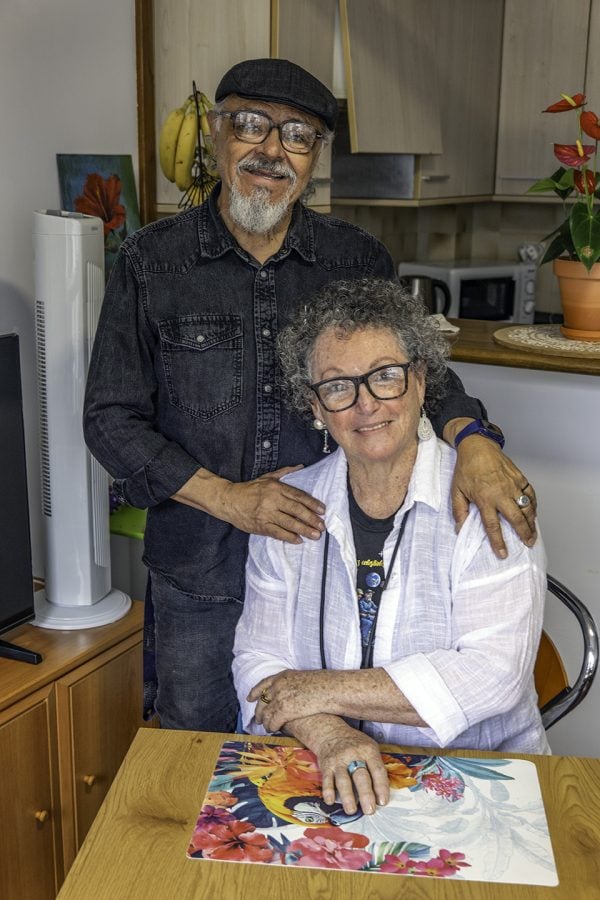
Pedro and Luisa Andrade in Vigo, Spain.
The couple left South America late last year to take their church-planting skills to a new continent. Pedro counted up 500 people he had baptized as he thought back to the places he’d preached. The couple themselves planted 13 congregations in Venezuela and collaborated in other evangelistic efforts there and on the nearby island of Aruba.
Venezuela has experienced political and economic upheaval for more than two decades, including the forcible removal of Venezuelan president Nicolás Maduro by the U.S. in January 2026. Recently, the nation suffered two powerful earthquakes killing more than 5,500 people.
But the Andrades didn’t leave the South American nation just because of conditions at home, they said.
“When we came here, it was truly from a desire to establish a work,” Pedro explained. The couple wrapped up their work in Falcón state on the northern coast of Venezuela and began searching for another place to spread the Gospel.
The U.S. crossed their mind, or another Latin American nation, or even Mérida, Venezuela, where they had worked before.
Then came the chance for a short vacation in Spain to visit relatives.
‘A culture they know’
Luisa’s brother has lived about 25 years in Osebe, Galicia, near Santiago de Compostela, the endpoint of the Camino de Santiago, or Way of St. James, a popular pilgrimage route across northern Spain. Osebe is about 50 miles north of Vigo.
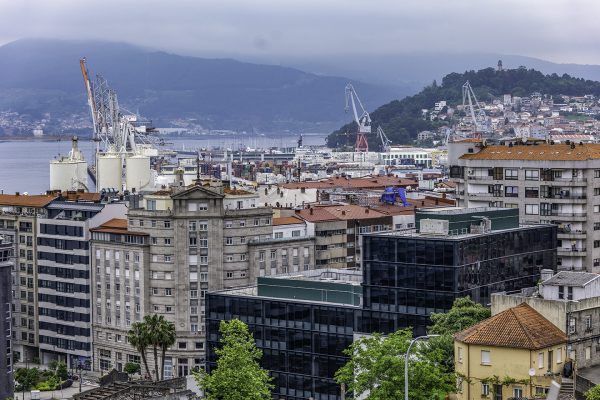
Vigo, Spain.
Before the trip, the Andrades learned from their younger son, Aaron — also a preacher in Venezuela — that Rut Morillo, a woman the couple brought to Christ years before in the Venezuelan city of Maracay, was living in Vigo. Pedro baptized her when she was 12.
Luisa messaged Morillo on Facebook. Morillo moved to Galicia 20 years ago and works as an importer of Venezuelan cacao. She had struggled to find a Church of Christ.
Reestablishing contact with Morillo struck an emotional chord with the Andrades. Pedro fell in love with Vigo.
“She was like the trigger for us to come to establish a work,” Pedro said.
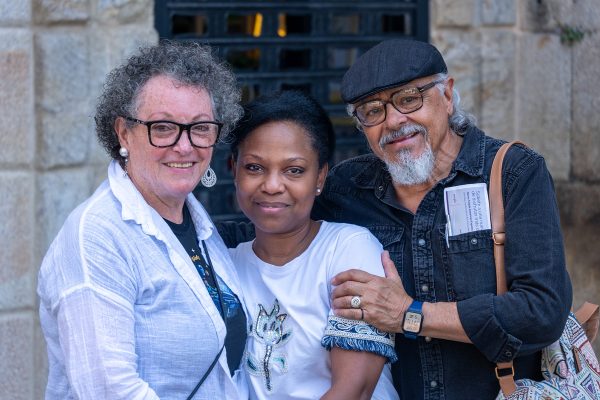
Pedro and Luisa Andrade in Vigo, Spain.
The Andrades presented their vision for working in Galicia to the New Hope Church of Christ in Edmond, Okla., which had long supported their work in Venezuela.
Paul Ferrell, the New Hope Mission Team’s liaison for the Andrades, said that the committee had been concerned about Pedro and Luisa.
“We were very behind them being somewhere besides Venezuela because of the hardships there,” Ferrell said.
“They really saw what could be,” said fellow missions team member Alan Phillips, who also serves as stewardship officer for The Christian Chronicle. For Phillips, the Andrades’ longing to connect with Latin American immigrants in Spain made sense.
“It’s more natural, probably, for them to have outreach within the culture they know,” he said.
From conquistadors to immigrants
In the 15th and 16th centuries, Spaniards crossed the ocean to conquer, extract resources and colonize.
In the 19th century, many Spaniards once again left Europe, this time as immigrants in search of work in places such as Cuba and Argentina.
Later the pattern reversed again, with Latin American immigrants seeking economic opportunities in a now thriving Spain.
According to the Spanish government, Latin American immigrants represent 60 percent of the nation’s foreign-born population.
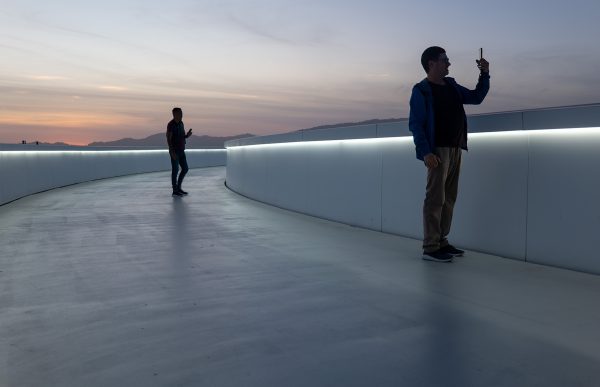
Vigo, Spain.
Venezuelans form the second largest group of Latin Americans in Spain, with Colombia providing the biggest population and Ecuador the third largest. Almost 600,000 Venezuelans called Spain home at the start of 2024.
Pedro’s own observations square with the statistics. “Venezuelans live here, lots of them,” he said, adding Colombians, Peruvians, Guatemalans and others to the list of Latin Americans he’s encountered in Galicia.
Pedro has a plan, one that puts to use the Catholic Church’s parish system that divides the city into zones surrounding a parish church. A map in Pedro’s office highlights an urban core of 30 Vigo parishes.
The Andrades are focusing on the central part of that core. They dream of a congregation in the heart of the city that will serve as a beachhead from which to fan out.
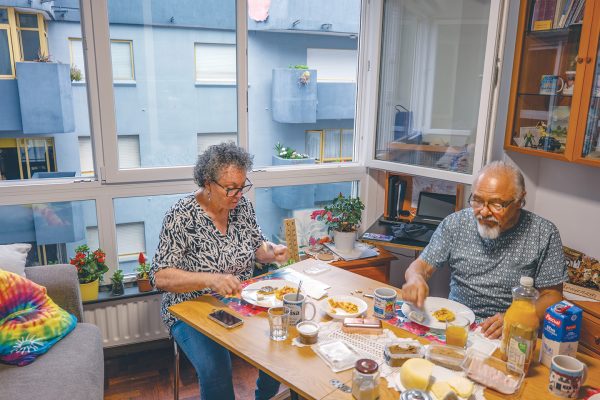
Venezuelan church planters Luisa and Pedro Andrade share a meal at their apartment in Vigo, Spain.
The couple arrived in Vigo in January. The first real estate office they visited showed them a nearby apartment that had just entered the market. It’s tiny, about 215 square feet, but close to the train and bus stations. The Andrades saw the quick, centrally located and newly available rental as providential.
After housing, the Andrades found a space in a commercial building to hold services. “On Saturday afternoon, nobody’s there. On Sundays, it’s ours alone,” Pedro said.
It was affordable, near the heart of the city, but unfurnished.
Pedro saw God at work again.
First steps … and seats
The budget was tight. “We have to buy something, but … we can’t buy anything new” Pedro told Luisa. They prayed, then set off on foot for a resale shop run by an evangelical Christian organization.
The missionaries bargained for a desk and four unmatched chairs, all the store had that day.
When the delivery truck arrived, the Andrades met another employee, one who had been in Venezuela. They got acquainted. He was able to offer 14 chairs. They were set for worship.
“Why doubt it?” Pedro said. “This is from God.”
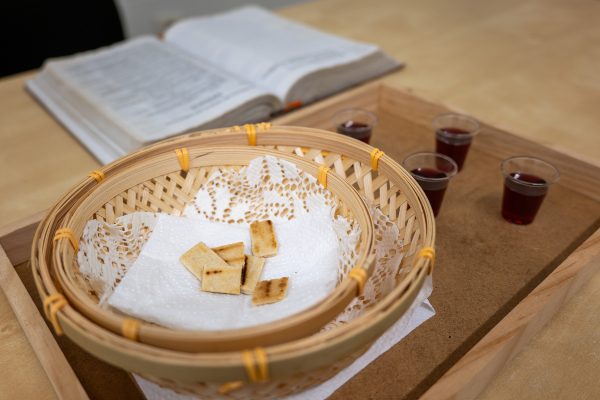
Communion in Vigo, Spain.
Morillo, the woman who decades after Pedro baptized her would lure the couple to Spain, spoke of the influence the Andrades had on her life.
Now living in Redondela, Galicia, about 10 miles northeast of Vigo, Morillo imports Venezuelan cacao.
She recalled a request a few years back to use her cacao containers for a smuggling operation.
“I was alone with my daughter at that time,” Morillo said, adding that the payback would have been “very big.”
Her decision about that deal reflected a different one she made long ago.
“The truth is, I didn’t stress out about saying no,” Morillo explained. Becoming a Christian at an early age, she said, “has saved me from many things … in my process of immigrating.
“I’ve had a very clean path,” Morillo added. “Not that I don’t make mistakes. I make a lot, a whole lot.”
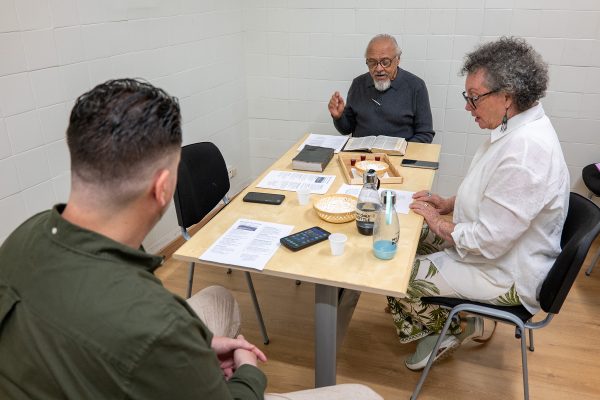
A worship service in Vigo, Spain.
In Vigo, the Andrades made contact with another Latin American immigrant, Mariano García, a psychoanalyst from Argentina.
García had heard of Churches of Christ back in South America from his uncle, a member. The psychoanalyst went to Catholic schools but never firmly embraced the Christian faith.
During a particularly hard time after moving to Spain, his doubts grew. “What good is it doing me to believe in God?” he asked himself. “It doesn’t matter — it’s just a lie so I don’t feel alone.”
García started looking for a Church of Christ. The closest was in A Coruña, a city about 100 miles north of Vigo. The preacher told him about the Andrades.
“When I found out that they were here, it was an enormous joy,” García said. “For me it was a gift, a gift from heaven, because literally what I most needed was to meet with Christians.”
After Pedro and García began studying the Bible, García visited his uncle, now living in Alicante, a city all the way across Spain on the Mediterranean coast.
“I got baptized on the beach,” García said.
Convinced that Christians need community, García hopes that Churches of Christ flourish in Galicia.
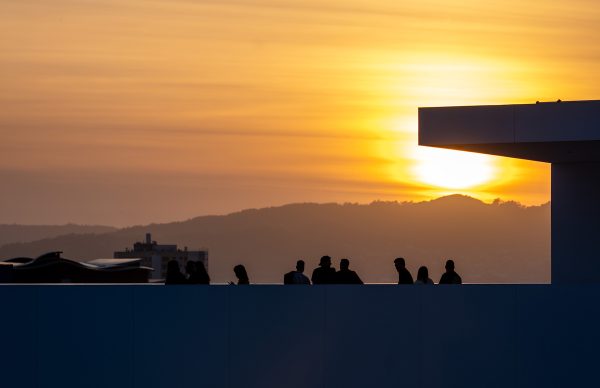
Vigo, Spain.
“Maturity in the faith to me goes hand in hand with a personal relationship, one on one, with God, but that doesn’t exist if it’s not supported by study … with other Christians, by the companionship of other Christians, by sharing the Lord’s Supper with other Christians,” García said. “Your walk is your walk, but on that walk, you can’t do it alone.”
He dreams that the new Vigo church “will not be just any congregation, that it will be a congregation that motivates, pushes, that grows and that makes other congregations grow. And that we’ll know how to use the people God sends us.”
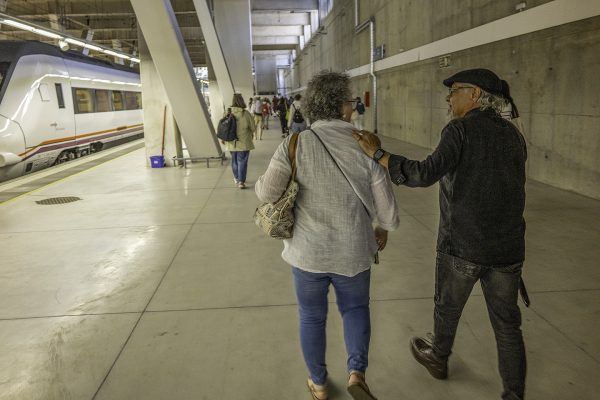
Luisa and Pedro Andrade walk through a train station in Vigo, Spain.