
On Aug. 7, 1980, NASA’s Viking 1 spacecraft ended its epic and historic mission on the Red Planet.
Viking 1 was the first spacecraft to successfully land on Mars. It was one of two Viking missions NASA launched in 1975 to go look for evidence of life on Mars. Each of the Viking missions were composed of an orbiter and a lander. Viking 1’s orbiter took photos of the Martian surface that helped NASA decide where to drop the lander.
After four years of orbiting Mars, the orbiter ran out of attitude-control propellant, so NASA had to shut it down. The lander continued its scientific observations for another three years before it lost contact with NASA in 1983.
Why it mattered
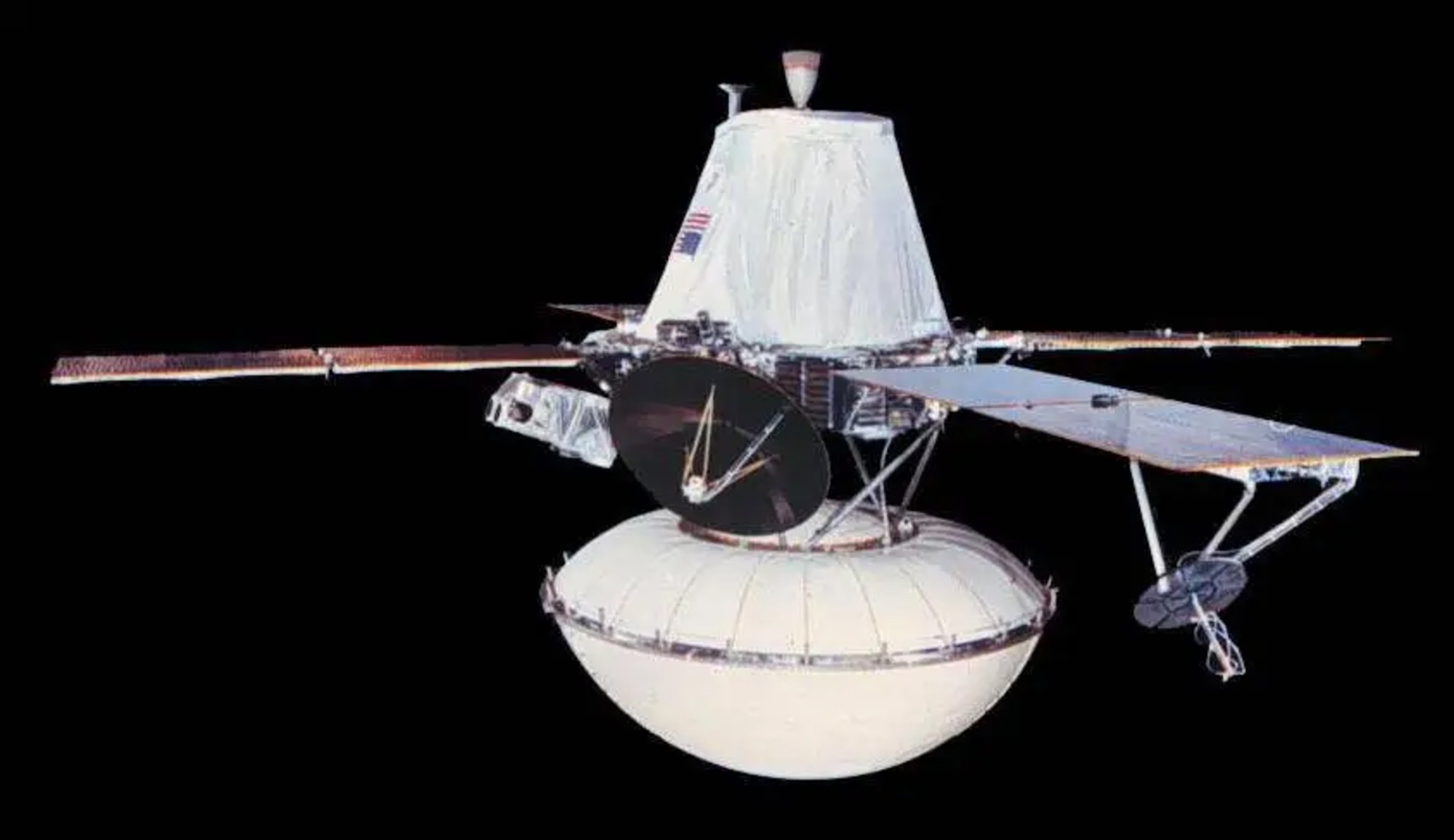
NASA’s Viking 1 mission is most well-known for making the first truly successful landing on Mars, but the mission was more than just a huge lander. Viking 1 actually consisted of two spacecraft, the Viking 1 Lander and the Viking 1 Orbiter. The two spacecraft rode to Mars together, with the lander separating from the orbiter ahead of its landing on the Red Planet.
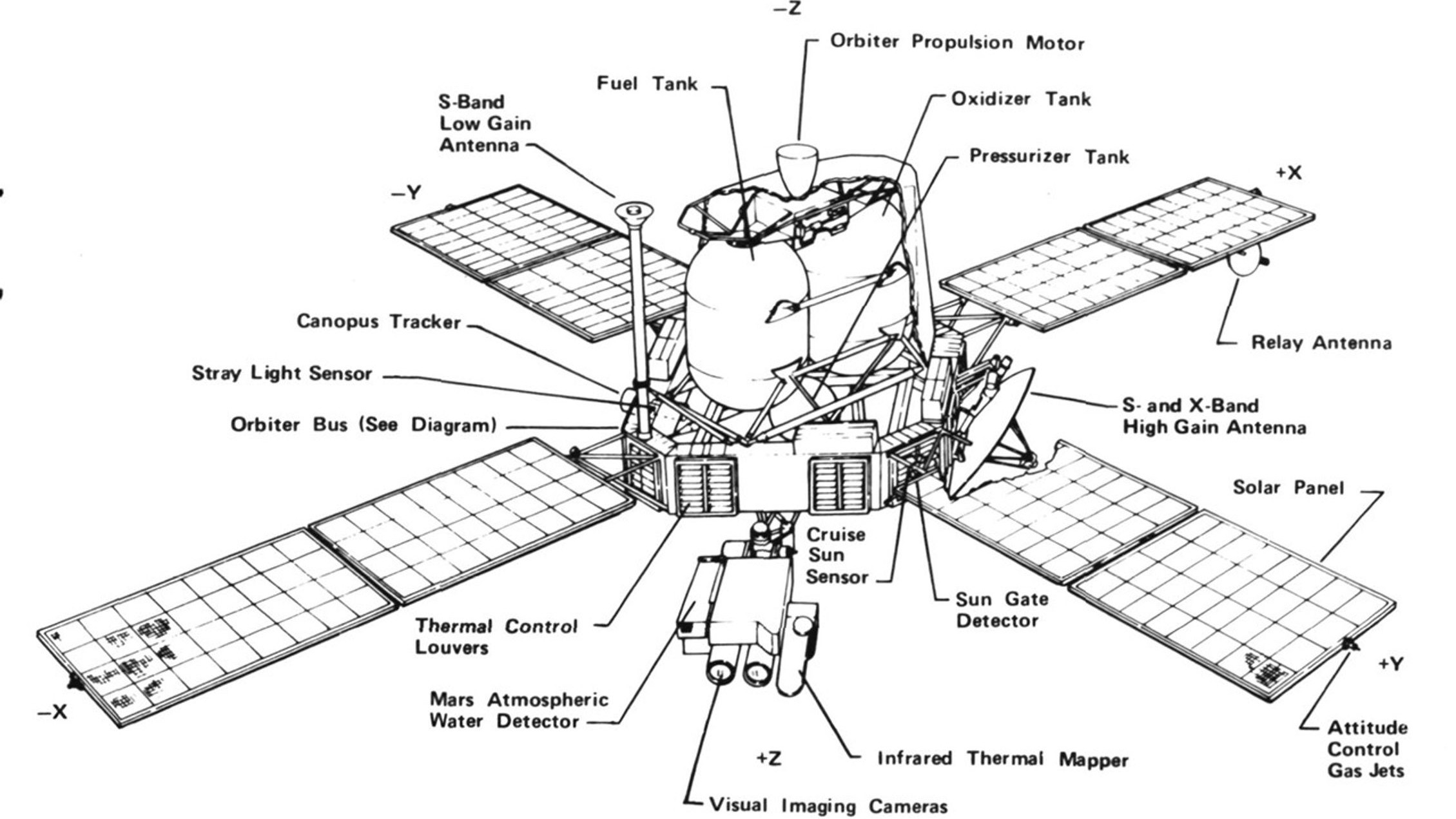
In fact, NASA sent FOUR Viking spacecraft to Mars in total. The Viking 2 mission also carried both a Lander and Orbiter. But the Viking 1 probes were the first of that wave. The two orbiters were based on NASA’s general Mariner 9 spacecraft bus, but more sophisticated. They carried three primary instrument suites: A two-camera imaging system; infrared spectrometer for water vapor mapping; and an infrared radiometer for thermal mapping.
The Viking missions were only planned to last 90 days, but both the lander and orbiter lasted years beyond their design lifetime. The Viking 1 Orbiter studied Mars for four years, orbiting the planet 1,488 times before shutting down on orbit 1,489 on Aug. 7, 1980.
The Viking 1 and Viking 2 Orbiters captured a combined 52,663 high-resolution photos of Mars, mapping about 97% of its surface with a resolution of about 984 feet (300 meters). They also snapped photos of Mars’ two moons, Phobos and Deimos, in great detail, far surpassing what NASA achieved with the Mariner 9 Mars orbiter in 1971.
Want more space history? Check out our full On This Day In Space Story archive and watch our On This Day In Space videos on YouTube.