

Economist, banker, CEO of Alpine Investment, former NNDC executive, and former Chairman of the Nigerian Economic Summit Group and Presidential Aspirant for the ADC, Muhammad Hayatu-Deen has attributed the worsening insecurity in Northern Nigeria to deep-rooted structural challenges, including poverty, weak governance, and gaps in education and social services.
Speaking on the crisis, he said: “There are lots of ungoverned spaces. Secondly, the number of those who are creeping into the poverty bucket has been increasing very, very rapidly. Approximately 105 million Nigerians are living below the poverty line. And this is what will even shock you: in the sense that approximately 90% of those who are poor actually live in the northern part of the country. So only 10 to 12% reside in the south.
“But more importantly, when you look at education, you look at health, you look at other social services, you look at employment numbers, the Northeast and the Northwest are far way behind the North Central and the southern part of Nigeria. So essentially what has happened is that there are children who are not in their homes, who are not in schools, who are not in employment—they become cannon fodder.
“And because of that, unemployed people who are working on the streets find it very, very easy to take on light weapons and fend for themselves. In the process, they actually get completely intoxicated. Human life doesn’t mean anything to them, and they go on a carnage,” he explained.
Hayatu-Deen rejected the idea that Nigeria’s security and development challenges can be attributed to leadership from a single region, saying governance is a broader, multi-level responsibility over time.
“I do not agree with that premise simply because the President is only one man. You’re dealing with the government. Second of all, there is a time element to this.”
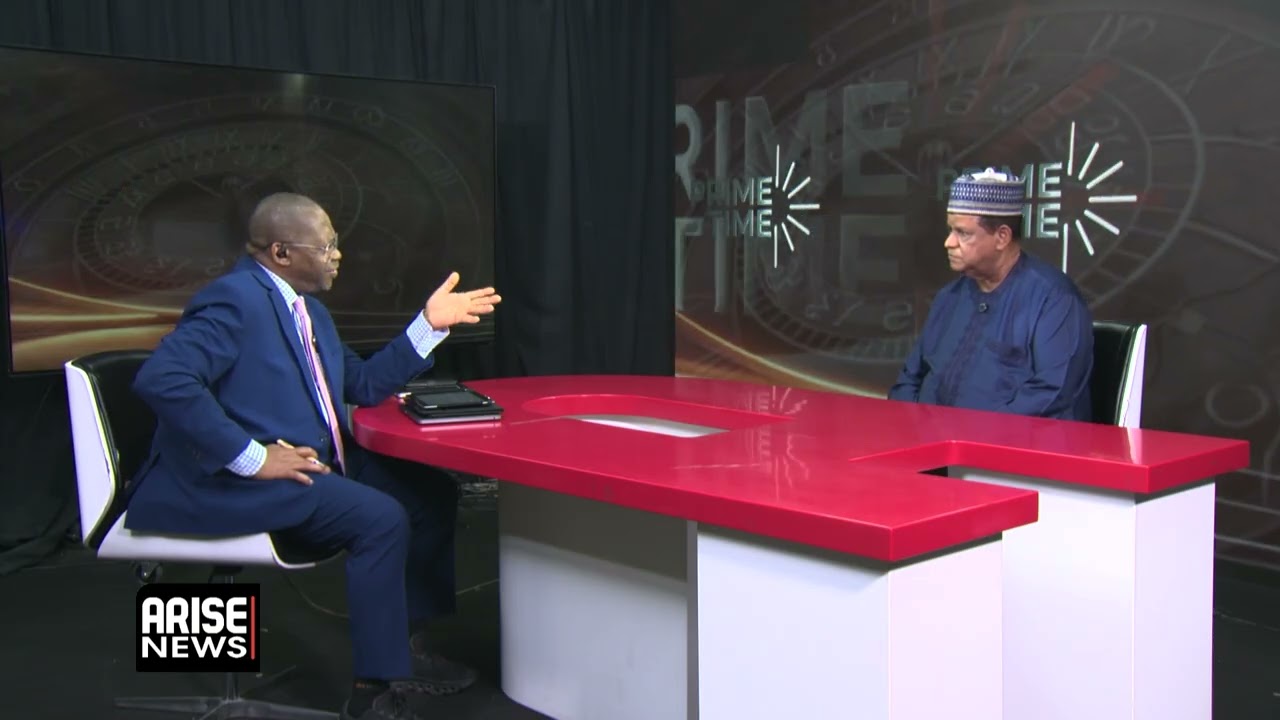
Speaking on why he joined the ADC, Hayatu-Deen said he believes other opposition parties have been weakened by internal crises and external interference, making them less effective. He added that the ADC brings together experienced political actors working to build a more stable platform ahead of future elections.
“The thing is that the current government has virtually snuffed out opposition completely. I’m not an interloper. I went into the PDP, I’m a loyal engaging partner of the PDP. Over the years, within the last two or three years, I’ve seen the slow undoing of the PDP. And what is left is actually virtually a hollow shell as far as I can see. It doesn’t mean it cannot be rebuilt in another time. But for now, NNPP has been devastated. So also has Labour Party. There are all kinds of crisis going on within the parties. And we can see an invisible hand that is actually winging into these conversations and creating a lot of crisis.
“Many of the people in the ADC came from some of these parties. They are respectable politicians who are experienced. Many of them have been governors for two terms. One of them has been a Vice President of this country. People of deep-seated experience,” he explained.
Responding to concerns whether he has the political machinery and grassroots connections to compete for the presidency, the presidential aspirant said his life experiences, education, and professional engagements across Nigeria have given him broad national networks and leadership exposure.
“I’ve been in politics all my life. Let me tell you: the secondary schools I went to, the universities I went to were national in outlook. It was a mini United Nations. So I’ve been able to form relationships with all manner of Nigerians drawn from all of the states of the federation. I’m amply qualified to be President,” he declared.
Adding, Hayatu-Deen said he is not an outsider in Nigerian politics, pointing to decades of experience straddling both public and private sector leadership roles.
“It’s not an outside voice. What I’m bringing is deep-seated experience,” he said.
Speaking on his priorities if elected president, Hayatu-Deen said national security and the economy must be addressed together, arguing that poverty and unemployment are key drivers of insecurity.
“Essentially, I think there are two things that are intertwined. One is the issue of national security. A lot of people make the mistake and tend to deal with it in isolation, but it’s actually related to the economy. It’s the pains in the economy and the ravaging poverty in the land and the lack of empowerment, lack of jobs, that is actually giving rise to this huge tendency towards insecurity.
“So that’s one. Two, in terms of what I would do, I would like to put national security on the same pedestal as the economy, and I would like to do exactly what could have happened or what happened in 1995/1996 when we did the Vision 2010 program. At that time, I would assemble experts and stakeholders from all shades of life, put them in the room as a matter of great urgency in order to deal with these twin problems of the economy and national security as of my very first action in office,” he said.
On whether he relies on ideas alone, Hayatu-Deen said he has built a political base across Nigeria and believes public sentiment reflects demand for leadership with his experience and background.
“I do have a political base and I’ve developed it and nurtured it over time across the length and breadth of this country. And I’ve run a poll, by the way—an international poll and the domestic poll—and the numbers clearly suggest that Nigerians are aching very, very badly to see this kind of face with a kind of background that can actually serve the long-term interest of this country.”
Driven by what he described as a lifelong passion for Nigeria’s development, Hayatu-Deen said his ambition is rooted in a deep concern for the country’s economic and social challenges, which he believes require urgent intervention.
“So I have a consuming passion for this country. It’s been burning inside me from childhood. I’m a student of development economics and therefore what happens to this economy and the society at large is very, very important to me. And I have no other reason other than to actually rescue my country from the abuse. I’m a worrier by nature—in terms of worrying,” he shared.
He also reaffirmed his commitment to the ADC, saying he would respect and abide by whatever decision the party leadership makes regarding its presidential candidate, while expressing confidence in its internal processes.
“I respect the party leadership tremendously. But for this party leadership in particular, I would not have joined, to be honest with you. I trust them totally and completely to do the right thing. I’m willing to abide by any decision that the party leadership takes in terms of who they want to be President,” Hayatu-Deen maintained.
He also dismissed concerns that he is focused on personal ambition.
“It’s not about me,” he stated.
Citing his record and commitment to public service, he said he would restore public trust by running what he described as a disciplined and effective government, if elected president.
“First of all, I’ll run a bloody good government. Second, there is nothing in my antecedents or my record that will even remotely suggest that I do not take my assignment and my duties as a citizen and a compatriot seriously. I take it very, very seriously,” he stressed.
He added that political leadership must be rooted in accountability and the delivery of campaign promises, warning that Nigeria risks further instability if leaders fail to act responsibly.
“You can negotiate around the margins, but there are certain core principles that are actually very, very fundamental to you and the Nigerian people, because you are going to run on a platform which you will sell to Nigerian people and you had better keep that promise. This country is heading for trouble unless politicians actually pull up their socks and do what is right by the people. I’m beginning to see signs of a class struggle and we’re running out of oxygen,” he warned.
Favour Odima