


They didn’t get the message. They won’t bow down.
About 2,600 years ago, King Nebuchadnezzar erected a 90-foot-tall image of gold on the plains of Babylon. He assembled his empire’s leaders, and a herald announced, “When you hear the sound of the horn, pipe, lyre, trigon, harp, bagpipe, and every kind of music, you are to fall down and worship the golden image.” The alternative: “Be cast into a burning fiery furnace” (Dan. 3:5–6, ESV).
For decades now in university science classrooms, the furnace hasn’t been fiery, and most of the music has come from marching bands on football fields. But the message to conform to Darwinistic materialism has seemed unstoppable. Rice University chemistry professor James Tour says Darwin devotees preach it to their students, who pass it along to their students in turn. Nobody “wakes up in the morning thinking, I’m going to deceive people today,” he told me. “You grow up with it. The professor acts like he knows it, and you just nod along.”
Vern Poythress, who celebrated his 80th birthday on March 26, understands the milieu. He was valedictorian of his class at the California Institute of Technology, an experience he says was “invaluable in understanding the ‘This Is How We Do Science’ atmosphere. It’s not just words. It’s a whole community experience—and God never enters into the picture.”
Encouraged by his parents, Poythress was a math prizewinner, but he said, “I became more and more interested in the Bible and in theology. Midway through grad school, I realized all my spare time was going into Bible and theology. And I stood back and asked the Lord, ‘What does that say? Where is my heart?’ I decided, yeah, I really want to study this. My parents had to adjust.”
Poythress has a PhD in mathematics from Harvard and is the author of 26 books, including Redeeming Mathematics and Redeeming Science. His knowledge is important because “population genetics” is the big push among Darwinists today, now that the search for a “missing link” (or “transitional link”) between apes and humans has faltered—more about that later. The mainstream belief has become that humans have more genetic variation than an original Adam and Eve could have produced.
Poythress told me about one article making that claim. “I looked up the footnotes, and the footnotes were these technical articles on models of population genetics. But I could read them because of my math background. I saw that built into the models were assumptions about the size of population needed, but those were assumptions. It’s all hypothetical. Evangelicals who are not comfortable with the science get intimidated.”
Married for 43 years, Poythress has taught at Westminster Theological Seminary for 50. He talked about the pressure to conform: “I’m grateful to the Lord for my background because it means that I’m not swept away.”
He also rests in the understanding that God acted supernaturally in creation and resurrection, “first Adam and Second Adam.” Adam and Eve, he notes, could have had normal DNA but sperm and eggs “with extra diversity. Could God do that? Of course he could. Did he do it? We don’t know. But I’m not willing to say I know he didn’t do it.” Much that seems strange could happen “when you’ve got a unique event. And God does what he pleases.”
recommended
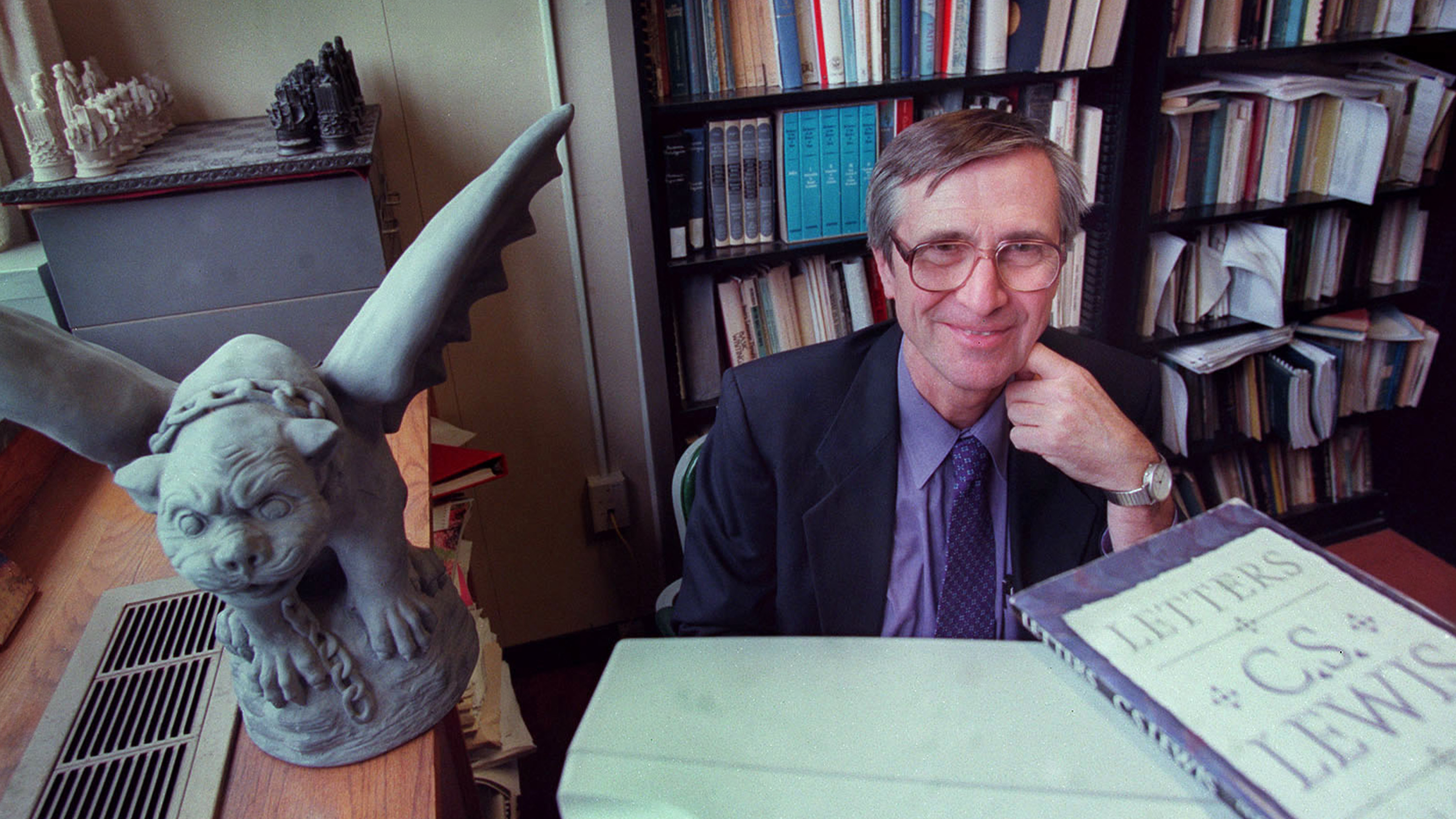
And so does Poythress, not on theological essentials but on cultural standards. During our interview, he was in his home office in Glenside, Pennsylvania, but he wore a tie. I asked why. He responded, “Oh, I see. This looks strange to you. Most of the faculty go without ties nowadays, but this is a professional meeting, so I’m going to dress professionally. That’s the way I think. The culture is going every which way, but I’m going to be who I am.”
Another professor who stands by his standards is Tour at Rice University. Tour, 66, has taught chemistry at the leading research university since 1999, with respect from the administration because he’s pulled in millions in grant dollars for his pathbreaking work in nanotechnology and materials science. “I bring in more money to the university than anybody else,” he said. That’s hard to verify externally since Rice does not publicize the data, but the university’s Office of Research, in a glowing article headlined “The Relentless Genius of James Tour,” was
dazzled by the range of fields Tour touches: cancer therapy, chemical cleanup, sustainable manufacturing, advanced nanotechnologies like computer memories and ultrastrong materials. … Tour doesn’t just publish and move on. He actively pushes his discoveries toward commercialization: More than a dozen startups and partnerships have spun out from his research.
Tour also makes lists like “The World’s Most Influential Scientific Minds” and “The 50 Most Influential Scientists in the World Today.” His career h-index score of 182 (measuring how often people cite a researcher’s work) is like hitting 500 home runs in Major League Baseball—which would mean entry into the Hall of Fame.
And yet Tour gets eye rolls and worse from many other scientists and is not one of the 2,600-plus members of the National Academy of Sciences. Current members would have to vote him in, but Tour has shown that an emperor of mainstream biology—the idea that life emerged purely through natural causes—has no clothes.
Tour is famous, or infamous, for telling defenders of blind evolution, “Show me the chemistry!” And, he says, they can’t.
Based on his record, Tour knows chemistry as well or better than any other human, so when he says, “I don’t understand the chemical basis behind evolution,” scientists in other fields should listen. “The few people who really know a lot don’t want to talk to people like me because I ask them questions,” he says—questions that make “their arguments wither.” Those questions include: How do simple organic molecules spontaneously assemble into complex, functional components in the right place and purity? What are the specific chemical reactions that transform one complex biological system into another?
My junior high school teacher in 1964 taught me about the 1952 Miller-Urey experiment that featured a lightning strike forming some amino acids. The theory about the beginning of life is still pretty much stuck on that speculation, which Tour scoffs at. The chemistry of cells, he explains, is so hugely complicated that it could not be the product of chance. He also says the human brain is so massively different from any animal brain that belief in the one-small-change-at-a-time mantra, no matter how many eons are involved, involves a leap of faith greater than rational people should indulge.
Charles Darwin contended in The Descent of Man (1871), his sequel to On the Origin of Species, that humans are descended from an apelike ancestor that lived millions of years ago. Tour differs: “Humans alone have the capacity for art, music, advanced communication, advanced mathematics, and religious practice. I do not understand the mechanisms needed to change body plans or the mechanisms along the descent pathway. Nobody else understands the mechanisms either. Nobody.”
Real science is based on evidence, and Tour says that since the idea of life originating from nonliving matter has no evidentiary support, Darwinism is faith rather than science. Ironically, that makes Tour, who grew up in a Jewish home and became a Christian in graduate school, the scientific agnostic in the classroom. He teaches what is proven scientifically regarding how life and humans emerged so, he says, “I have no problem telling the young we don’t know. I never say God did this. I just say, ‘Science doesn’t know.’”
Tour did gain election to the National Academy of Engineering in 2024 and was not surprised: He remembers years ago going to “a big engineering meeting. They prayed before they ate. It would never happen in the sciences, never, that these people would pray. The engineers have always been more open. I mean, scientists act as if they understand these things, but they really don’t. I’ve sat with them many times. Many of them have said to me they agree with me, but not to use their name.”
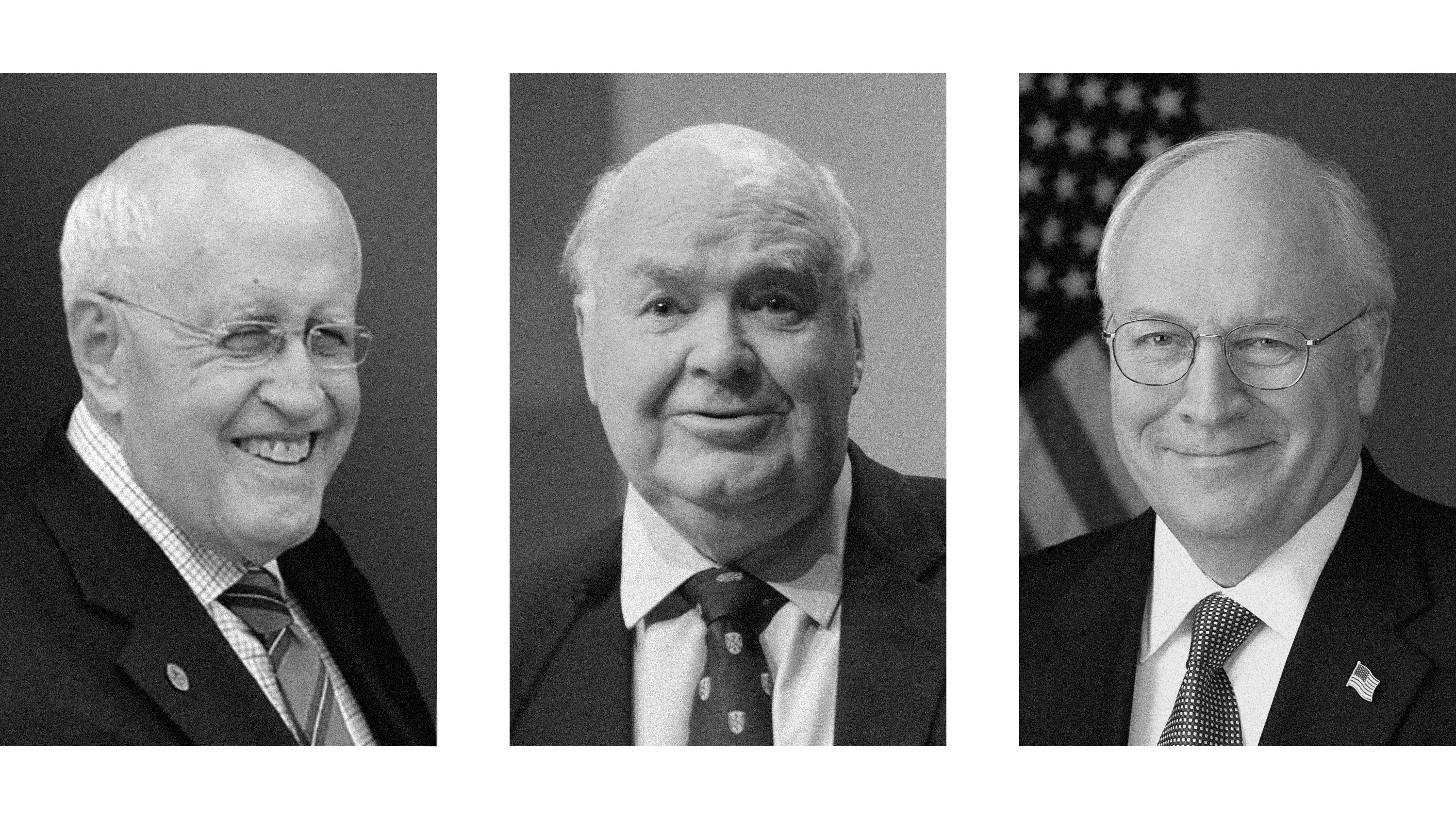
Tour does give some scientists an out: They’re not chemists, so they look at the big picture and not the tiny pictures of cells—“You’re not a chemist; you just nod along.” But he sees change coming: “Just today a student walks up to me and says, ‘I don’t understand how life comes about. Do you have some information I can read?’”
Tour does, and you can read his explanations (and his testimony) at JMTour.com. You can also readily access the enormous abuse heaped on him by Googling “James Tour.” How does Tour stay resilient as he faces frequent attacks? He said he’s willing to challenge the scientific community “because Jesus challenged his community.” He then referred to Luke’s quotation of Jesus: “Whoever is ashamed of me and of my words, of him will the Son of Man be ashamed when he comes in his glory” (Luke 9:36, ESV).
Tour also has the benefit of a 43-year marriage to Shireen, who grew up in a Christian home in Pakistan. “I think the criticism hurts her, but she always encourages me,” he said. “She doesn’t complain about it.” Tour does complain, but the wall of his office has a student-drawn depiction of the fruit of the Spirit.
He recited what it proclaims: “love, joy, peace, patience, kindness, goodness, faithfulness, gentleness, self-control.” Tour clearly depends on those and tries to restrain his sarcasm about Darwin advocates, but he still says, “The vast majority of people who are very confident in evolution know nothing about it.”
Daniel’s history of the flaming furnace has three protagonists—Shadrach, Meshach, and Abednego—so I spoke with a third person who has the background to understand these scientific arguments. Hans Madueme, 50, has since 2012 been a theology professor at Covenant College, an unlikely landing point for a person with a medical degree and three years of residency at the prestigious Mayo Clinic.
That’s particularly true given his heritage: “Both my parents are Nigerian [with] a very traditional way they thought about vocations for their kids. At the top was medicine and then law and engineering and maybe architecture. Anything else was worthless.” Madueme’s dad worked for the United Nations: Madueme, born in Sweden, raised in Austria, and schooled in England, said, “I’ve always been more of an outsider than an insider.”
Madueme entered college at McGill in Montreal and “did all the pagan things that you do.”
During the summer, though, he visited his aunt and her family in Nigeria. “They did family devotions every evening. I had to sit in. It wasn’t anything profound: Read a bit of Scripture, talk about it, maybe sing a song and pray. And for whatever reason, in that context suddenly my eyes were opened.” He returned to McGill and said, “I’m a Christian now.” His friends were shocked “because of all the ways we had hung out, partying and all that.”
Madueme joined the McGill Christian Fellowship. “So now I’m a Christian learning what it is to be a Christian, and I’m a premed student doing a bachelor’s in anatomy.”
He entered medical school at Howard University in Washington, DC, and then completed his internal medicine residency in Rochester, Minnesota.
“Of course, with his eldest son ‘at the world-renowned Mayo,’” Madueme said, his dad “was the proudest Nigerian you could be.” But during his residency, Madueme was using his stipend to feed a growing theological hunger: “All these theology books arriving from Amazon, and I’d rush home from the hospital to unpack another book.” Soon, he said,
My dreams are about preaching, about theology. Being a doctor is a great calling and way to serve the Lord, but I felt pulled in other ways. It was a crisis, because you can’t be a Nigerian at the Mayo Clinic and decide you want to do something else; that’s unheard of. I knew this would be very difficult for my parents. I talked to them, and not surprisingly they were saying, “Why don’t you practice medicine for 10 years? If you still want to go to seminary, you could do it then. Don’t make this rash decision, son.”
But Madueme made his own decision, and now he’s a professor, a church elder, and the author of Defending Sin: A Response to the Challenges of Evolution and the Natural Sciences. His training allows him to analyze critically what others merely accept: “I can look at what the experts are saying while asking the uncomfortable theological questions. When I push back on evolutionary biology, that puts me, at least by some reckonings, in an unsavory place, but I’m happy to let the chips fall where they may.” Madueme has no qualms recognizing the arguments supporting evolution, but like Poythress, he remains unpersuaded because the counter-evidence from Christian theology and the biblical foundations on which it rests are stronger. In the end, God is God.
Did growing up as an outsider and being willing to push back against cultural expectations when necessary prepare Madueme to push back against other pressures? Shadrach, Meshach, and Abednego had the God-given faith to stand for Him and stand up to Nebuchadnezzar, and the experience of their whole lives helped.
My own doctorate is in American studies, not scientific or biblical studies, so I approach both subjects as an amateur. As a journalist, I do notice trends, and it seems that the high point for materialist evolution was the centennial in 1959 of Darwin’s paradigm-shattering work, On the Origin of Species. One year later, the hit movie Inherit the Wind portrayed the evolution debate as a battle of smart versus stupid.
My biology textbooks during the 1960s all showed the “tree of life,” which was Darwin’s prime metaphor in The Descent of Man. I and millions of others learned that our ancestors first moved on all fours then stood up to see over the grass—and then brains became bigger and thumbs became opposable. Brow ridges softened and teeth shrunk. The creatures made tools and mastered fire.
The Beatles in 1967 sang “Lucy in the Sky with Diamonds,” and the 1970s brought fame to some 3-million-year-old bones scattered across the Ethiopian ground. They became part of a put-together four-foot-tall skeleton of Lucy, named after the song. Lucy was a member of Australopithecus, a genus of “hominins,” purported ancestors of humans known as “missing links.” The “I love Lucy” show at many museums is still going. When Tour makes fun of those who see an easy pathway “between the australopithecine brain and modern human brains,” he’s taking aim at exhibits at the American Museum of Natural History and others that show Lucy fossils or models of them.
As late as 2015, Time was still running headlines like “How Lucy the Australopithecus Changed the Way We Understand Human Evolution.”
But even then the bubble was bursting. As Nature articles have acknowledged, much of Lucy’s body (as best we can tell, since only about 40 percent of her bones were found) was “quite ape-like.”
recommended

If she did walk upright, it wasn’t much like humans because she also knuckle-walked like today’s chimps and gorillas and spent a lot of time in trees. A 2016 Science Daily headline noted the results of a Johns Hopkins study: “Human ancestor ‘Lucy’ was a tree climber.”
Overall, the idea that Adam and Eve were special creations of God has new resilience, and Tour’s “Show me the chemistry” challenge resonates more than it might have 20 years ago. Unable to answer well, some Darwinians have turned more to “Show me the math”—but the claim that humans and chimps have 99 percent similarity in DNA has given way to estimates of 84 or 85 percent.
The new analysis, instead of proving Darwin’s “descent of man,” is leading to the descent of percentages. My children 40 or so years ago enjoyed a song lyric “I am not descended of monkeys, / though you may be fooled at first glance.” But the battle over statistics is not child’s play. (Although children enjoy learning that humans and bananas have genes with a 60 percent DNA overlap.)
With the study of bones inconclusive, “population genetics” is the new standby, but Poythress and others have pointed out alternatives to assuming human populations worldwide have so much variety that a human pair in the past 500,000 years could not be responsible for the world’s occupants.
As an epilogue to Poythress’s story, recent research from many Christian biologists and mathematicians shows that modern human genetic diversity does not preclude our species descending from an initial pair.
So clear were their findings that, in 2018, one of the top initial promoters of this argument against Adam and Eve conceded that even a naturalistic history of the human race could accommodate Adam and Eve giving rise to modern human genetic diversity, provided they lived far enough in the past.
So if a Caltech valedictorian turned theologian, a Jewish Christian chemist with more than 1,000 publications, and a Swedish Nigerian with a Mayo Clinic seal of approval walked into a bar—no, a meeting of the National Academy of Sciences—what would happen? They could hold their own.
Marvin Olasky is editor in chief at CT.
The post Men Who Didn’t Get the Message appeared first on Christianity Today.