

Last summer, I called a few dozen people who attend my church to ask whether they would consider becoming members in the fall. A surprisingly large number of new attendees had showed up over the past year, and we wanted them to consider joining.
Many said yes right away, but others had natural questions about whether church membership is biblical, about abuses of power and church hurt, and about why membership even matters. I offered them the same biblical answers I’ve noticed have helped others.
When I have these conversations, I begin by conceding that I don’t think that, back in Ephesus, even if they had a clear plan for discipleship, ol’ pastor Timothy led a six-week membership class. The modern experience of membership classes, interviews, names in bulletins, and a congregation’s recognition on a Sunday morning are all, admittedly, made up. That doesn’t make it bad or wrong. Persecution in the early church had a way of clarifying what now takes most of us a few extra steps. The concept of meaningfully belonging to a local church, however, does have roots in both the Bible and wisdom.
I go on to explain to potential members that the “majority” discussed in 2 Corinthians 2:6 implies the concept of membership. I mention that church discipline in Matthew 18 and 1 Corinthians 5, which discuss the possibility of excommunication, require something like membership: We can’t put outside those who didn’t first inhabit the inside.
I also share that even though Paul had not yet visited the church in Rome, in the final chapter of Romans, he could mention dozens of people by name, indicating an awareness of who belonged. I tell people that Hebrews 13 commands Christians to have people they can call their leaders, just as shepherds should have people they can call their sheep.
When people ask about abuse, I mention our accountability structures, plurality, and other policies to curb misconduct as best we can. I explain how healthy, engaged membership has prevented abuses throughout church history—and has even sustained our own church in harder years. Finally, I encourage Christians who have been hurt in churches to consider that God, in the long run, desires healing in the church, even if it’s in a different congregation from the one that inflicted the pain and even if those outside the church help too.
All these points have been helpful enough. They have given attendees ideas they’ve often not considered before. But none has been as helpful as a new metaphor I’ve started using to capture part of what it means to belong to a local church. To borrow from the medical world, I ask believers to consider this: church membership as an advance directive.
An advance directive, which is similar to a living will, is a formal, legal statement made by a healthy person who tells others how to intervene when he or she becomes less healthy, perhaps critically so. The moments after a serious car accident and in the later stages of Alzheimer’s often create complicated medical decisions not only for the patient but also for the closest friends and family. These decisions get less complex when people have made their wishes clear beforehand.

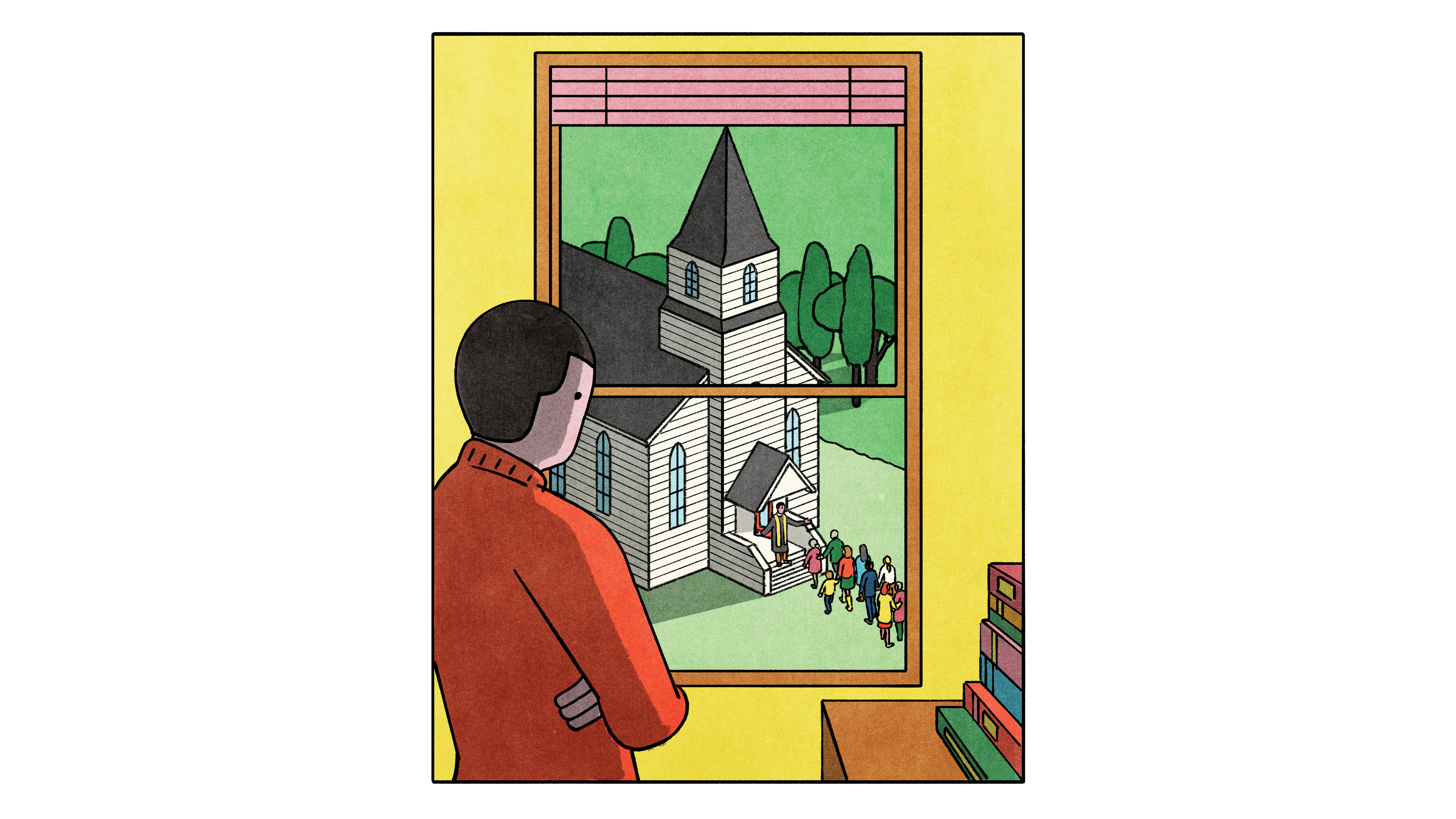
Formal church membership functions in a similar way. Within a spiritually healthy mindset, membership asks others to move toward you lovingly on some future day when you’re less spiritually healthy, rather than letting you slip away. When a member drifts from regularly gathering in worship, when a marriage becomes icy for months at a time, when service in ministries that once brought joy seem to bring only crabbiness, these become opportunities to engage more deeply.
But opportunities is not the right word. When a person is a member of a local church, these signals of unhealth become more than opportunities. They become obligations—not to meddle in unwanted ways but to provide the kind of needed and invasive shepherding that’s not always possible with those who merely attend.
Surely, no church has perfectly executed faithful, biblical shepherding. Every church has members who will go spiritually misdiagnosed or undiagnosed and will miss the care they so need. But meaningful membership gives churches a better chance to be the healthy body God desires his church to be, helping us not to neglect to meet together but to encourage one another, and all the more as we see the Day drawing near (Heb. 10:25).
When potential members ask more, I tell them that perhaps the most compelling aspect of considering membership as an advance directive is how it’s helped me in the past. Two different seasons of ministry, long hours, heavy conflict, and weighty decisions left me more frazzled than I would like to admit. And that downward spiral of walking 50 miles barefoot on the smoldering edge of burnout, while not itself sinful, could have led to dark places if not interrupted.
Rather than letting my heart drift away, our church leadership tossed me on a proverbial gurney, got out the defibrillators, and yelled “Clear!” And God shocked me back to life. The experiences were nothing I’d call fun. But my church’s assertive care might just be what saved my life as a pastor, a church member, and more importantly, a Christian. Let the redeemed of the Lord say so.
Benjamin Vrbicek is the lead pastor at Community Evangelical Free Church in Harrisburg, Pennsylvania. He is the author of several books, including The Restoration of All Things. You can follow his writing at benjaminvrbicek.com.
The post Join a Church Before It’s an Emergency appeared first on Christianity Today.