

Officially, fewer than 150,000 of Iran’s 93 million people claim Christianity as their faith, most of them from Armenian and Assyrian backgrounds, according to a government census.
Unofficially, at least 1 million more Iranians worship in secret, and their numbers are growing, claim organizations that track religious movements. Iranian authorities arrested more than 250 of those worshipers last year on charges of “propaganda contrary to the holy religion of Islam.”
That’s nearly double the number arrested on such charges the previous year, according to a report from Open Doors, Christian Solidarity Worldwide and other nonprofits.
It’s difficult to imagine a time when Churches of Christ — much less, congregations comprised of U.S. servicemen —met freely in Iran and other predominantly Muslim countries, including Libya.

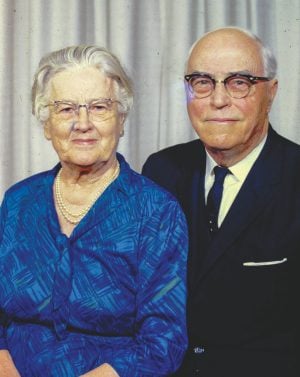
Ellen and Albert Bryan
But Churches of Christ did once exist in the capitals of Tehran and Tripoli, thanks to the work of Christians including Albert and Ellen Bryan.
The unlikely missionary “was the sweetest man I ever knew,” said his grandson, John Bradley. “He was so kind. He was a wonderful husband to my very sweet grandmother. All the grandchildren loved them so much.”
Born near Lebanon, Tenn., in 1892, Albert H. Bryan Sr. was the son of a farmer who also taught in a one-room schoolhouse near his farm. Two of Albert’s brothers earned medical degrees from Vanderbilt University in Nashville, Tenn. One became a medical missionary in China in the 1920s and was imprisoned by the Japanese when they invaded. The Japanese later released the brother, who returned to the U.S.
Albert, meanwhile, stayed on the farm and married Ellen Waters Baker, who grew up in nearby Watertown, Tenn. Albert took over teaching at the school when his father died. Although he never went to college, Albert studied civil engineering through mail-order courses and got a job with the Tennessee Highway Department. He helped plan some of the first paved highways in Middle Tennessee. Then Albert took a job in the civil engineering office at Arnold Air Force Base near Tullahoma, Tenn.
He attempted to retire in the early 1950s, but the U.S. Army Corps of Engineers asked him to change his plans and move to Libya.
At the time, the U.S. operated Wheelus Air Force Base, just east of Tripoli. Albert and Ellen moved there in early 1953. “I was in second grade when they left,” their grandson said.
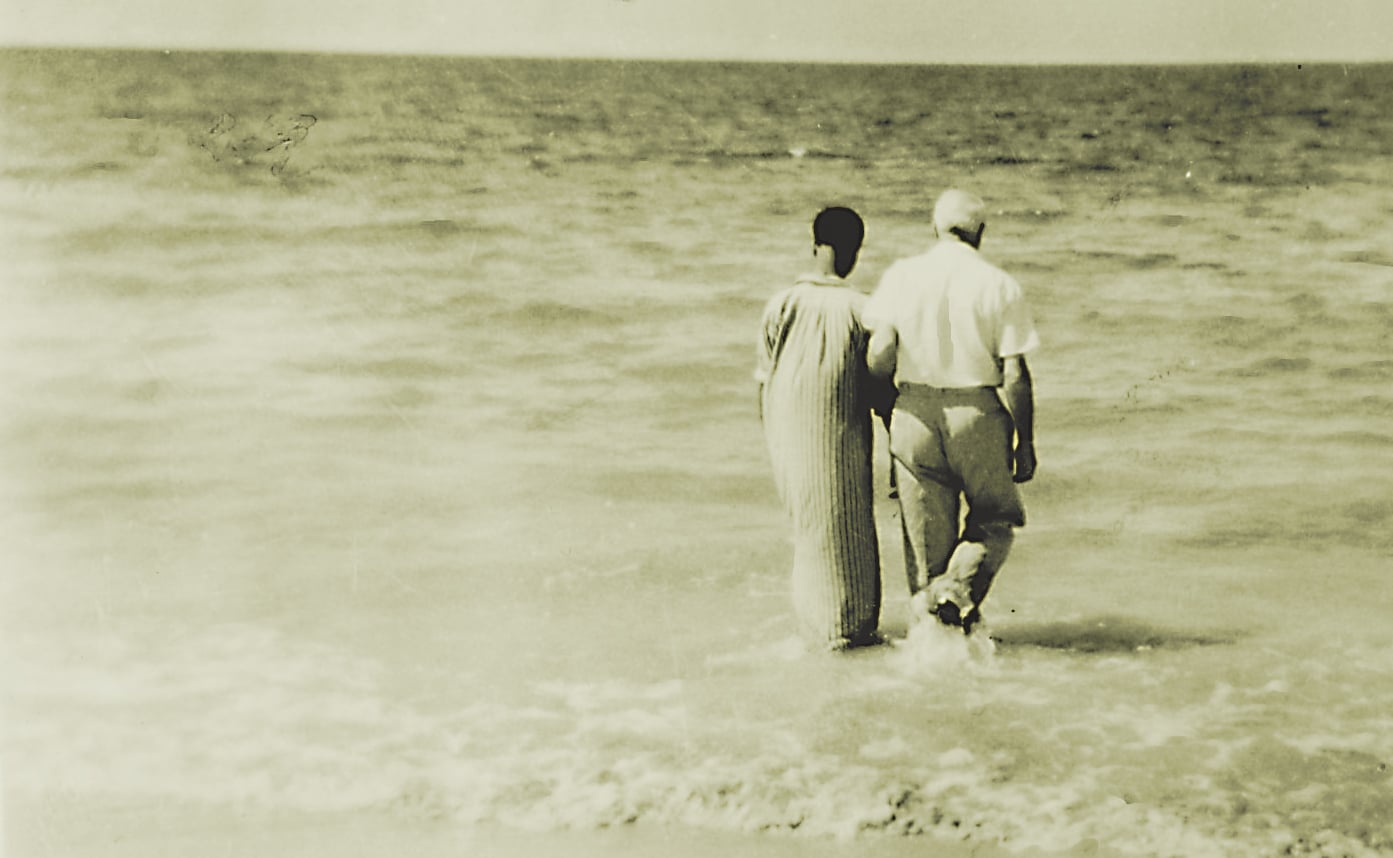
Albert Bryan baptizes a man named David in the Mediterranean Sea in 1954.
During the Cold War, Wheelus was the largest U.S. military facility outside the U.S. Albert worked in the civil engineering department, assisting in building projects on the base.
“He and my grandmother right away started a church in their home,” Bradley said. “They were longtime members of the Church of Christ.”
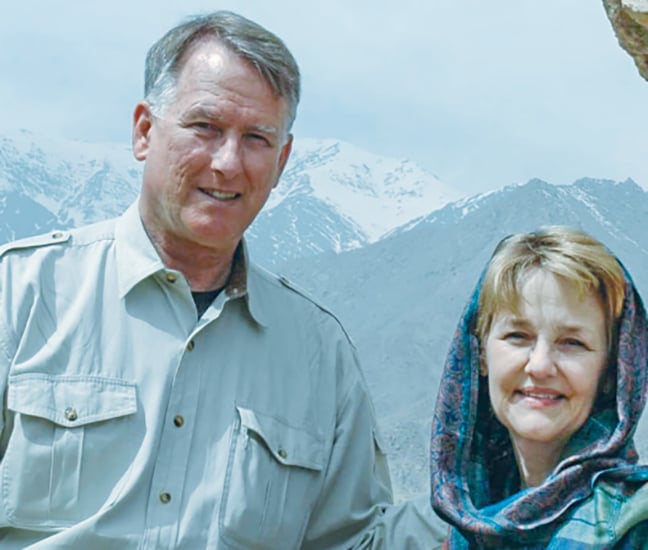
John and Jan Bradley
In addition to being a self-taught civil engineer, Albert became , baptizing new converts in the Mediterranean Sea. Eventually, the Tripoli Church of Christ purchased its own meeting place with the help of the College Street Church of Christ in Lebanon. Bradley has a photo of the building, complete with North African-style pointed arches.
“There is a note on the back of the photo that says it was the first ‘non-Muslim’ church ever allowed by Libya in Tripoli,” Bradley said.
After four years, the Bryans returned to the U.S., though not for long. The Corps asked Albert to do similar engineering work in Tehran, so he and Ellen packed their bags for Iran.
“Again, my grandfather and grandmother started holding church services in their Tehran home,” Bradley said. “There were many U.S. military and civilians working there who attended those services. I do not know if they were ever allowed to buy a building in Tehran for church services.”
During the couple’s time in Tehran, U.S. President Dwight Eisenhower visited Iran’s ruler, Shah Mohammad Reza Pahlavi. “My grandparents saw a huge parade down a boulevard in December 1959 with the president and the shah sitting together in a Cadillac convertible,” Bradley said.
The Bryans returned to the U.S. again in 1962. Seven years later, Muammar Gaddafi seized control of Libya and ordered the closure of U.S. air bases there. A decade later, in 1979, Pahlavi fled Tehran in the midst of the Iranian Revolution.
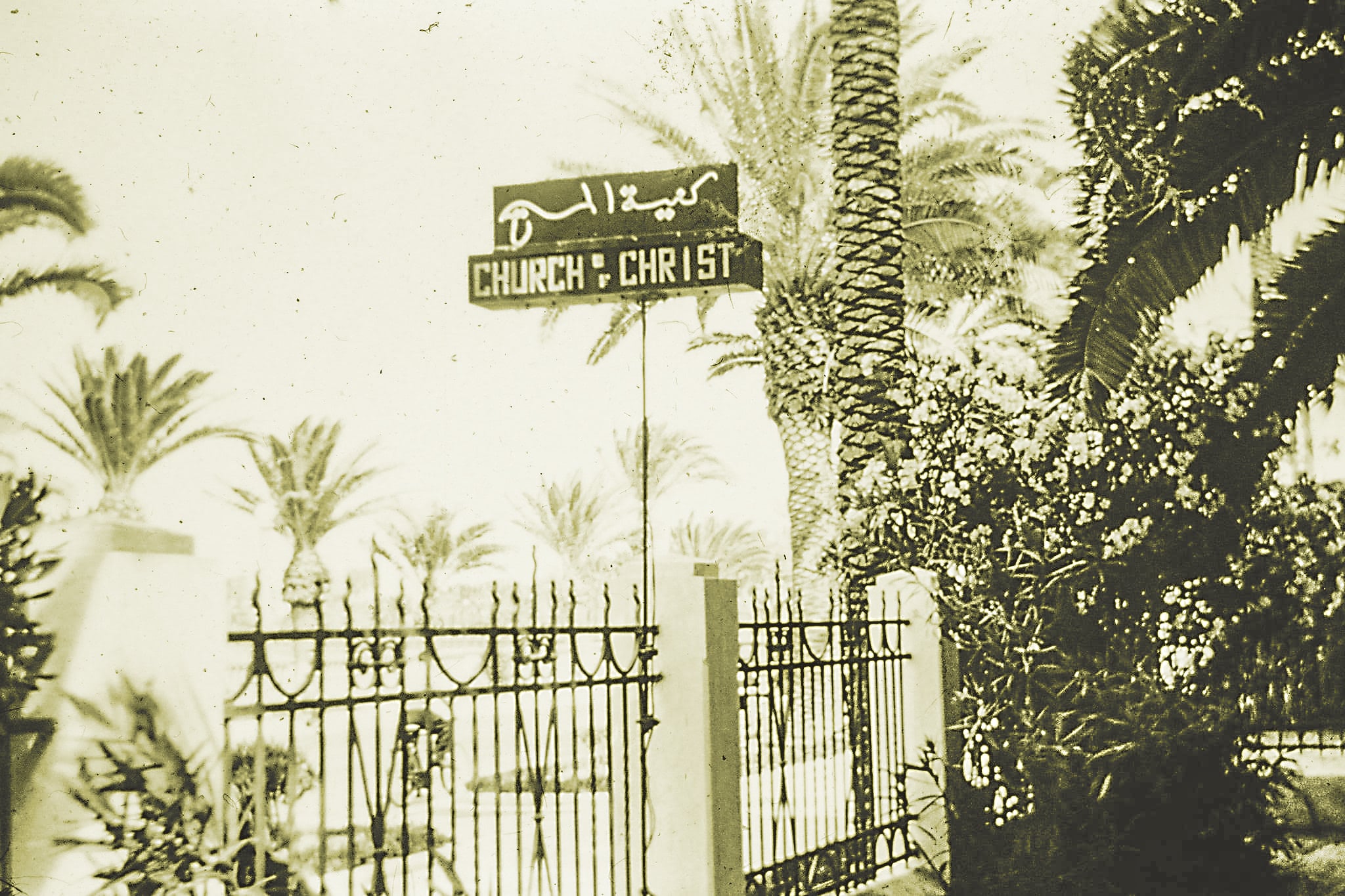
A sign welcomes worshipers to the Tripoli Church of Christ.
Albert became an elder of the College Street church, eventually serving alongside his son-in-law and Bradley’s father, Leonard K. Bradley Sr. Ellen Bryan died in 1973 at age 86. Albert followed her in 1986 at age 91.
The couple’s sons served in the military. Albert Bryan Jr. fought in the Army in World War II. Robert Bryan graduated from West Point before earning a doctorate in nuclear engineering. Charles Bryan attended the U.S. Naval Academy in Annapolis, Md., and flew reconnaissance missions during the Vietnam War.

Albert Bryan speaks during a service in Tripoli.
Bradley himself served in the Air Force for 41 years. He flew 337 combat missions in Vietnam, received the Distinguished Flying Cross and earned the rank of lieutenant general before retiring. In 2008, Bradley and his wife, Jan, launched the Lamia Afghan Foundation, named for a 9-year-old girl who pushed her way through a crowd to ask the general for boots during his tour in Afghanistan.
Through the foundation, the Bradleys provided more than 3.5 million pounds of humanitarian aid to Afghanistan, built seven schools and clinics and provided prosthetics for children injured in their country’s decades of conflict.
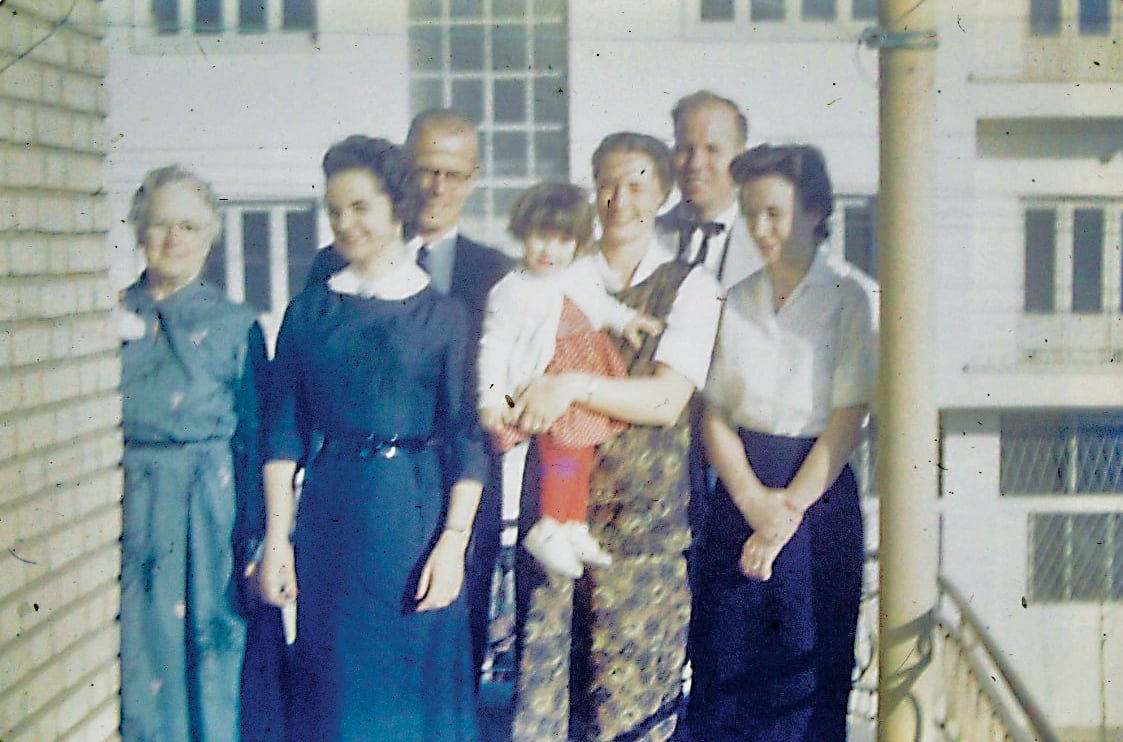
Ellen Bryan, far left, stands with members of the Tehran Church of Christ, which met at Ellen and Albert Bryan’s home during the 1950s.
“I always wanted to be like Papa,” Bradley said of his grandfather. “I have fallen short, but I keep trying. The work Jan and I do in Afghanistan through our foundation, we feel, is trying to help very needy people have some hope of improving their lives.”
Although laws prevented the Bradleys from evangelizing Afghans, “people there, of course, knew we were Christians,” he said.
Taking a cue from Jesus’ words in Matthew 25:40, “I looked at our work as doing for ‘the least of these.’”
ERIK TRYGGESTAD is President and CEO of The Christian Chronicle. Contact erik@christianchronicle.org.