


In early 2025, Peace*, a research assistant at Covenant University, Ogun State, Southwestern Nigeria, had a health emergency and was short on cash. So, she did the first thing that came to mind: open the OPay app to take a loan.
She navigated to EaseMoni, a loan product offered through OPay’s lending arm, reviewed the repayment terms, and took some loans. It was ₦6,000 ($4.21) the first time. Then subsequently, ₦24,000 ($16.85).
Peace told TechCabal she repaid the loan before the one-month deadline, closed the app, and moved on. The app, however, did not.

A few days later, the calls began: an automated and relentless stream of reminders about loan discounts and improved offers.
“It was like an automated response, [talking] about how my loan discount has increased and how I should apply for a new loan,” Peace said. “Mind you, you don’t even have to eventually take the loan for them to bombard you with calls. Just going over the options alone without eventually borrowing will trigger the calls.”
Months later, she says, the calls have not stopped. “I’ve been looking for how to turn that [call] thing off, but I can’t find [how to]. It’s so annoying,” she said.
Peace is not alone. In January 2026, Lagos-based growth professional Franklyne Ikediasor shared a curious experience on LinkedIn. After embarking on what he described as a personal “exercise” to understand Nigeria’s booming digital lending market, he found himself at the centre of a flood of unsolicited loan pitches.
Ikediasor said his experiment allowed him to “test and experience a wide range of loan applications firsthand, reviewing limits, disbursement speed, interest rates, fees, and repayment structures.”
Despite only interacting with a select few platforms, he soon began receiving calls and messages from lenders he had never even heard of, some offering to “buy over” his existing loans in a bid to capture his interest.
“This is clearly illegal,” Ikediasor told TechCabal, adding that he scanned the 200-page terms-of-use documents for data-sharing loopholes. “Because I interacted with one application doesn’t mean that data should be passed to another. It’s not just an infringement; it’s predatory.”
For a researcher and growth professional like Ikediasor, it did not sit right.
“On average, I get about three [spam] calls a day,” he said. “I’ve already had two today. Some are robocalls, but others are human beings speaking to you,” he said.
Their experience points to a broader issue: some digital lending companies and telcos have become persistent in calling their users. Across Nigeria, customers report a barrage of unsolicited promotional calls that disrupt work and invade privacy.
For many, the calls continue even after they block numbers, clear outstanding debts, or—in extreme cases—delete the app entirely. Customers say these calls are rarely from human agents. Instead, users claim they are greeted by automated recordings pushing a variety of financial products, from airtime coupons to loan limits.
The implications of automation that persists after an app is deleted go far beyond annoyance. It could allow Nigerians to normalise calls from random, unverified mobile numbers, creating a massive opening for vishing (voice phishing) scams, involving tricking people into sharing sensitive information over the phone.
According to a 2025 report by the International Criminal Police Organisation (INTERPOL), phishing is one of the most frequently reported cybercrimes in Africa. The report stated that cybercriminals regularly impersonate recognised authorities and prominent corporations, exploit widespread unemployment by offering fabricated jobs, and use mobile platforms for prize-related and emergency-based scams.
Since users are accustomed to organisations using unofficial channels to push loans, they are significantly more vulnerable to fraudsters who mimic this tone to hijack accounts.
TechCabal also conducted a broader survey with 120 respondents across Nigeria. 79.2% said they frequently receive spam calls. The respondents include 54 Nigerian employed professionals whose workdays are being systematically interrupted, while the other respondents are students and unemployed young people.
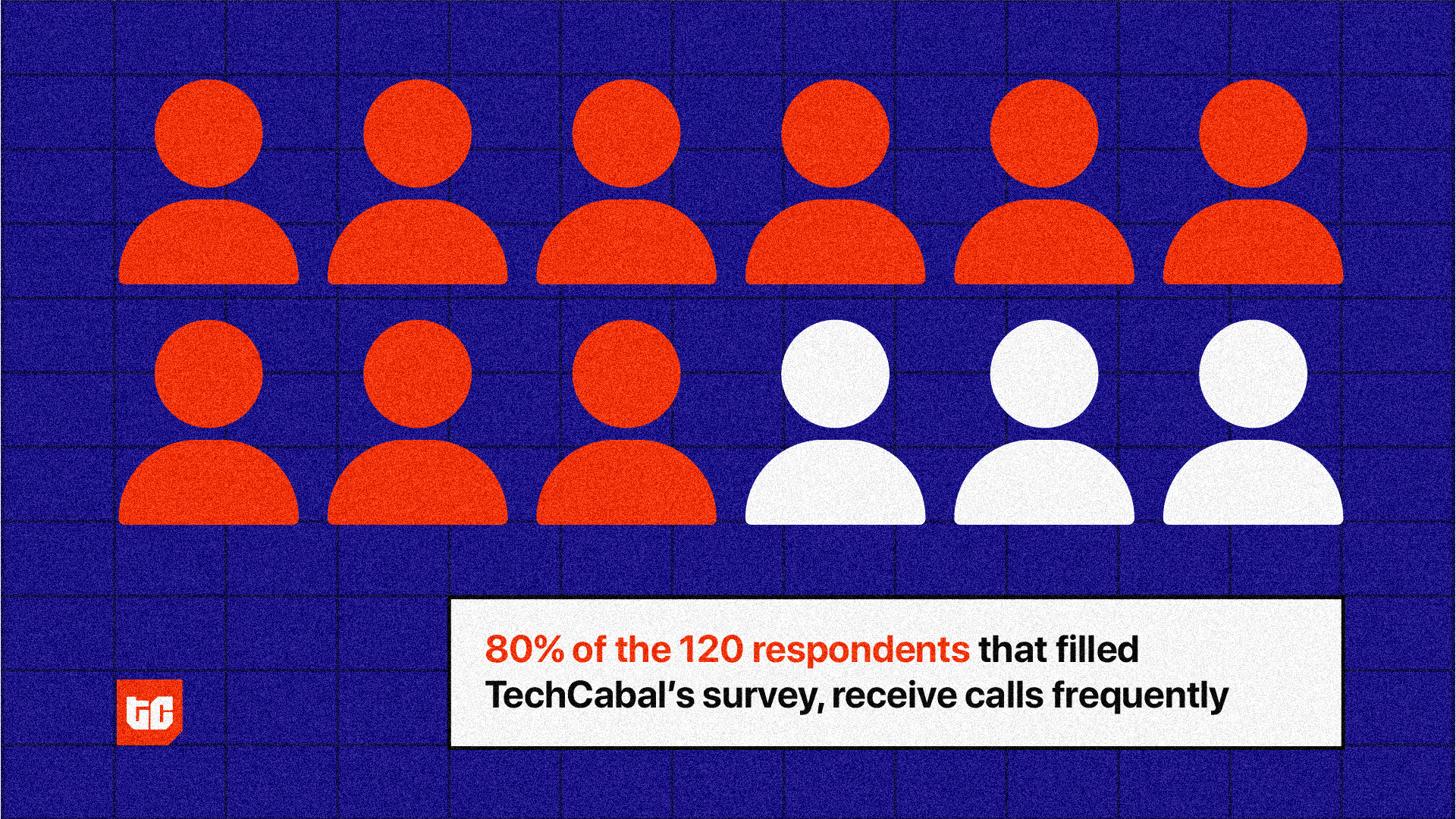
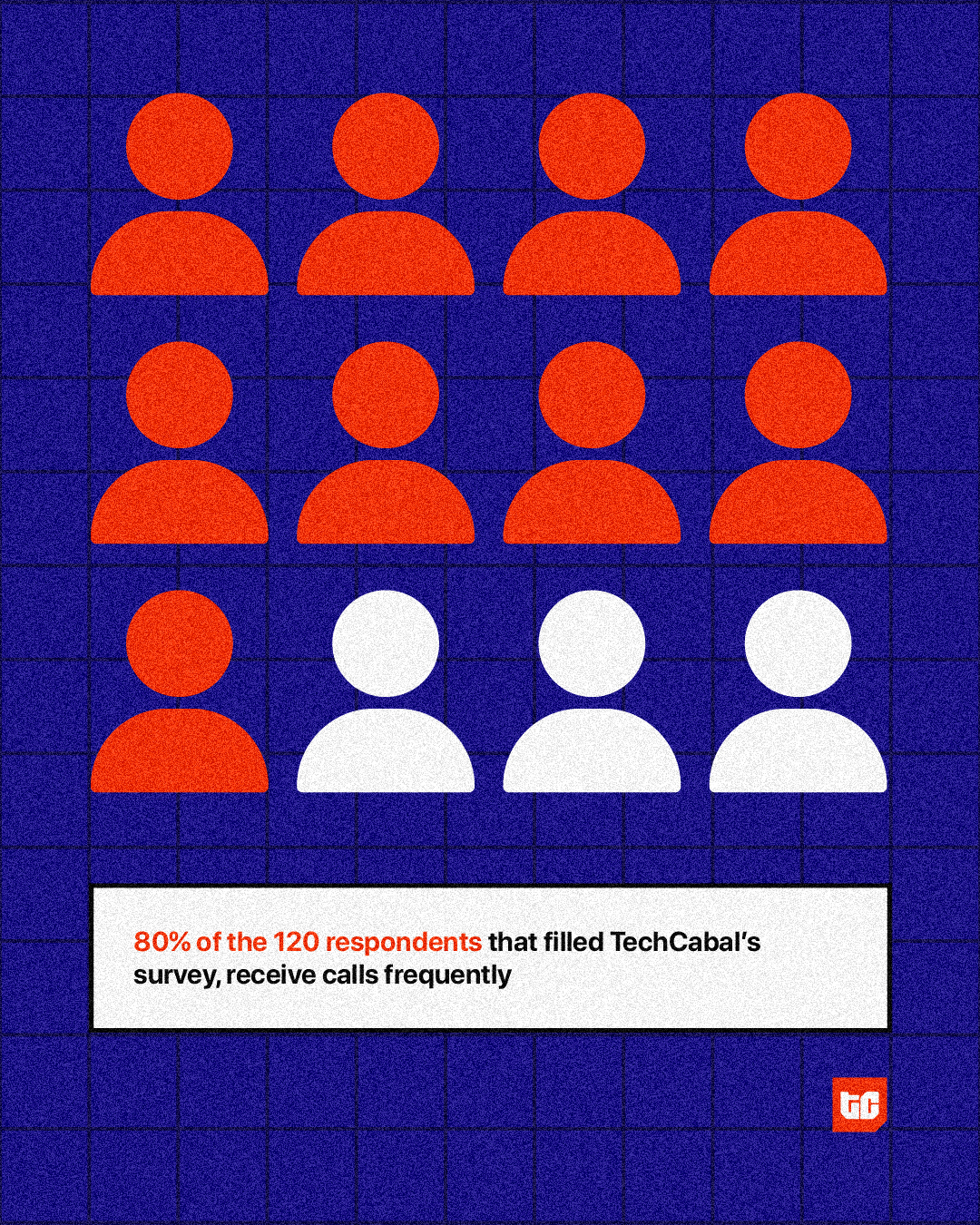
Of the 95 respondents who reported receiving these calls, 36 named OPay as a primary source of harassment. Other frequently cited sources included associated services such as EaseMoni and OKash, as well as telecommunications giants such as MTN and Airtel.
EaseMoni, OKash, MTN, and Airtel did not respond to requests for comments as of presstime.
TechCabal also spoke to 20 OPay customers across Lagos, Ogun, Abuja, and Plateau states. Their accounts revealed a consistent pattern: a high-frequency calling model that persists regardless of loan status, often utilising a rotation of mobile numbers to bypass blocks and filters.
Adedayo Ojo, an associate consultant at TechCabal Insights, who says he receives OPay calls “at least four times a week,” captured a recording of one.
In the audio clip, a female robotic voice said: “Enjoy a daily interest rate as low as 0.3%. Borrow ₦10,000 and repay as little as ₦10,900 in one month. Log in to your OPay app now to check your limited-time offer.”
Click below to answer or decline the call.
OPay declined to comment as of the time of publication.

Seamless onboarding, relentless outreach
OPay’s rise in Nigeria, following its entry in 2018, was built on simplicity. Months after entry into the country, the company implemented the strategy of using a phone number as an account number.
This design choice lowered the barrier to entry for millions of unbanked Nigerians. However, this same phone-number-as-identity model inadvertently created a double-edged sword. While it made onboarding seamless, it also turned their direct phone lines into the primary target for the company’s customer retention and marketing strategies.
Several current users were originally acquired through OPay’s earlier ecosystem approach, which included services like ORide, an on-demand motorbike ride-hailing service, and OFood, a food delivery service. By consolidating those users into a unified database, OPay successfully retained the users as fintech customers.
The guardrails of data privacy
The Nigeria Data Protection Act (NDPA) 2023 mandates that data controllers, including fintechs, must secure informed and explicit consent before processing personal data for direct marketing.


According to Itunu Dosekun, head of the media unit at the Nigeria Data Protection Commission (NDPC), using customer data collected for banking purposes for marketing violates Nigeria’s data protection law and “is a crime.”
Truecaller displays the caller ID of the person calling, even when the recipient does not have the number saved.
“There is no law outrightly banning Truecaller or its use. The issues that the app would raise would be issues of data privacy and protection,” Similoluwa Sebiomo, an Oyo State-based legal consultant, told TechCabal in an interview with TechCabal on Wednesday.
The NDPC confirmed it is also quietly looking into the industry-wide surge in complaints.
“Yes, we have received a lot of complaints,” Dosekun noted. However, he maintained, the commission often keeps these probes under wraps to avoid destabilising the business environment.
“We are the kind of commission that will not announce to the public that we are investigating an organisational data controller.” He noted that if a company is “adamant” about not fixing the problem through their remediation process, the NDPC doesn’t hesitate to go public.
In a 2023 public warning, the Nigerian Communications Commission (NCC) stated that no service provider or telemarketer was authorised to harvest or use subscribers’ phone numbers for commercial purposes without express consumer consent and “is hereby strongly warned to desist from this illegal act, as anyone found guilty shall be arrested and prosecuted in keeping with the law.”
That warning feels far removed from the daily reality of many users. Adetola Bamaiyi, a Lagos-based filmmaker and content creator, said after a gruelling overnight film set that kept him awake until 3 a.m., he was jolted awake four hours later by a spam call.
“Some people have phone call anxiety,” Bamaiyi said. You can’t just be calling… the person might be trying to rest after work.”
Phone call anxiety, also known as telephonophobia, is the intense fear or reluctance to make or receive phone calls.
For those with this condition, an unexpected ring initiates a “fight or flight” response, causing symptoms like increased heart rate, sweaty palms, and a sense of impending dread. With spam calls on the rise, the psychological safety of picking up calls, especially from unknown numbers, is eroded.
Olayinka Akinbiyi, a computer accessibility instructor, said she “always gets calls from OPay every Monday by 9 a.m. and every other day of the week.
Despite never having borrowed from the platform, she is frequently targeted with “coupons” and loan limit updates.
“It is so annoying because I will be doing something very important and my phone will start ringing… only for it to be OPay calling,” Akinbiyi said.
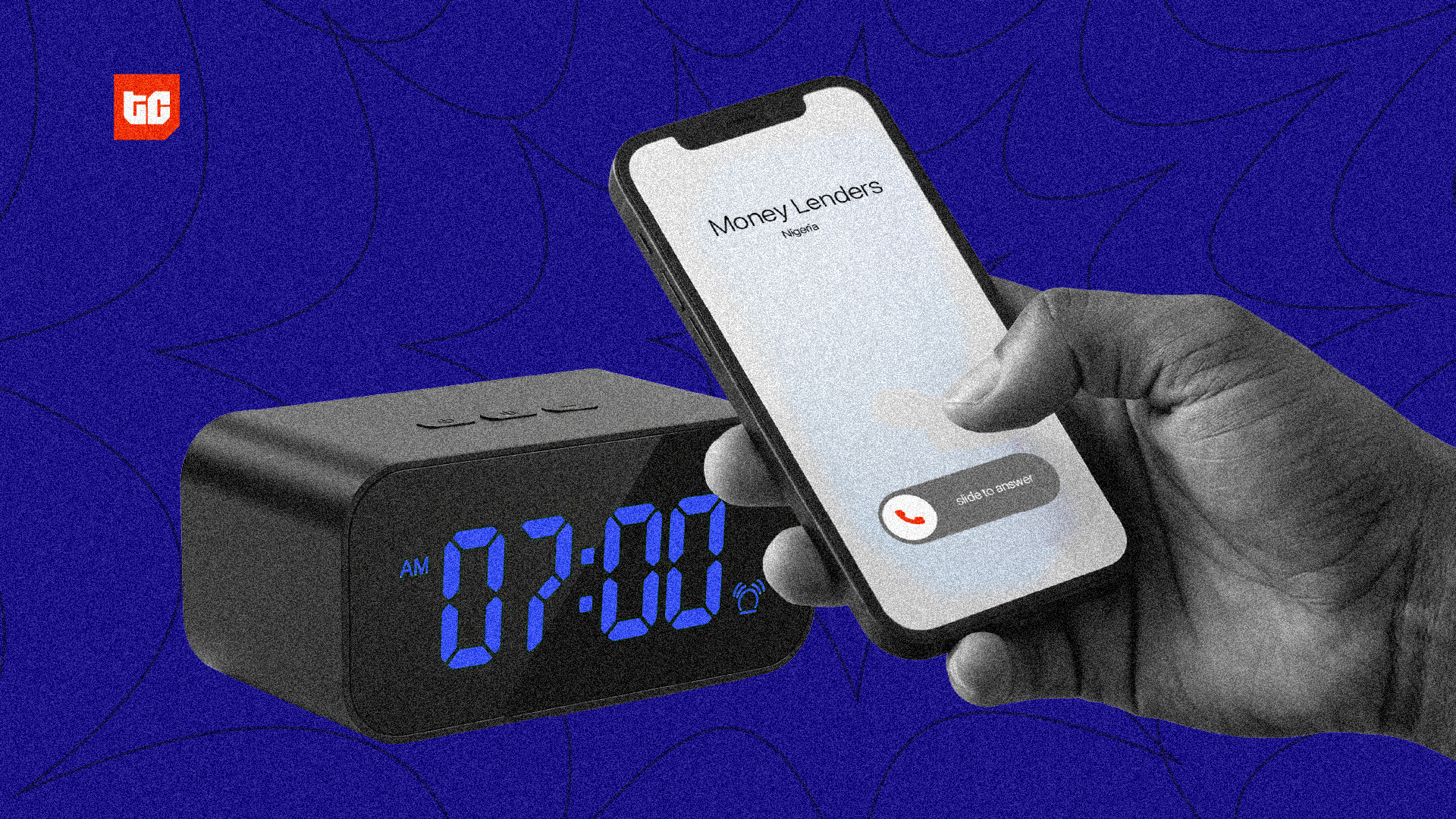
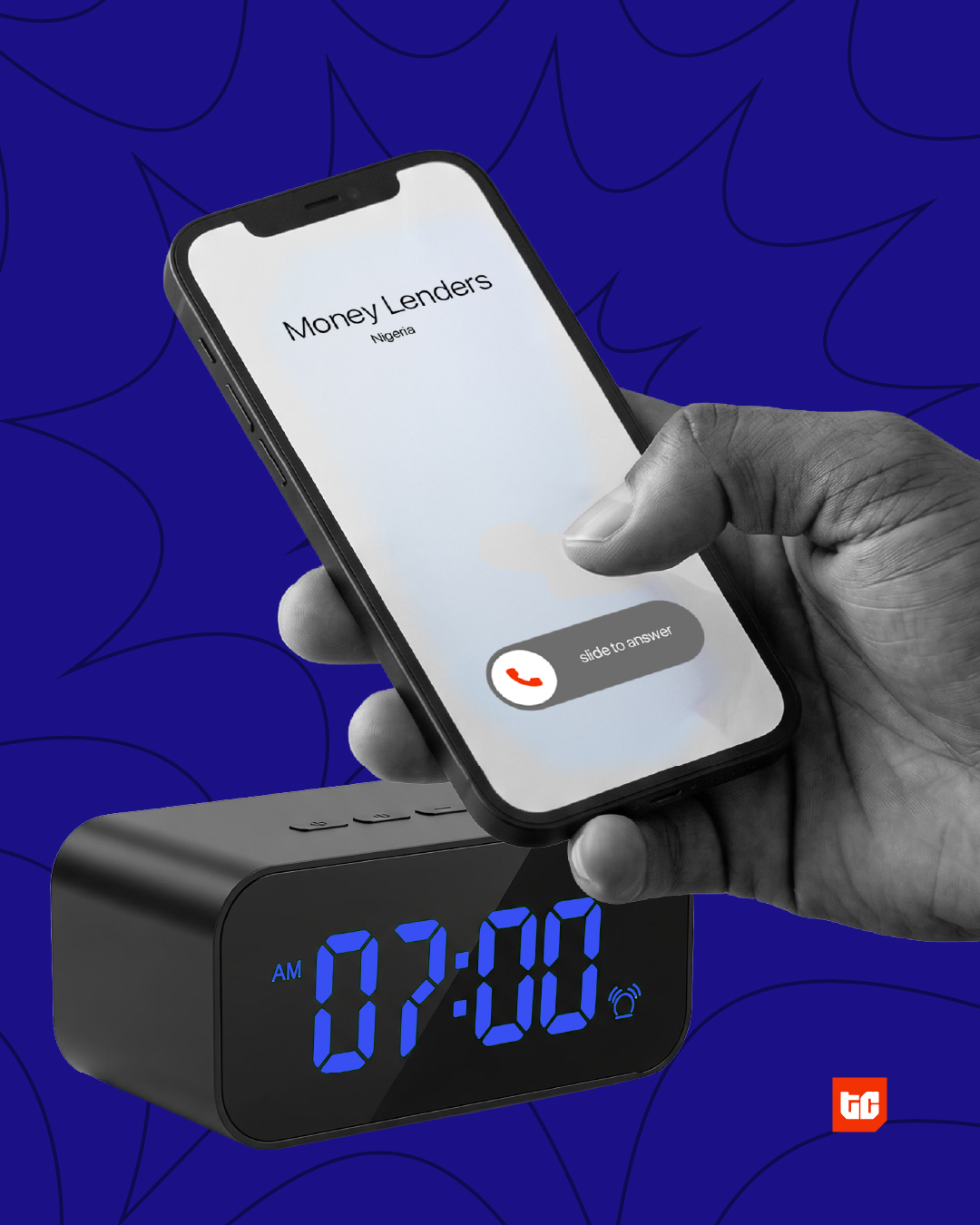
The disruption is particularly acute for small business owners who rely on their phones as a primary point of contact for sales. For these users, an unknown caller might be a potential customer, making it impossible to ignore the ring.
Juliet Ilesanmi, who runs a shop in Atan, Ogun State, embodies this dilemma.
“Sometimes I think it is a customer calling me to ask for a product only for it to be OPay,” she said. “I will be glad if you can tell me how to block them. I have learned how to restrict one number that starts with “020”, and they will be calling with [a] normal [Nigerian] phone number [that usually begins with “080” or “070”],” Ilesanmi said.
Jadesola Adejana, a student at Redeemers University in Southwestern Nigeria, also reported that the calls often originated from “020” prefixes or from unusual international locations, such as Equatorial Guinea and Russia.
TechCabal learnt that blocking and rerouting are signatures of the modern spam cycle. When local Nigerian numbers are flagged or blocked by users, the calls often appear on screens as international or spoofed dial-in codes to bypass phone filters.
Perhaps the most alarming account comes from Dimas, a disability advocate in Abuja who discovered that deleting the app doesn’t necessarily erase your presence in OPay’s marketing machine.
“The number they are calling, I did not use it to open any OPay account,” Dimas said. The calls are reaching the SIM card in his POS machine, not his registered OPay number. “I really don’t know how OPay was able to trace this new number, or is it that my data has been breached?”
According to the NCC website, telecom subscribers’ data is protected under multiple regulations, including Section 35(1) of the Consumer Code of Practice Regulations 2007, Section 9(1) of the NCC Registration of Communications Subscribers Regulations 2022, and Sections 4.2(a) and (b) of its Internet Code of Practice.
These rules prohibit the use of subscriber data for marketing purposes without clear, prior consent. Under the Nigeria Data Protection Act (NDPA) 2023, companies must obtain “freely given, specific, and informed” consent to use personal data for marketing purposes.
“Users should know that they solely have the right to consent that their numbers and information be used for third-party activities, and they also have the right to opt out and withdraw consent at any time,” Sebiomo, the lawyer, said.
Sebiomo noted that the Nigerian Communications Act 2003, the NCC Consumer Code of Practice Regulations 2007, and the Nigeria Data Protection Act 2023 address issues of spam messages in Nigeria.
She noted that spam calls are a “breach of data privacy, and even a breach of the relationship between the network provider and the user”.
A global problem

Spam call complaints are not unique to Nigeria. In several markets, financial institutions have emerged as major drivers of spam calls, prompting regulatory intervention.
In 2019, South Africans were one of the most spammed people in Africa. At the time, people received up to 25 spam calls monthly. Spam calls in the country have persisted over the years.
In a September 2024 case, SBM Bank Kenya, a Kenyan commercial bank, was fined Sh0.4m ($3,489) for sending hundreds of unsolicited emails to a non‑customer. In December 2025, the Kenyan Office of the Data Protection Commissioner (ODPC) fined Platinum Credit, a microfinance lending company, about Sh400,000 ($3,100) for repeatedly sending unsolicited calls and SMS to a customer.
In January 2026, South Africa’s Information Regulator announced that offenders can be fined up to R10 million ($624,325) or jailed.
Across these markets, regulators have moved to treat persistent marketing calls as a privacy issue that demands enforcement.
When asked what the industry standard should be, Bamaiyi pointed to traditional commercial banks as a model for ethical marketing.
“The traditional banks in Nigeria, if they want to tell you about loans, they just send it to your email. [They] would never call you to say ‘hey, come and take a loan from us,’” he said.
The filmmaker’s solution for microfinance banks and lending apps is to move the conversation to less intrusive channels.
Is there an opt-out option?
The persistence of these calls may indicate that OPay’s system is failing to provide users with an easy opt-out option.
The technical workaround of blocking these numbers has proven futile for many. Benny, a member of Nigeria’s National Youth Service Corps, a mandatory one-year public service program for university graduates, cleared his debt only to be hounded by “upgrade” offers.
“Even when I block some of their numbers, they will use new ones to call, and it’s frustrating. They really need to stop,” he said.
Dosekun said that while some companies bury these permissions in the fine print of their terms and conditions and privacy policy, NDPC is pushing for transparency.
“On the part of data controllers and processors, we tell them to shorten their terms and conditions and privacy policy, importantly, to just make it short and precise,” he said.
Unregulated market?
For companies that fail to rein in these practices, the penalties go beyond simple warnings. Dosekun warned that the NDPC can penalise non-compliant firms.
“The NDPC has the power to fine these organisations. The fine can even go from ₦10 million ($7,027) to 2% of your gross earnings in the past year,” he said. The consequences can even escalate beyond the company’s balance sheet: “It can even go as far as jail time for the CEO of the organisation.”
Despite the NDPC’s warnings and the Federal Competition and Consumer Protection Commission (FCCPC) efforts to clamp down on digital debt collectors, the line between marketing and harassment remains thin.
For Winsome Charles, an Abuja-based teacher, that line was crossed long ago.
“I have removed the SIM [card] I used to open the OPay account because I got tired of the calls. It was really becoming a problem,” she said.
*Rate used is Ksh1 KES to $0.008
* $1 to ₦1,423