

At church and in evangelical schools alike, I was raised to ask the classic questions of Christian theodicy, the branch of theology that grapples with why evil exists in a world made by a God who is both all-good and all-powerful. These are the questions raised in the Book of Job: How can a good God let evil happen? Why do the good suffer? Or, in maybe the most common contemporary formulation: Why do bad things happen to good people?
But as I’ve begun my career as a Gen Z Bible professor to Gen Z students, I’ve realized my undergraduates aren’t asking those questions. Time and again I instead hear some variation of another question: Where is God’s judgment against oppressors? If God is real, why hasn’t he struck down these people for their sin? Or, most bluntly: Why don’t bad things happen to bad people?
The two sets of questions are related, no doubt. But the shift from one to the other is significant. My classes understand the problem of evil much differently than did generations of Christians in the recent past.
One of the clearest examples of this shift came when I covered the life of David in my Old Testament survey course. My students struggled not with the account of David’s sins against Bathsheba and her husband but with the aftermath. They were deeply concerned that David was let off too easily. Not only that, they wondered, but where is Bathsheba’s vindication in the story? And how could biblical authors subsequently point to David as a positive example of faithfulness?
The difficulty for them was not David’s sin, which they found unsurprising. The difficulty was God’s forgiveness and mercy.
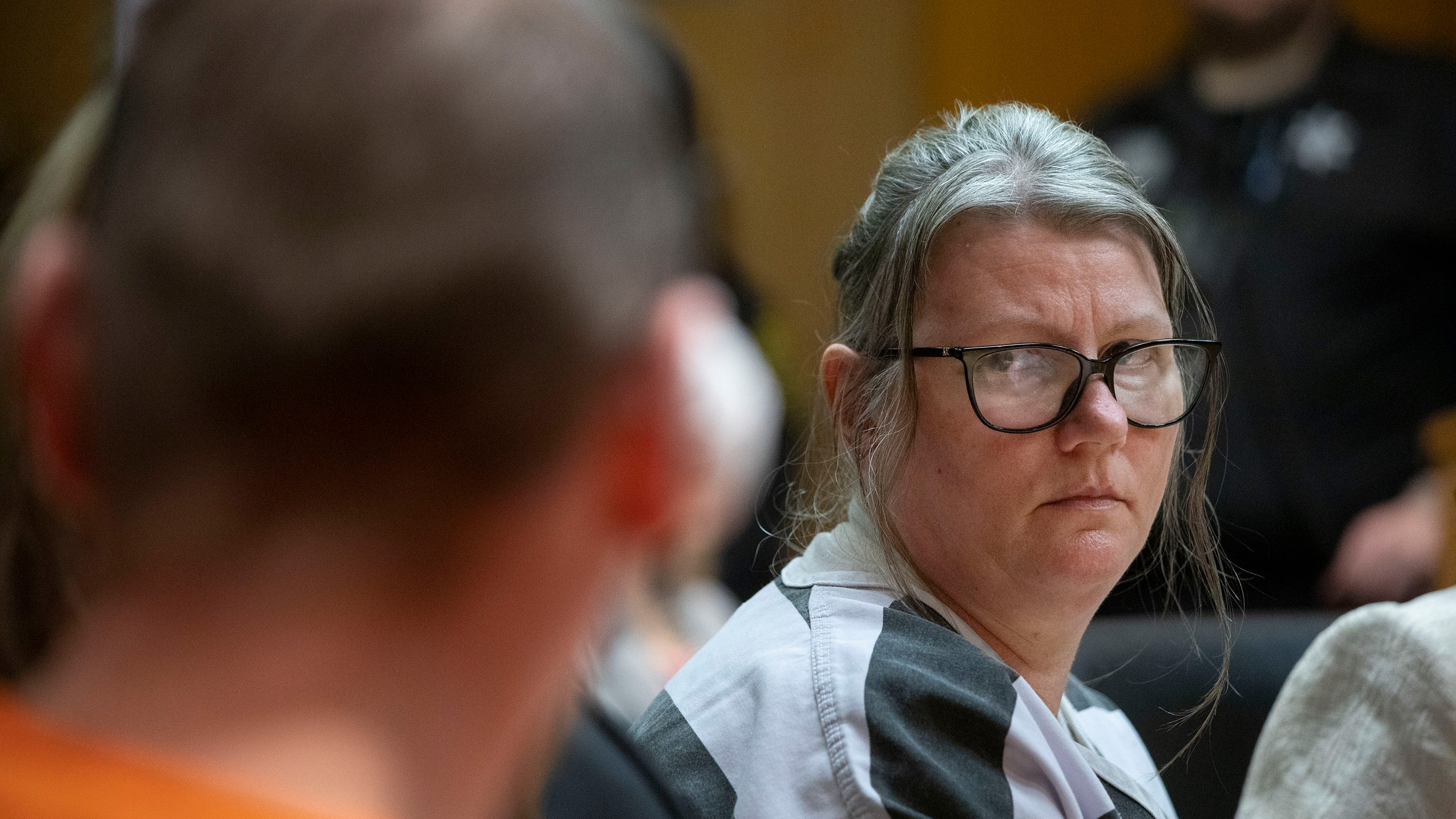
From my observation in the classroom, Gen Z seems to be expectant of evil and brokenness. Sin doesn’t faze them to the same degree as it did older generations. Their response to seeing a biblical hero fall is not shock but anger. A story like that of David and Bathsheba is all too familiar for many of my students, who think it bears striking resemblance to countless stories of contemporary faith leaders being exposed in sexual abuse and harassment. And while the biblical text has an answer to these concerns—even a beautiful and redemptive one—the fact of my students’ reactions is telling.
And this shift doesn’t seem restricted to churched students. While many young people at my institution identify as Christians and were raised in church, many don’t or weren’t. One Christian student expressed comfort with the command not to “leave alive anything that breathes” in Deuteronomy 20:16, on the grounds that the Canaanites “deserved it.” But a non-Christian student very similarly assented to the near erasure of the tribe of Benjamin in Judges 20 as a collective consequence for the rape of the Levite’s concubine in Judges 19.
These reactions might be shocking, but they aren’t occurring in a vacuum. COVID-19 and policy responses to the pandemic simultaneously isolated young people and pushed them to spend more time online, which weakened their mental health, trust in established institutions, and general sense of confidence.
The timing of the pandemic also exacerbated Gen Z’s experience as the first generation to have used social media throughout their most formative years. As zoomers entered adulthood, digital media gave them near-constant exposure to profound suffering and violence. For my students, it is normal to see images of death, starvation, and bloodied men, women, and even children—particularly in the wars in Ukraine, Gaza, and now Iran—on their phones every day.
related


And it’s not only international violence that has shaped the worldview and moral imagination of this generation. There’s heightened violence at home as well. As political violence rises in America, Gen Z is increasingly desensitized to it. Polling has repeatedly showed that zoomers are markedly more likely than older generations to say political violence may sometimes be justified.
Assassinations and attempted assassinations—of activist Charlie Kirk, President Donald Trump (now at least three times), Rep. Nancy Pelosi’s husband Paul Pelosi, Minnesota state lawmaker Melissa Hortman, and more—have been a regular feature of Gen Z’s adulthood. Some now see political violence as just one more option for dealing with the opposition.
Members of Gen Z “really felt betrayed by their government and political system in general,” Montclair State University political scientist Gabriel Rubin told Newsweek. “In general, Gen Z is very cynical about the U.S. political system and feels like nothing gets done, it’s divided, that politicians don’t represent them.”
This confluence of eroding trust, a sense of powerlessness, exposure to intense suffering of others, and desensitization to political violence leaves Gen Z looking for judgment—and justice. My students know all too well that bad things happen to good people. They want to know when bad people will get what they deserve.
This same longing is recorded in Bible. The Psalms in particular are famous for it, with an entire subgenre known as the Imprecatory Psalms. (An imprecation is a plea for divine judgment and punishment of evil.) Psalm 79 declares, “Pour out your wrath on the nations that do not acknowledge you, on the kingdoms that do not call on your name; for they have devoured Jacob and devastated his homeland” (vv. 6–7). Even more viscerally, Psalm 137:9 says of the Babylonians who destroyed Jerusalem and exiled Judah, “Happy is the one who seizes your infants and dashes them against the rocks.”


We shouldn’t assume the Imprecatory Psalms are included in Scripture because God did what the psalmist asked. Rather, they’re there because they speak to our deep desire to see justice, especially for the oppressed. Imprecatory psalms are often written from a position of powerlessness. Some, like Psalm 59, are David’s words from before he was king, when he faced death at the hands of Saul. Others, like Psalms 79 and 137, follow Israel’s defeat and exile at the hands of foes like the Babylonians. These cries for justice are accepted in the Bible as a proper form of worship.
Christian communities living under oppression have long turned to this imprecatory language to articulate their own cries for justice. Enslaved Africans in the Americas, many of whom embraced Christianity under conditions of profound violence, frequently drew upon the Psalms and Exodus to express both lament and hope for divine intervention. Their spirituals and testimonies reflect not only trust in God’s deliverance but also a longing for judgment against injustice. As the formerly enslaved writer Olaudah Equiano recounted in his 1789 narrative, for example, he came to see in Scripture a God who hears the cries of the oppressed and will ultimately set things right.
What we see in these voices is a deep reliance on a God who does not ignore evil. This pattern echoes the imprecatory prayers of the Psalms and tends to resurface wherever Christians find themselves subject to evil and without power to seek justice for themselves.
The experience of Gen Z is unique, however, in how digital media exposes young people to suffering, oppression, and violence against others en masse. Zoomers’ interest in imprecation and justice comes not only from their personal experiences but also from their daily witness of the harm done to others around the world.
Yet while their desire for justice is good, insofar as they see political violence as a legitimate means to that end, Gen Z is less like the psalmists appealing to God than crowds of Matthew 21 during Jesus’ triumphal entry into Jerusalem on the week of his death: As the crowd shouted “Hosanna!” they implored Jesus to please deliver them (v. 9).The deliverance they wanted, though, was not what Jesus came to bring. The crowds sought the violent overthrow of the oppressive Roman Empire. But Jesus came to die.

That was an inversion of the crowd’s expectation, and it’s an inversion of what Gen Z has become accustomed to seeing too. The self-sacrificial, nonviolent way of Jesus is the only true source of the justice Gen Z seeks.
A student of mine once asked, “Do you really think no one is so evil they’re beyond redemption?” I responded with something to the effect of “Biblically, no. I don’t think anyone’s evil is more powerful than the Cross.”
She was outraged.
To her, the idea of redemption available to everyone was unimaginable. What I tried to explain was that her instinct here was dehumanization of another person created in the image of God—and that this is precisely what often undergirds the evil she’s right to deplore.
Gen Z’s willingness to name evil and seek justice is good and necessary in a fallen and suffering world. Their care for the widow, the orphan, and the foreigner is biblical and a needed corrective in much of American evangelicalism.
But what I see in my classroom is that Gen Z’s longing for justice needs to be discipled in the image of Jesus the Messiah, who gave his life for ours while we were his powerless and ungodly enemies (Rom. 5:6–10). This longing needs to come not from a worldly celebration of merciless punishment for wrongdoers but from the love that shakes empires to the ground.
Jared Dodson teaches biblical studies and theology at Bushnell University and writes about Scripture, theology, and culture. You can follow his work on Substack at Walking alongside Scripture.
The post Gen Z Isn’t Asking Why Bad Things Happen to Good People appeared first on Christianity Today.