

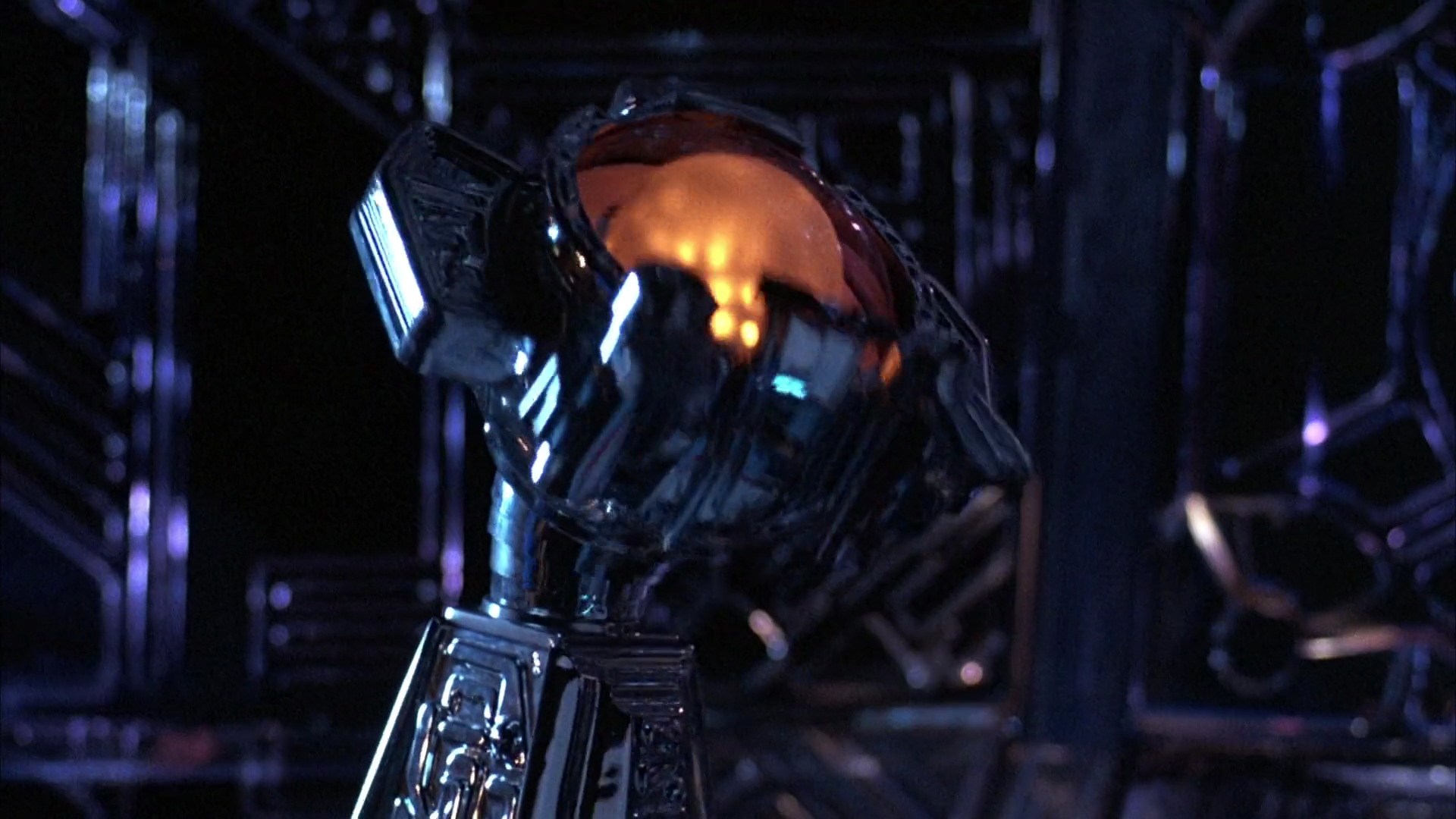
Despite Han Solo’s protestations to the contrary, travelling faster than light on screen is usually just as straightforward as dusting crops. So whether you’re in “Star Wars”, “Star Trek” or “Battlestar Galactica”, jumping to hyperspace, going to warp or spooling up the FTL really is as simple as popping out to the store.
In fact, Albert Einstein’s time-dilating general theory of relativity tends to be little more than an afterthought, with films highlighting the inconveniences of interstellar travel definitely in the minority. For this reason, the very existence of “Flight of the Navigator” is even more improbable than its premise.
The Disney family movie — which celebrates its 40th anniversary this weekend — sends an ordinary kid on an unlikely journey that’s part “Interstellar”, part “Back to the Future”.
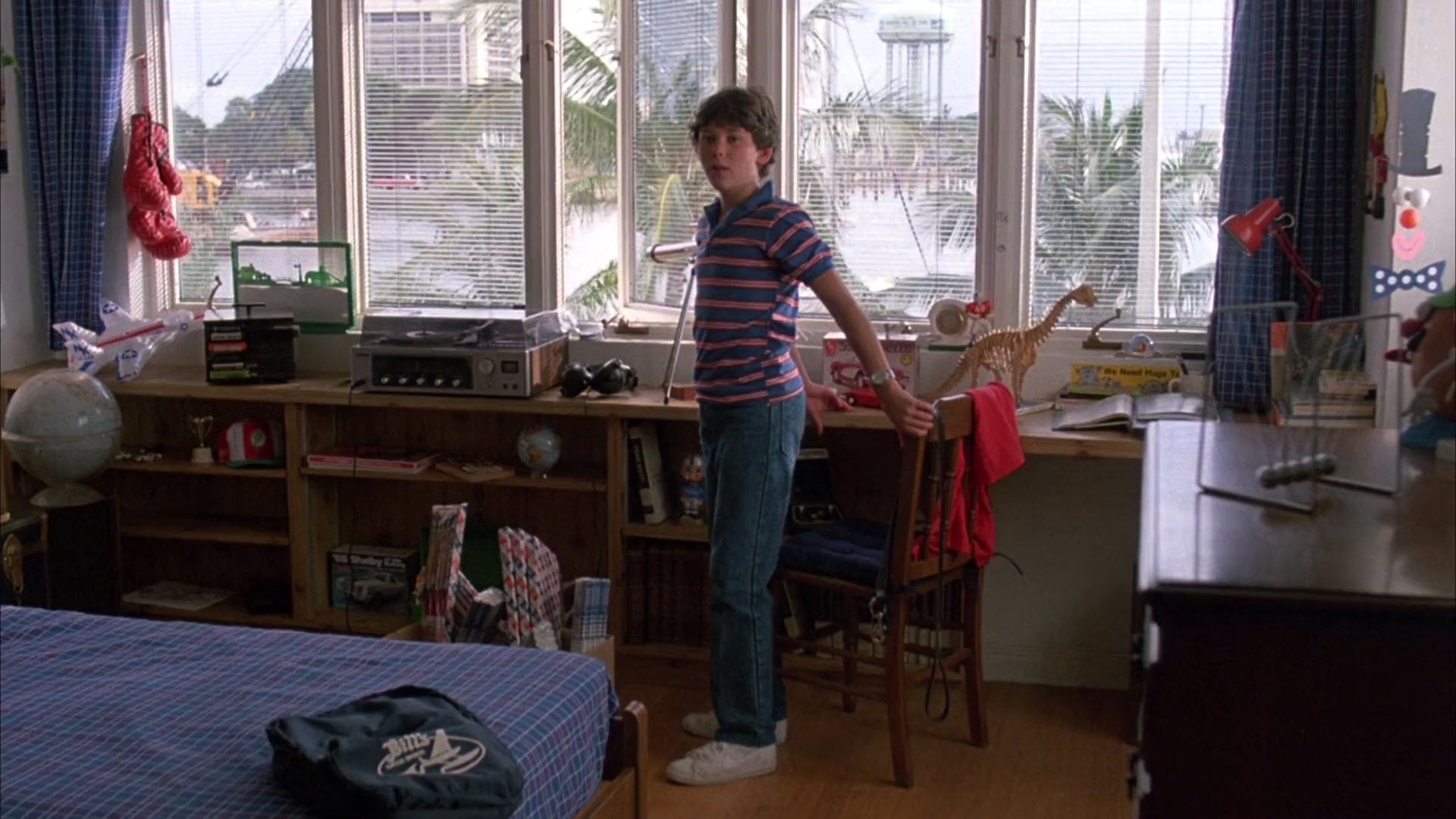
On July 4, 1978, 12-year-old David Scott Freeman is briefly knocked unconscious after he falls into a ditch near his Florida home. When he wakes up — seemingly moments later — he finds strangers living in his house, and gradually comes to realize that eight years have passed for everybody else. In the meantime, David has been declared dead, his little brother is now his big brother, and — perhaps weirdest of all — music videos are now a very big thing on MTV.
He doesn’t know it yet, but much like Matthew McConaughey’s Cooper in “Interstellar”, David has been caught in the crosshairs of relativity. It turns out that he’s unwittingly taken a ride in a Trimaxion drone ship, making the round trip to the planet Phaelon (some 560 light years away) in a mere 4.4 solar hours.
NASA scientists explain away the eight-year time slip as a consequence of “light speed theory”, the idea that “time slows down as you approach the speed of light”. And if that sounds like a big concept for “Flight of the Navigator”‘s target audience to grasp, the filmmakers weren’t particularly worried.
“I think kids can understand it,” director Randal Kleiser said back in 2020. “‘Back to the Future’ was sort of like that, and kids are smarter than most people think. You just tell them that you’re going at the speed of light and time slows down, and they get it.”
Kleiser was best known for the musical smash hit “Grease”, the highest-grossing movie of 1978, when he got the “Flight of the Navigator” gig. When he came on board, the film’s paymasters were already disagreeing about the direction they wanted to take Mark H Baker’s story.
Disney, unsurprisingly, were shooting for a family movie “with dancing little animals”, while their production partners at Producers Sales Organization (PSO) were looking for something a little edgier. “They wanted to have the army come in and shoot down the spaceship,” Kleiser recalled.
Eventually, a gun-free compromise was found, though the opening act of the movie would remain surprisingly bleak and emotionally complex. Now living in 1986, David has to come to terms with his new reality as a human guinea pig in a world where his family looks familiar, but he no longer really knows them. Also, how did his brain come to be filled with weird alien languages and complex star maps?
The role was always going to ask a lot of its actor, and Kleiser ultimately selected a young Vancouver native named Joey Cramer. Cramer beat hundreds of other kids to the role, including future Hollywood stars Chris O’Donnell and Joaquin Phoenix, who appeared in “Space Camp” the same year.
“Joey was so easy to get to cry,” Kleiser said of his casting decision. “For him to be able to do it in the audition — and be also so personable and likeable — was the thing that put him over the top.”
Cramer’s main co-star would prove even more difficult to find, however, seeing as faster-than-light spacecraft from distant worlds called Phaelon don’t — as far as we know — exist.
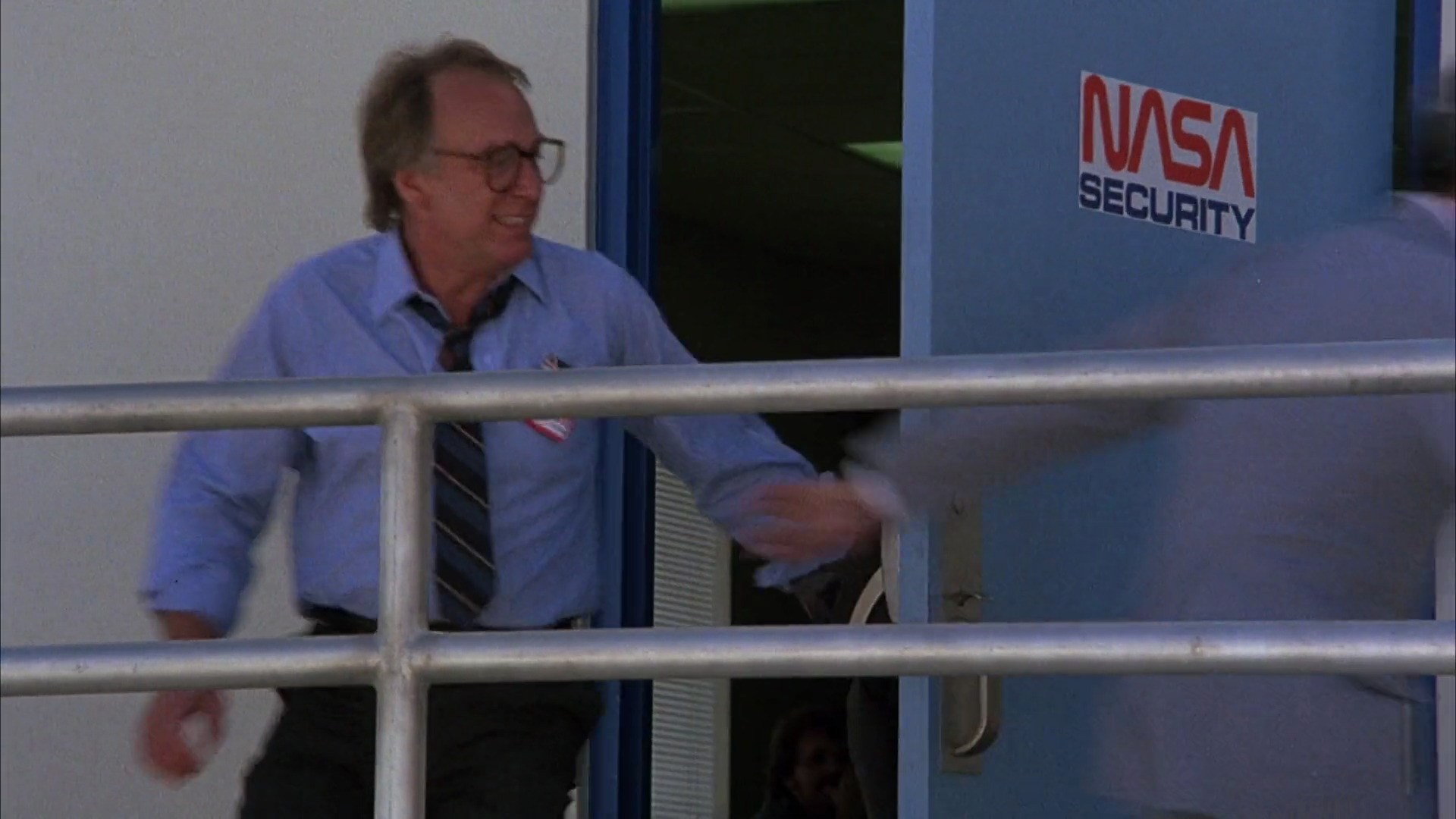
In the second half of “Flight of the Navigator”, David makes a credibility-stretching escape from a top-secret NASA facility — seriously, where did they find such a negligent bunch of security guards? — to hitch a ride on board the aforementioned Trimaxion ship.
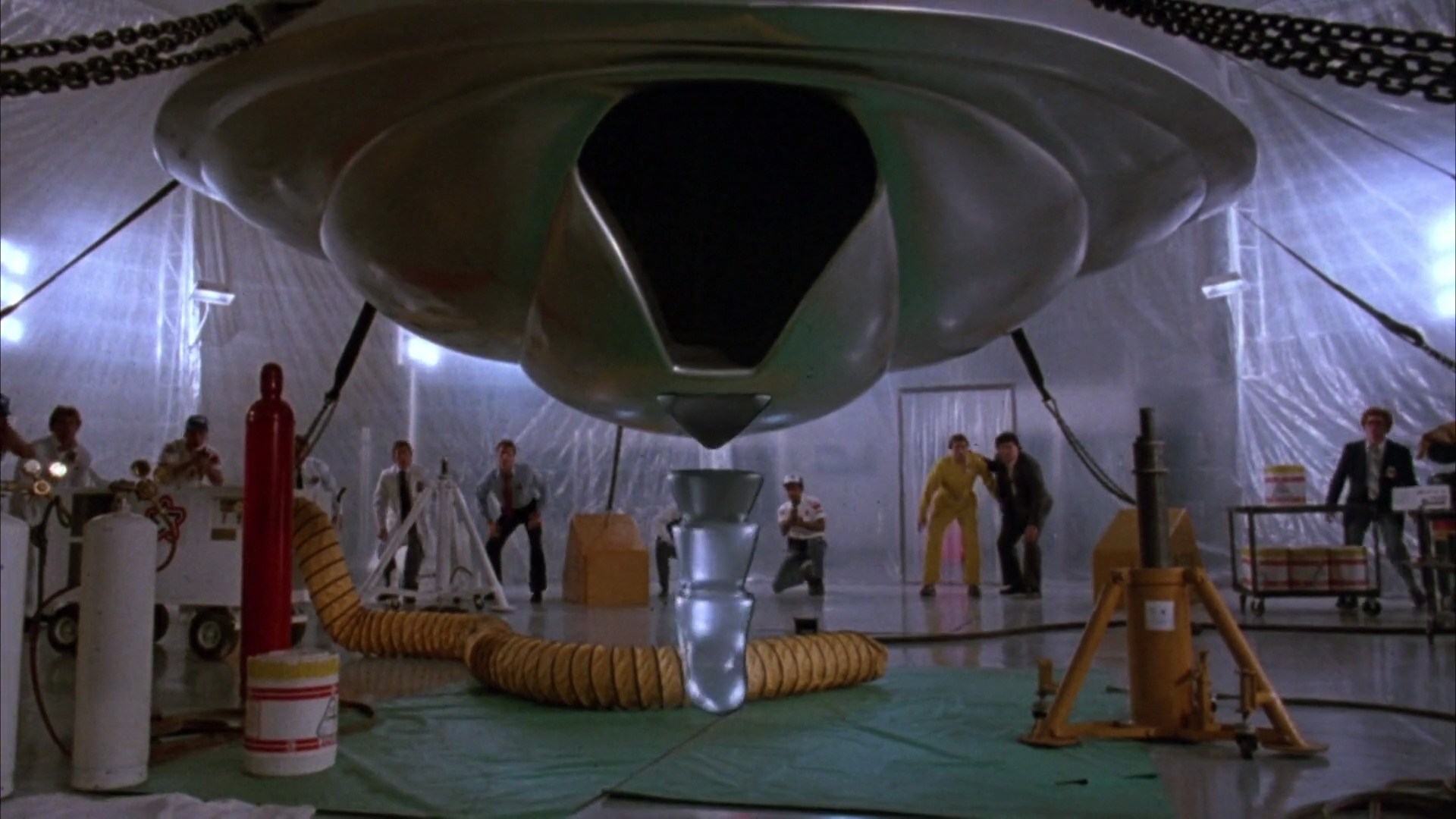
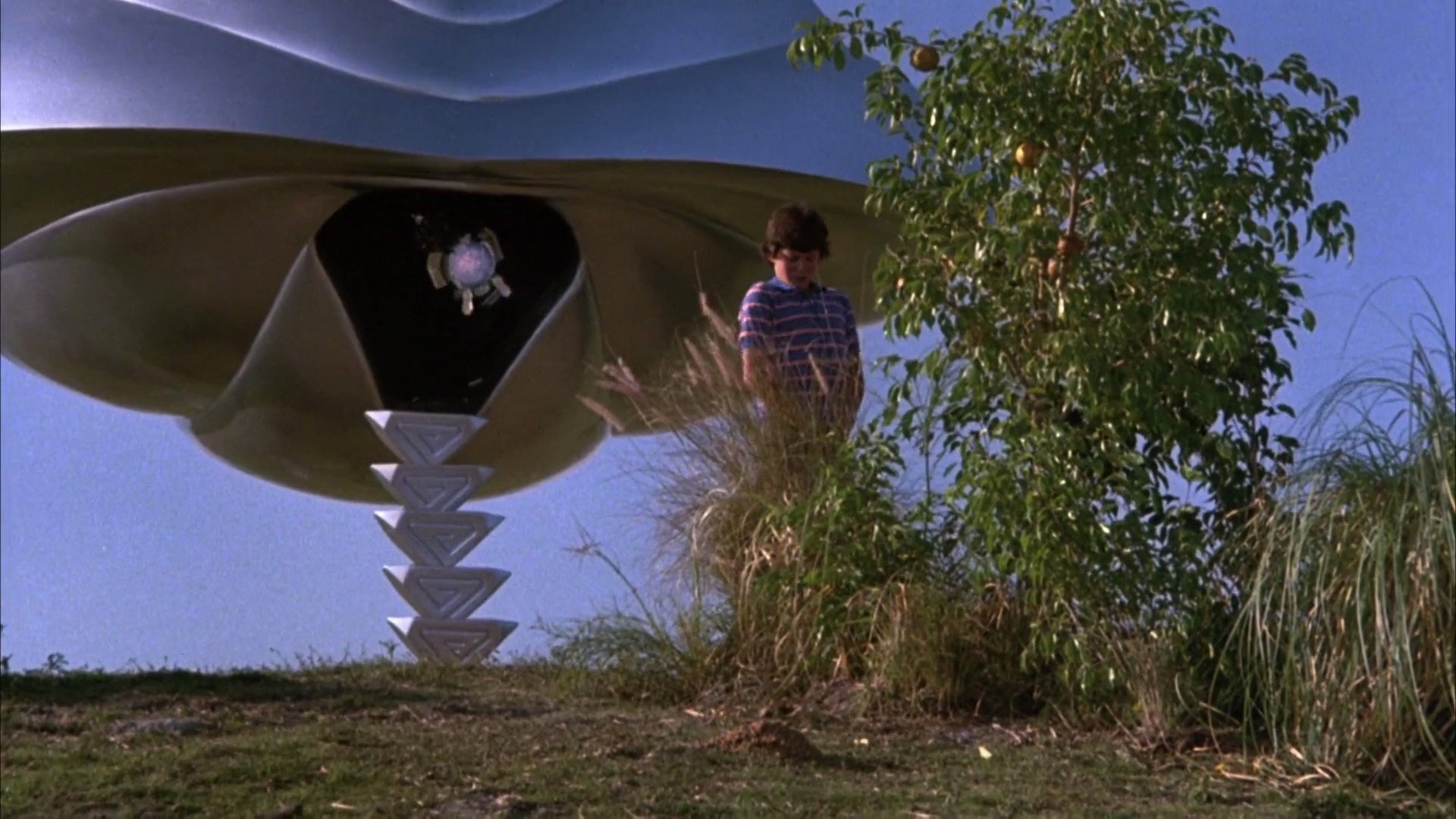
Nicknamed Max and voiced by Pee-wee Herman star Paul Reubens (credited here as Paul Mall), the spacecraft reveals that David is one of several alien species taken to Phaelon for study; we also meet a menagerie of puppets on board, including a hungry little guy who eats David’s hat, and the pocket-sized, implausibly cute Puckmaren.
Max would usually return the test subjects back to the time and place he found them, but says that David’s human physiology is too fragile to make the journey back to 1978. In the meantime, he also needs to access the maps he uploaded to the human kid’s brain, seeing as a collision with some electricity pylons has damaged his navigational databanks. It’s here that the movie evolves into childhood wish-fulfilment fantasy, as David and the fast-learning AI become BFFs on the run from the authorities.
The spaceship exterior, meanwhile, is arguably the most groundbreaking thing about the film, a mirrored, shapeshifting update of the classic flying saucer design popularized by “The Day the Earth Stood Still”.
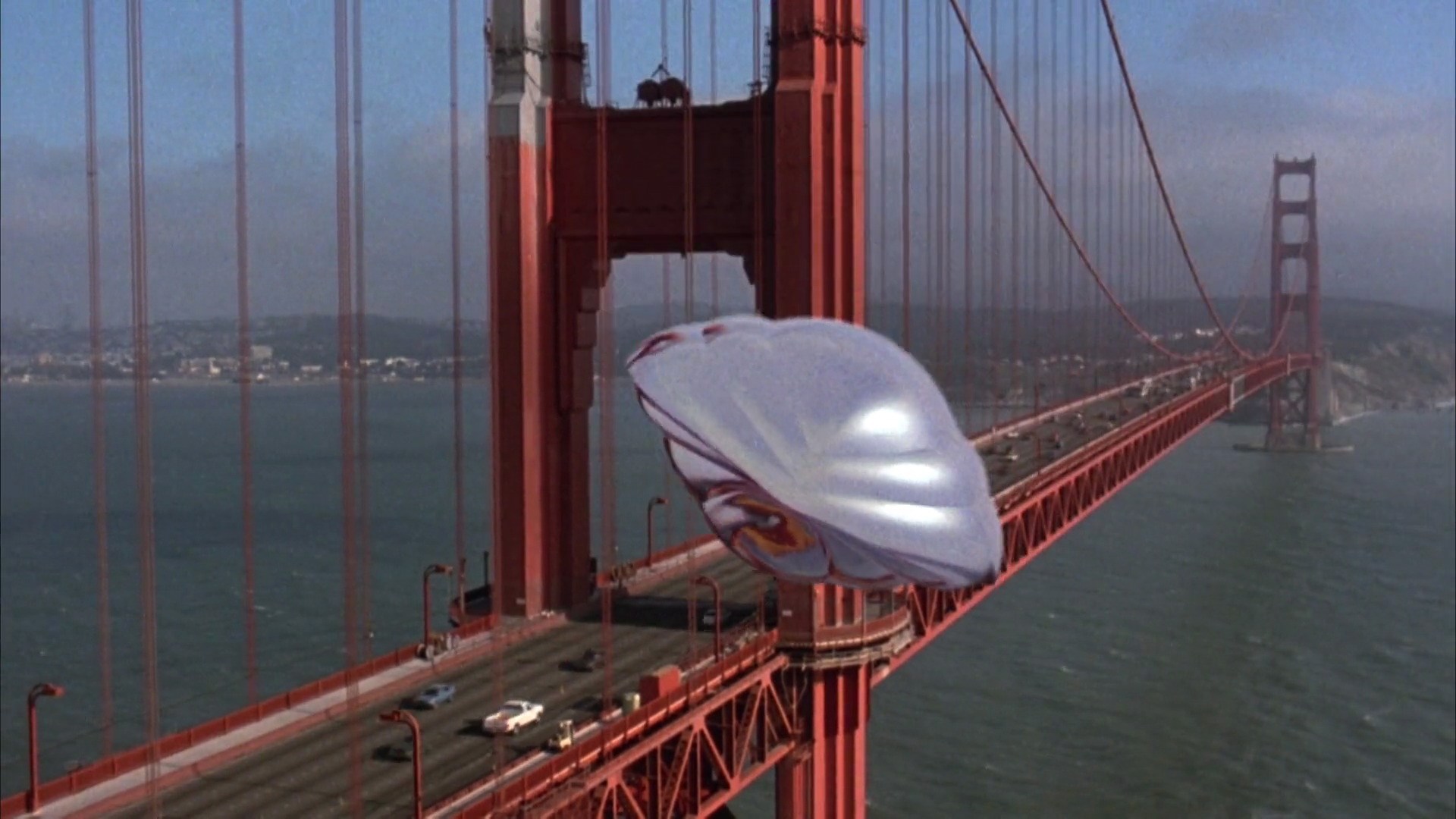
Kleiser persisted with that shiny surface, despite the advice of a former University of Southern California classmate (a certain George Lucas) who told him that all those reflective surfaces would make the ship “more trouble than it’s worth”. (By the time “The Phantom Menace” was released 13 years later, Lucas had clearly changed his mind, so maybe “Flight of the Navigator” had a tiny bit of influence on a galaxy far, far away.)
“I wanted to find something different that hadn’t been done before,” Kleiser explained. “I was driving down the freeway behind a big silver truck, and I could see my car reflected behind it. And I thought, ‘Wow, I’ve never seen a spaceship like that.’ It took a while till we figured out how to do it!”
After several unsuccessful experiments involving silver paint and mylar glued to paper plates, salvation came courtesy of Kleiser’s brother Jeff, who’d worked on the VFX for “Tron” and was a pioneer in the nascent field of computer graphics. And while the liquid metal effects aren’t quite as, ahem, polished as James Cameron’s genre-defining efforts in 1991’s “Terminator 2: Judgment Day”, “Flight of the Navigator” deserves to be mentioned in the same breath.
Despite having an innovative spaceship and a considerably happier ending than “Interstellar” (spoiler: David does eventually make it home), “Flight of the Navigator” struggled at the box office. It eventually found its audience on home video, however, and deservedly so, seeing as it’s an inventive, witty, and surprisingly sophisticated family movie that refuses to talk down to its audience.
“When it first came out, I think maybe it just wasn’t marketed properly,” said Kleiser, “but the fact that it’s become kind of a cult classic is nice. I run into people all the time who say that it’s their favourite movie. [Lots of them] really like the fact that it explored how time travel could change a sibling relationship.”
As we said, “Flight of the Navigator” really is “Back to the Future” and “Interstellar” rolled into one.
‘Flight of the Navigator’ is available to stream on Disney+ in the US and Prime Video in the UK. ‘Life After the Navigator’, a documentary about the film, is also available on Prime Video in the UK.

Watch Flight of the Navigator on Disney+ (US):
Disney+ (With Ads): $11.99/month
Disney+ Premium (No Ads): $18.99/month or $189.99/year

Watch Flight of the Navigator on Amazon Prime Video (UK):
Amazon Prime: $14.99/month or $139/year
Amazon Prime Video: $8.99/month
Ad-free add-on: $2.99/month