

Effective leadership requires a wide range of skills. We must understand how to deliver hard feedback, lead meetings and develop our teams. At the same time, many of the most crucial leadership skills have nothing to do with the way we interact with others.
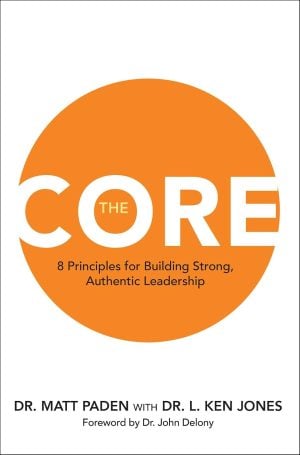
Matt Paden and Ken Jones. “The Core: 8 Principles for Building Strong, Authentic Leadership.” Forefront Books. 2026. 240 pages. $28.
Matt Paden and Ken Jones’ new book, “The Core: 8 Principles for Building Strong, Authentic Leadership” offers a unique approach to the oft-discussed topic of leadership, citing the biblical story of Esther and Mordecai and focusing on the “Leadership Core,” a set of internal ideas and personal practices as the ultimate driver of a leader’s success or failure.
Jones is president of Oklahoma Christian University in Oklahoma City. Paden is president of Great Days Leadership and a former vice president at Lipscomb University in Nashville, Tenn.
Their book begins with a leadership fable featuring two main characters: Clint, a college student spending his summer interning at a local hospital, and Dr. Bill Jackson, the longtime hospital CEO.
The story is told in such a way that we’re able to glimpse into Clint’s thoughts and feelings throughout the narrative, a helpful strategy in a leadership book where part of the impact comes as we understand the impact of Jackson’s leadership on Clint as both recipient and student.
At the conclusion of the fable, the book switches to a narrative as both authors explain the eight Core principles in detail. I found a few to be especially meaningful.
The chapter on “Leading with Your Ears,” a reflection on the importance of listening in leadership, deeply resonated with me. I appreciated the reminder that our best impact in leadership often comes not from what we say but from the space we offer for others to feel heard and valued. I was challenged by the idea that a failure to listen is not an ear issue, but a heart issue.
That said, I wish the authors had utilized a mnemonic device or a structured progression to help the readers more easily commit the Core principles to memory. Perhaps it would have been easier if there were more frequent connections to the fable during the narrative.
While many of the ideas in the book are not “revolutionary” in the sense that I haven’t heard them anywhere else, the way that they are freshly presented and creatively packaged, in conjunction with the fable and the authors’ storytelling and vulnerability, makes this an enjoyable and impactful read.
In general, I would recommend this book to any leader in the church or marketplace interested in thinking about everyday leadership through the lens of faith and Scripture, and to the leader who shares Paden and Jones’ core belief that leadership is about “speaking up for others and working for the good of the people.”
BRADY ROSS is the founder of Clear Path Leadership, an Oklahoma-based company that equips organizations for ongoing leadership development. He holds bachelor’s and master’s degrees from Oklahoma Christian and a master’s from Abilene Christian University.
As an Amazon Associate, we earn money from qualifying purchases made through the links on this page.