
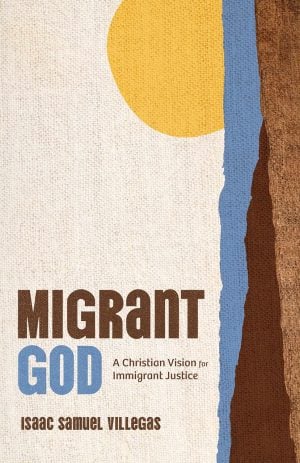
God is a God who moves with his people. This is the central idea of Isaac Samuel Villegas’ book, “Migrant God: A Christian Vision for Immigrant Justice.”
Villegas, the son of immigrants and a Mennonite pastor in Durham, N.C., shows that migration is woven throughout the biblical story — from Adam and Eve leaving Eden to Abraham’s journey, Israel’s exile and ultimately the incarnation of Jesus.
Isaac S. Villegas. “Migrant God: A Christian Vision for Immigrant Justice.” Eerdmans. 2025. 167 pages. $22.99.
God moves, crosses boundaries and chooses to identify with the displaced. God cares for those who migrate, knows the names of those who die in the attempt and hears the cries of the bullied, persecuted, detained and deported already inside American boundaries.
Villegas writes from experience, close-at-hand encounters and the practice of presence; he has walked through the desert, frequented immigrant aid centers, visited prisons and transformed his own congregation into a sanctuary for immigrants.
For him, this topic is not political rhetoric. His concern for immigrant justice is born of his lived experience and hard theological work.
Villegas’ book resonated strongly with us as co-ministers in a multicultural, multiracial congregation in Chicago that welcomes native-born Americans and immigrants from four continents. He tells stories of people whom we recognize, sit with on Sundays and serve the Lord with throughout the week.
There is the church outside Dallas creating a pueblo of God by their communal meals, where “worship spills over into the kitchen” and everyone has a place at the table. There is Rosa, a Honduran refugee from domestic violence who lives and serves at Villegas’ church in order to have a chance at a new life with her children.
There is the church-run network of shelters in Mexico providing places for migrants to live and thrive. These are stories of peace, not violence: of human beings trying to live with their neighbors in faith, justice and dignity.
Villegas wants his readers to remember that God knows every name, every hair on the head of migrants, just as surely as he knows those who have lived in America for generations.To him, nationalist government policies are not a fight against migration, but rather a war against immigrants who cross borders equipped only with the hope of a more dignified life — a hope that dies with many of them in the desert.
Some will find Villegas’ book challenging, perhaps even occasionally offensive. He points out, for instance, laws that the federal government has passed since the 1950s to offload responsibility for border crossing deaths onto migrants themselves. Villegas challenges all who identify with Christ to cease waving the banner of nationalist theology and offer places at our tables for immigrants.
Ultimately, “Migrant God” is both theological reflection and call to action. It reminds us of biblical commands to love and protect the foreigner. For Villegas, welcoming immigrants is central to faithful Christian living. This book challenges and inspires readers to see migrants not as strangers, but as neighbors — and even as reflections of God himself.
PAUL CHAE, CARLOS ESTRADA and PATRICK ODUM are ministers for the Northwest Church of Christ in Chicago, which has worship services in Korean, Spanish and English.
As an Amazon Associate, we earn money from qualifying purchases made through the links on this page.