

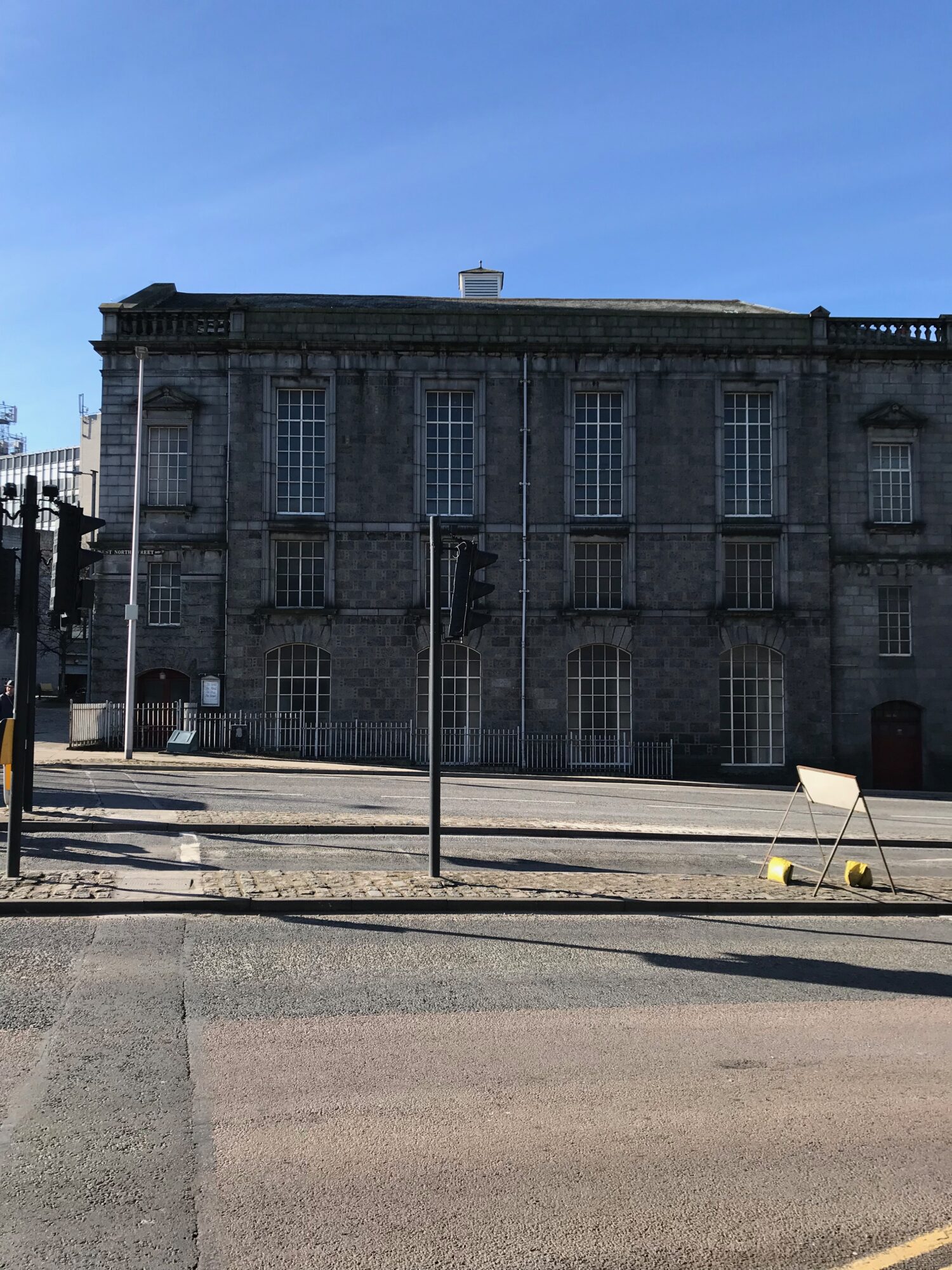
Recently, a man noticed major construction on a 120-year-old church building in Aberdeen, Scotland.
Curious, he approached someone who seemed to be involved with the project.
“Is this going to be another hotel?” he asked.
It was a good question. Aberdeen is now the most secular city in Scotland, which is the most secular country in the United Kingdom. Many of her massive granite church buildings are now restaurants and apartments and bars with names like Soul. A few years ago, a photographer documenting the shift called it “Jesus Has Left the Building.”
“So I understand why he asked that question,” Simon Barker, who helped direct much of the project, said later. “But I was pleased to be able to disagree.”
Barker turned to the curious pedestrian.
“It’s not, actually,” he said. “It’s going to be a church.”
When the 18,500-square-foot, five-story Presbyterian church building originally opened in 1905, it was a “hive of industry,” one church historian wrote. Staff and volunteers buzzed about, facilitating nine Sunday services, an orchestra, and outreach all week long.
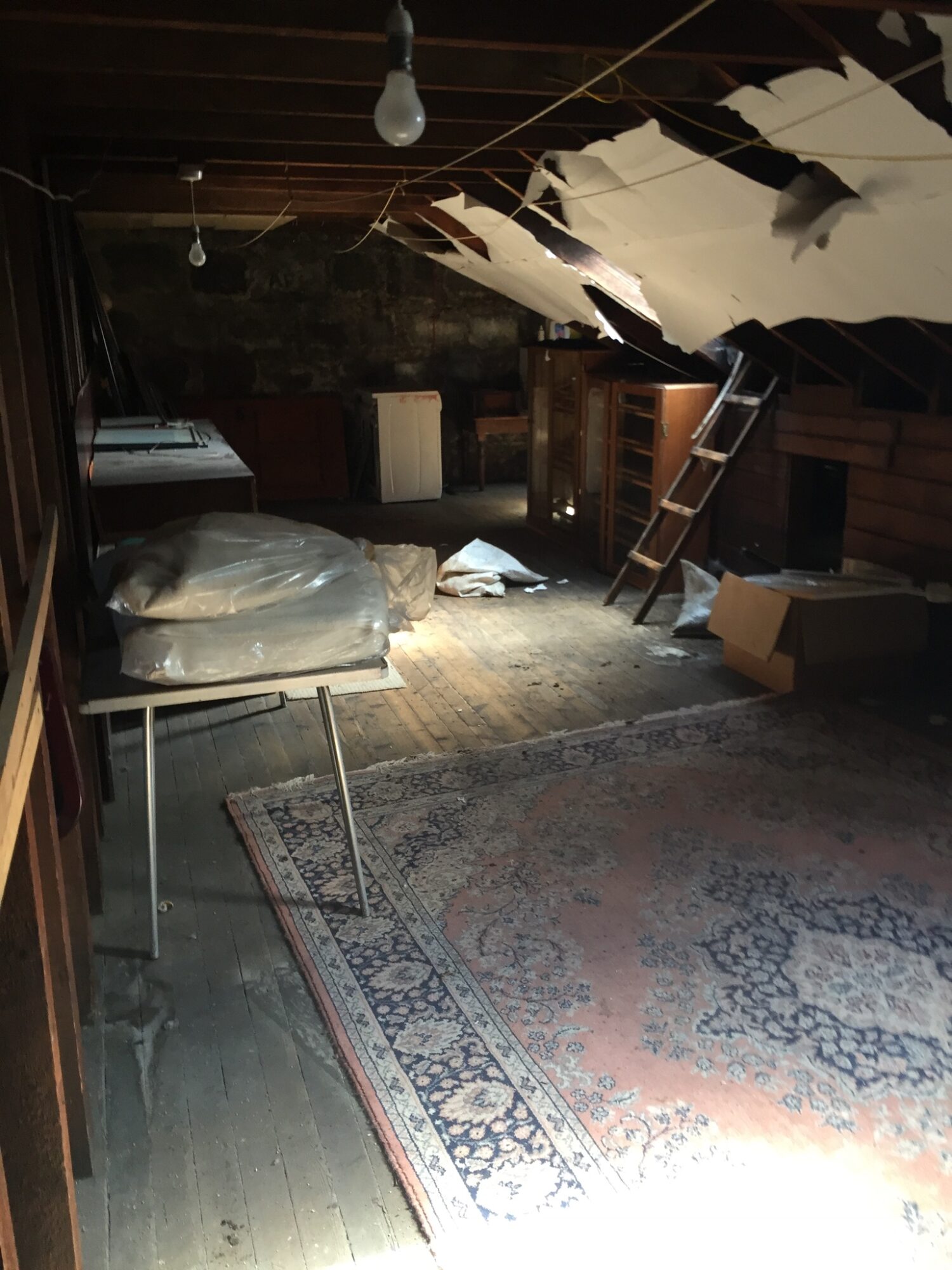
But by 2018, the building was barely functional. The roof leaked, the windows were broken, and the wiring was outdated. Some of the load-bearing pillars needed to be reinforced. It needed a sprinkler system, an elevator, new drywall, and a thousand other repairs.
When a congregation of about 250 looked at buying the space in 2018, the real estate agent advised them to just buy part of the building. They’d never be able to afford the repairs, and even if they could, they didn’t need a 1,000-seat sanctuary.
But Trinity Church, inspired by the idea of repairing both the ruins and the witness, bought the whole thing.
“A good friend told me it was going to take twice as long, cost twice as much, and be twice as difficult as I expected,” senior pastor David Gibson said. “He was right. But it was also twice as rewarding.”
A few months ago, Trinity reopened the doors. The congregation has already opened study rooms and launched a new ministry for those struggling with addiction. They can’t wait to do more.
“We are right in the heart of the city,” Barker said. “Already we see that when we have our doors thrown open on Sunday morning, people passing by us are interested, and some of them are walking in.”
Homeless
In 2011, High Church, Hilton, was the first congregation to leave the Church of Scotland over issues of sexuality. Another church in their presbytery called a same-sex pastor who was living with his partner. After three years of arguments, negotiations, and church court decisions, the call was allowed to stand.
And the 170 members of High Church, Hilton, left. Almost overnight, they were nameless, friendless, and homeless.
The first one wasn’t too hard to fix: The congregation chose the name Trinity Church.
The second problem was a little tougher but still doable: Trinity made its way into the like-minded International Presbyterian Church, and after a while, relationships there grew strong and deep.
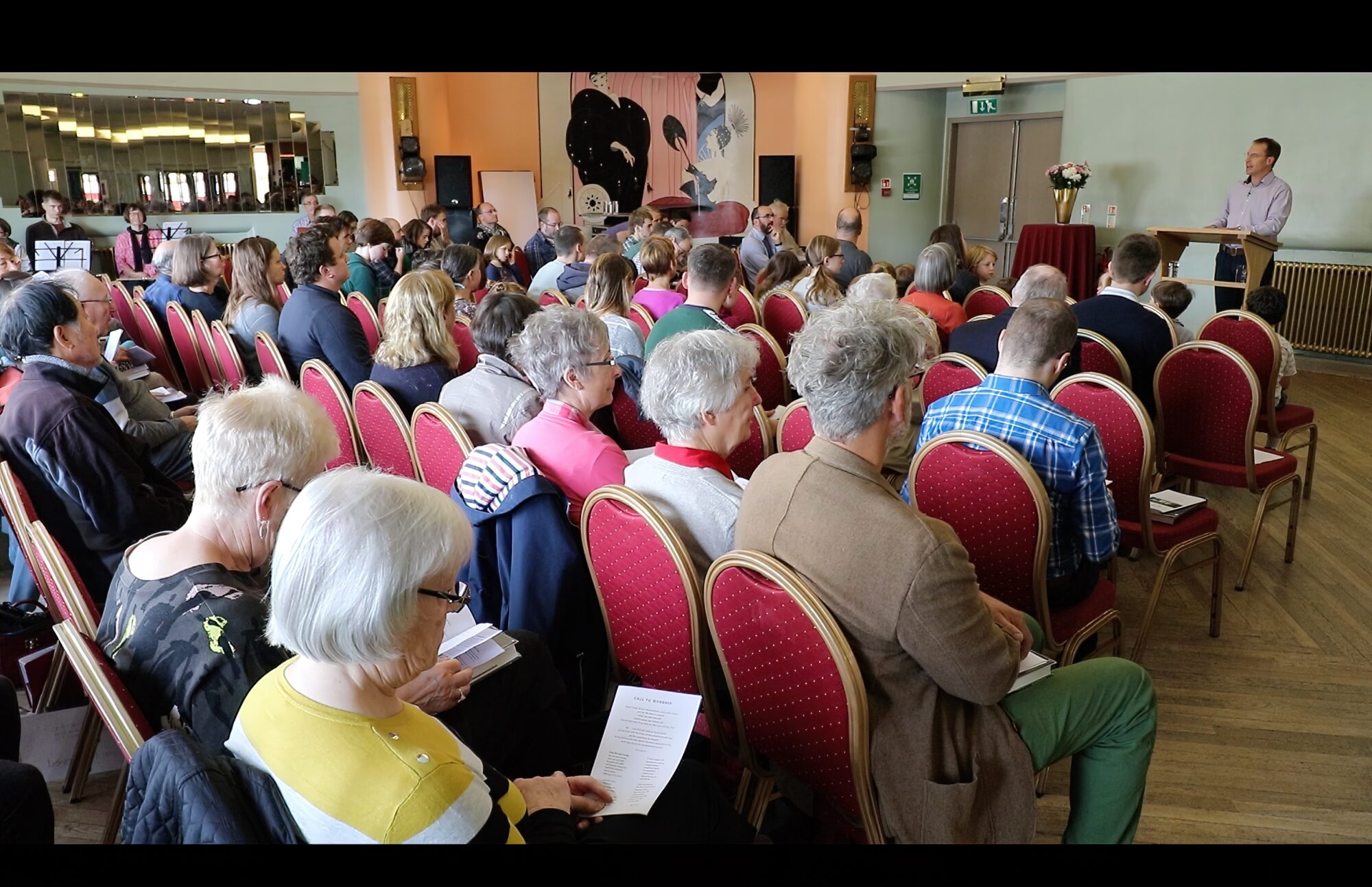
But the third problem was harder to solve. Trinity began renting space in a hotel ballroom, where the decor was fading and sometimes you could catch a whiff of liquor or spot debris from the party the night before. Even worse, they couldn’t always get in when they wanted. And it was almost impossible to use for local ministry.
“Church buildings can be so important,” said David Dillon, a Chicago businessman and Redeemer City to City board member with a passion for church planting. “For example, there is a great church in a major city in Europe that has been forced to relocate nine times in 11 years. That’s not uncommon in Europe. It is hard for any church to sustain that level of change.”
Dillon has been privately working to raise funds to help multiple churches acquire sites around the world. “Not only are buildings a stable place to worship and run ministries, but they’re also a visible sign of God’s work in a community,” he said.
So as soon as they could, Trinity’s members began to save for a building.
The Building
After seven years, Trinity had enough money to start looking around. At the same time, the old Presbyterian church—the five-story space in downtown Aberdeen—was coming onto the market.
The congregation there had shrunk from hundreds to just 30, rattling around in a building that was piling up deferred maintenance by the day.
“There are really two types of building projects,” Barker said. “The first is a new build or a renovation of a pretty blank space, like a warehouse. Those projects are probably a bit more predictable, because you can just insert the things that you require. You basically know how much things are going to cost per square meter. It’s fairly straightforward.”
The second type of project is to renovate an existing building—in Trinity’s case, an aging church.
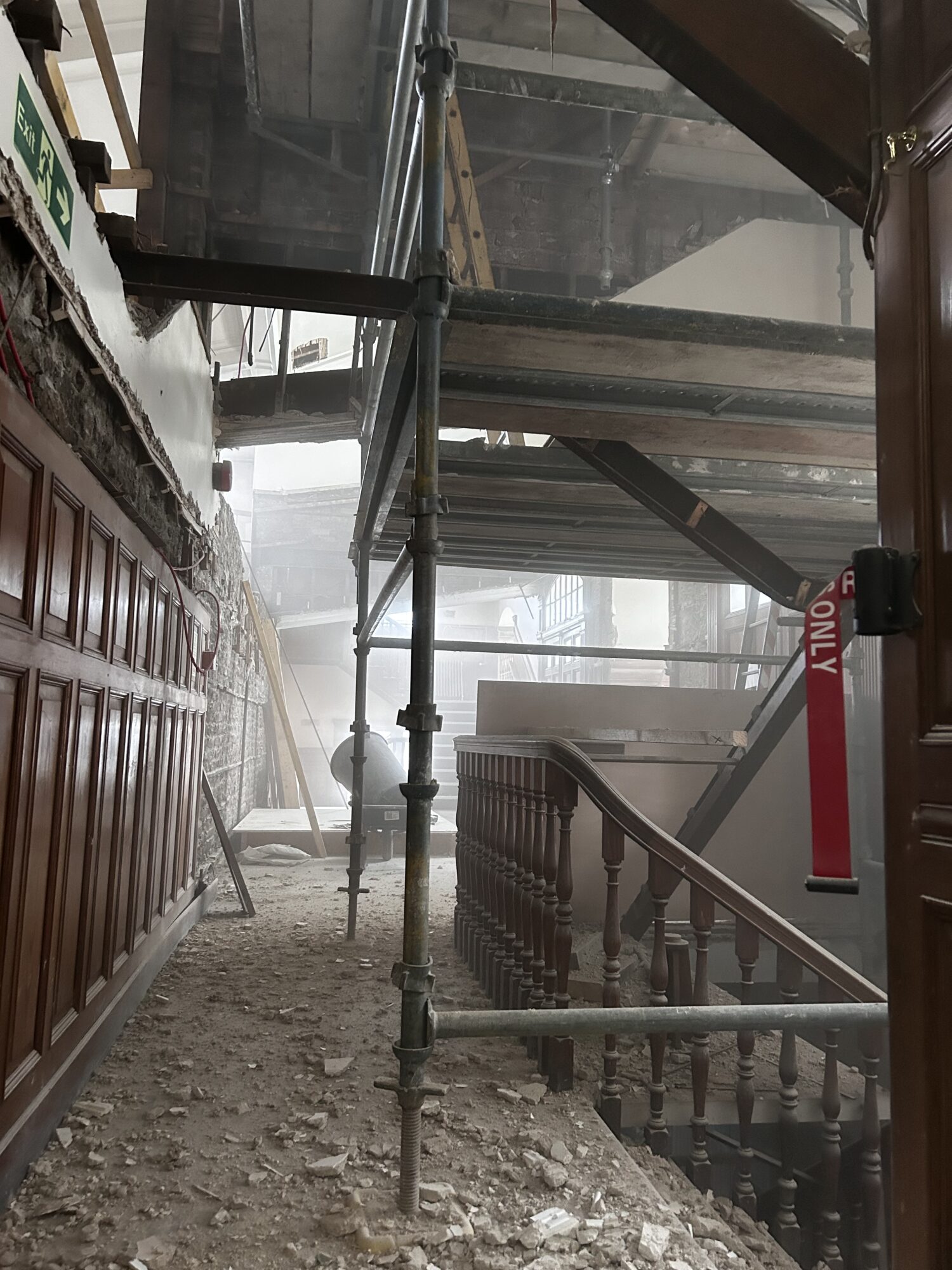
“There are lots of unknowns,” Barker said. “Until you actually knock down that wall, you don’t know what’s behind it. That introduces a huge amount of uncertainty in terms of time spent and expenditure.”
If the building has legal historical status, as this one does, you can add in logistical and legal challenges.
All things being equal, the first option is clearly faster, easier to budget for, and simpler to build.
But Trinity loved two things about the old church. First, it’s located in the civic, economic, and judicial heart of the city—with business down the street, law courts around the corner, and a city plan for shops and a plaza next door. The University of Aberdeen is within walking distance. Public transportation is plentiful and frequent.
Second, it was built as a witness to the living work of Christ. Its granite walls form something of an Ebenezer stone (1 Sam. 7:12).
“The point of an Ebenezer is it marks the moment you consecrate a space,” Gibson said. “The stone represents it forever—even after you’re gone, that memorial stone is still there. And you can either testify with the stone for the rest of your life and ministry that this is what the building is for, or you can leave the gospel and turn the building into something else. But the stone doesn’t stop testifying. The stone still preaches. And it can either testify with you or against you.”
All over Aberdeen, the stone walls of old churches, now converted nightclubs or restaurants, “are testifying against the people who abandoned the gospel in them,” he said.
Trinity didn’t want that to happen to another Ebenezer stone.
Witness of Buildings
In 2018, Trinity bought the broken-down church.
That isn’t always a good idea, Dillon said. “You have to size up the opportunity to acquire real estate for the church from a lot of different lenses, and just the fact that it’s an old church building doesn’t make it the right thing to do.”
Sometimes the cost is unattainably high, he said. Sometimes the building is affordable, but there isn’t a pastor or church plant ready to move in.
“I hate to see churches turned into restaurants and nightclubs too,” he said. “But I also think we have to be wise, because you can get over your skis really easily.”
But if it’s possible—the congregation is steady, the pastor is willing, and the price is right—old church buildings are a wonderful opportunity.
“When I’m looking at a church building, usually I’m sitting there saying, ‘Wow, faithful people have been gathering here to worship God and pray for 50, 80, 100 years,’” said Blake Schwarz, whose New Church Commons acquires empty church buildings and equips healthy congregations to inhabit them.
“The place starts becoming a thin space . . . where the veil is thinner between this world and the spiritual world,” he said. “The preservation of those thin places is really really important. It creates space for people to interact with the true and living God.”
Impossible
“There are commonly three stages in work for God,” missionary Hudson Taylor said, probably around the time the old Aberdeen church was originally built. “First impossible, then difficult, then done.”
“That quote has been our lodestar all the way through,” Gibson said.
Certainly, the task started off impossible. Almost as soon as Trinity’s leaders budgeted the renovation project, COVID-19 slowed progress and raised construction prices, sometimes as much as 100 percent.
Then things got worse.
“There was one moment when we first went out to tender, or out to bid,” Gibson said. “Two weeks after that, Putin invaded Ukraine, and two weeks later, the world prices were going up. That’s when our architect said, ‘You’re going to need to take a seat, because this is going to come back way more than you expect.’”
He was right. Snarled supply lines combined with rising energy prices pushed prices even higher than they’d been during COVID-19. The bids came back $1.8 million more than Trinity had anticipated.
What have we done? Gibson thought. This isn’t going to work.
But it had to. Trinity had already purchased the building.
“And I had amazingly solid Christian men on my shoulder who had courage and conviction,” Gibson said. “One of them said, ‘Let’s dice it up and do it in phases. We’ve got enough money to do the outside. Let’s do the outside and keep fundraising.”
Calling potential donors was largely Gibson’s job. In the beginning, that was impossible too.
“I was on a phone call with someone where I asked if I could borrow a silly amount of money, and I really thought this person would do it,” he said. “To my horror, he was like, ‘That’s a really crazy thing you’re asking me, and it’s not how you go about this.’”
Gibson felt horrible. When this call ends, I’m going to cry, he thought. But until then, he had to keep listening.
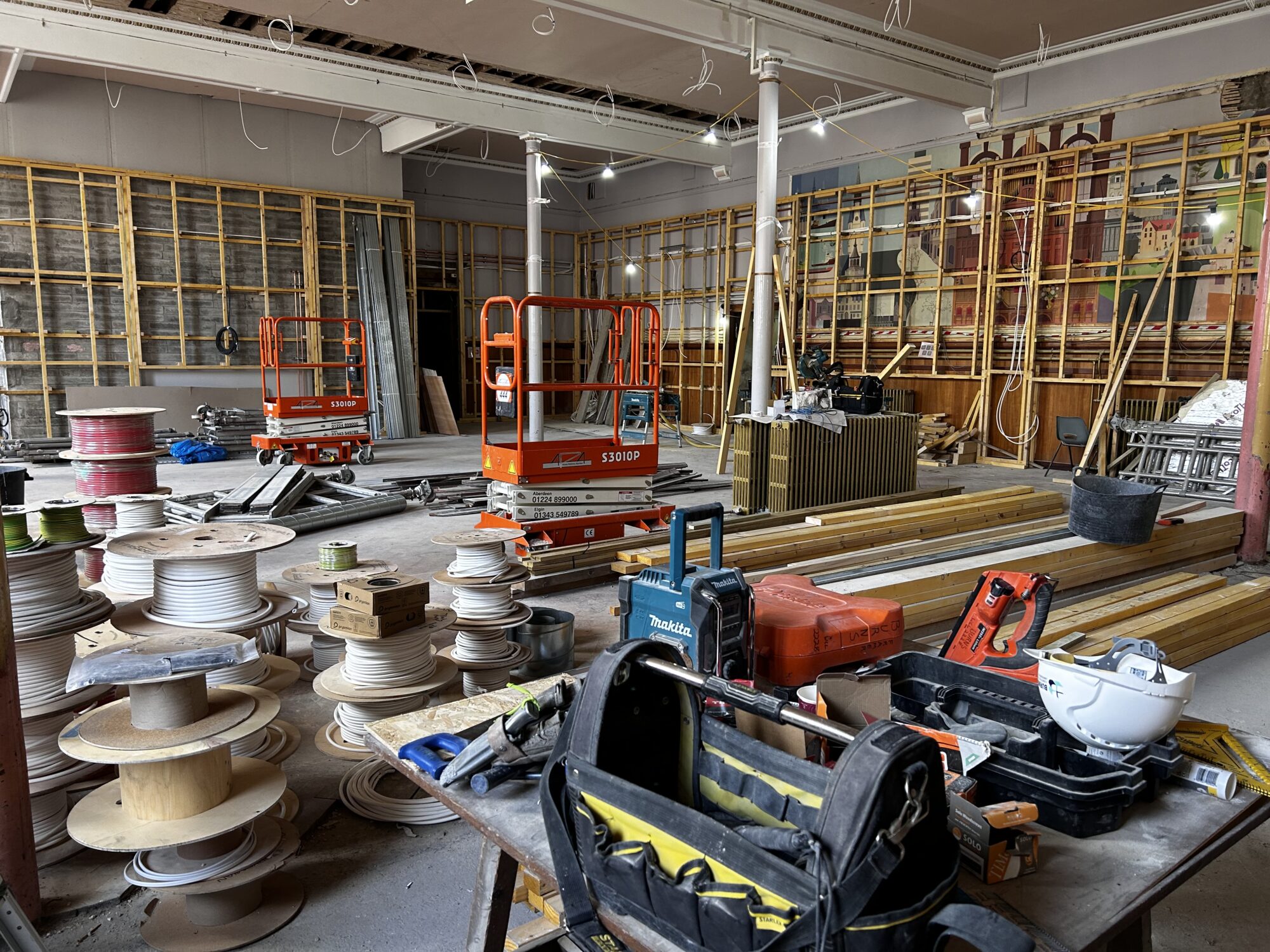
“You shouldn’t be in this position, asking people for money in this particular way, and you wouldn’t be if you had professional help,” the donor told him. Instead of writing a huge check, he offered to pay for professional project management.
When the call was over, Gibson did cry, but from relief instead of despair.
“I think only Christian people do something like that,” he said. “They understand the gospel and understand what the project is. They are committed to you relationally, not just to writing checks. They want the best for you and want you to grow as a leader. That was one of my most amazing experiences. The person I expected to drop me, with very good reason, instead pressed further in and stayed committed.”
That conversation also showed him how to lead his own team, made up of ordinary elders and deacons and laypeople.
When the task is impossible, he told them, don’t quit. But also, don’t necessarily look for miraculous rescue. Look instead for a way—probably difficult, slow, and split into steps—that you can take forward.
Difficult Steps
“The difficult bit is the longest bit,” Gibson said.
At least, it feels like the longest bit. For Trinity, this lasted about four years. Some days were better than others.
“We’re never going to do it,” Gibson told his wife, Angela, in a moment of despair. “I can’t see how it’s going to happen. I can’t see how we’re going to get there.’”
“Isn’t that the point—that you don’t see the way?” she asked. “You’ve got to keep trusting. We’ve got to keep going.”
Slowly, the Lord provided. And he gave more than just replastered walls and finances.
Twice as Much
“The whole experience was God’s kindness,” Gibson said. “He was giving me and Trinity not what we wanted, but what we really needed.”
What they needed was relationships.
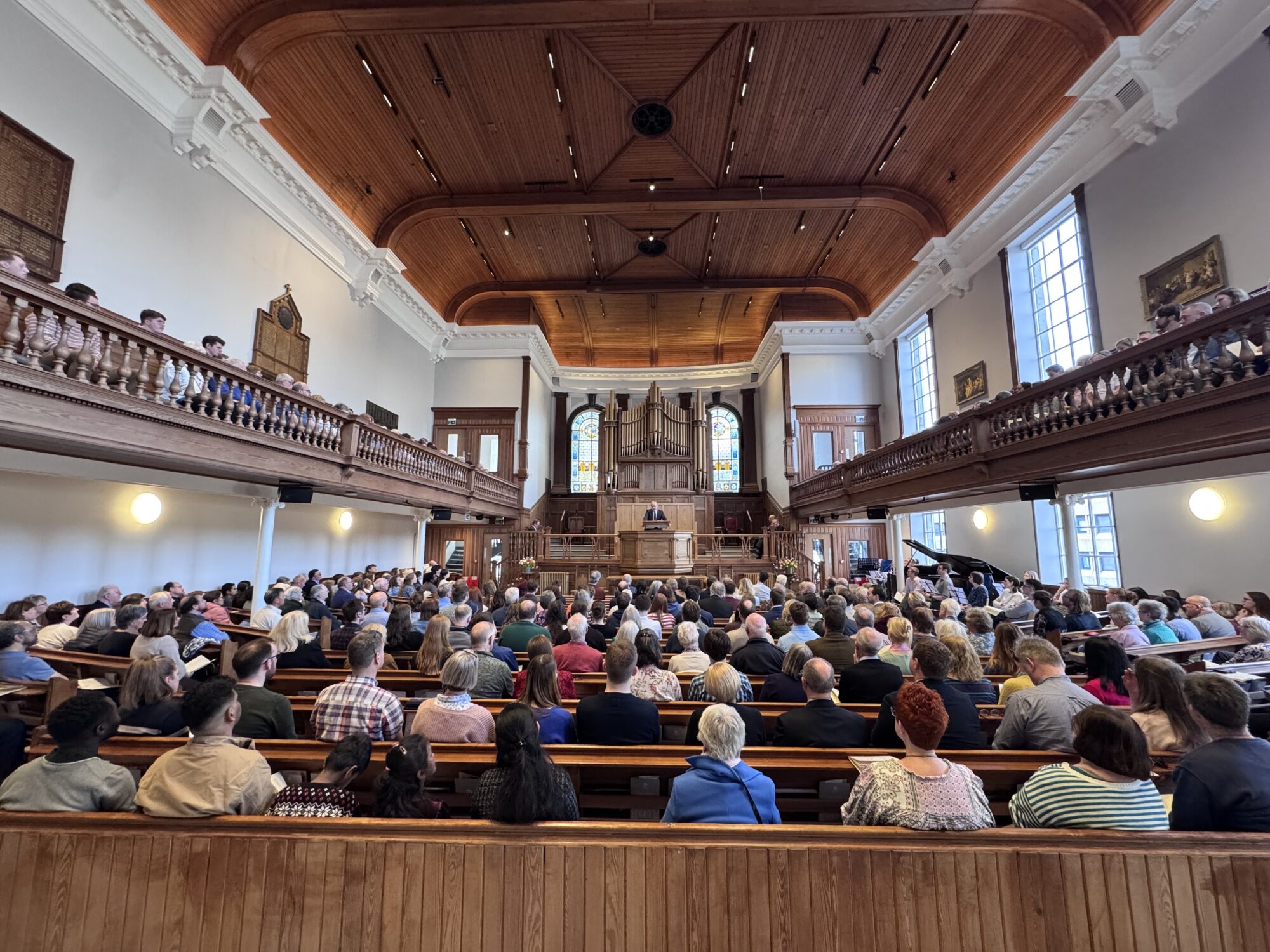
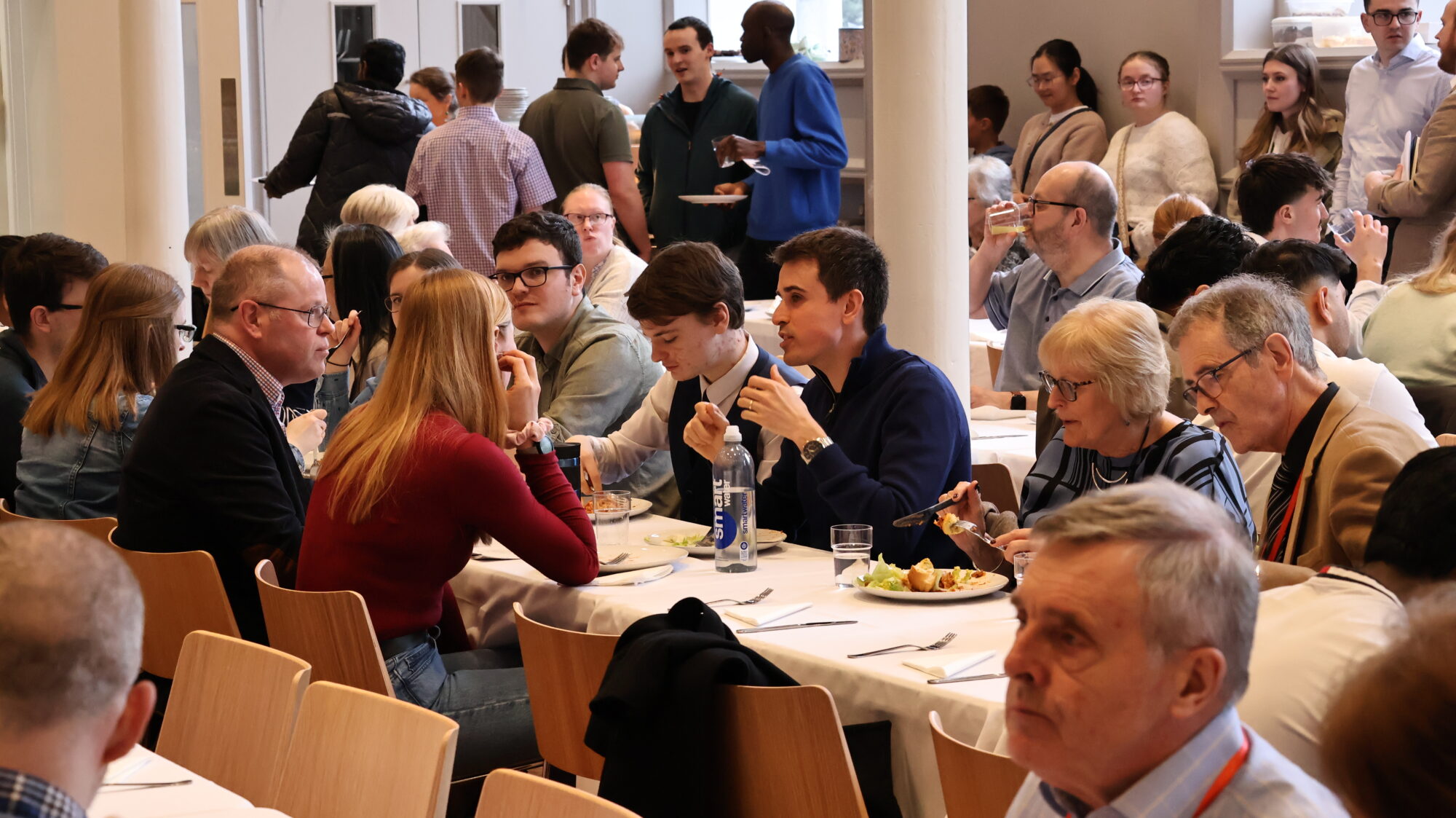
In March, when the building reopened with a special thanksgiving service, 200 others joined Trinity’s 250 members in celebration. Some were friends from other churches, some were men who’d spent the last three years working on the construction, and some were friends who had helped pay for the whole thing.
One of Trinity’s best friends is author and speaker Sinclair Ferguson, who moved to Aberdeen after his retirement so he could preach evening sermons for them.
“It’s a kind of perpetual pattern—the gates of hell seeking to prevail,” Ferguson told the community filling up the old wooden pews in the sanctuary and balcony. “And the people of Jesus Christ remaining steadfast, like a family.”
Or like a pile of stones.
What They Built
First, the idea of buying and renovating an old granite Presbyterian church in downtown Aberdeen was impossible, then it was difficult, then it was done.
The first service, held in March, was emotional.
“When the organ started up, I could see people burst into tears,” Gibson said. “It was a very moving, very beautiful day. It felt like, ‘This is it. We’re home now.’”
It isn’t taking the people long to settle in, Barker said.
“The first Sunday, people said, ‘Where’s this? Where’s that?’” he said. “Nobody knew where anything was. But that’s almost gone already. People have settled into the spaces and understand the various routes to get different places. It’s been lovely to hear their positive gratitude.”
Since Trinity is a healthy, active congregation, they immediately adapted their space to the ministry they were already doing. There are teens in the youth room, people studying in the library carrels, and women gathering for Bible study on Thursday mornings. There is room for prayer meetings, theology courses, and a fellowship group for older folks.
“It feels busy already,” Barker said. “There’s a lot going on.”
And they’re starting to add more.
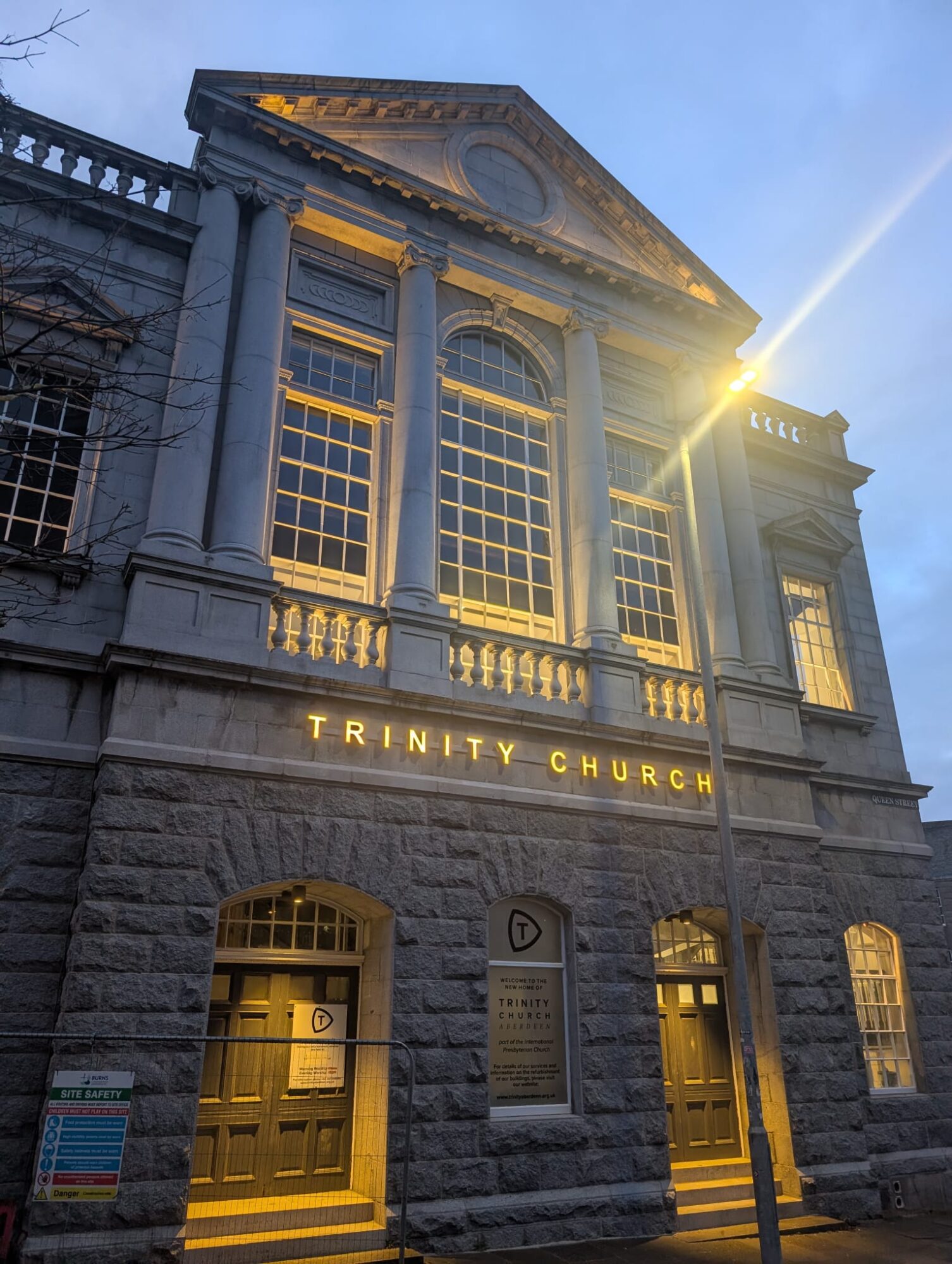
“Our building sits on a fault line,” Gibson said. “If you come out the front doors and turn left, you’re looking at social deprivation and need. If you turn right, you’re looking at wealth and the judicial, economic, and educational heart of the city. Our first priority is to go left.”
In the last couple of weeks, Trinity has launched an addiction recovery ministry. They’ve held a vacation Bible school for kids. And they’re dreaming about things like ministry internships, a food pantry, or weekday Bible studies for business people.
“Even though this building has historically been huge and prominent, lately it’s been anonymous,” Gibson said. “If I say to people, ‘I’m the minister of Trinity Church,’ they say, ‘Where’s that? Never heard of it.’”
But if he says, “It’s the building between the Aberdeen Arts Center and the Lemon Tree theater,” they know exactly where it is.
“Now the building is lit up at night, with beautiful window lighting,” he said. “Our name is in lights at the front. So we’re praying the city presence changes quickly.”
Already, passers-by have poked their heads in, curious.