
The scene was absolutely surreal. Iranian refugees cheered and sang, one of them waving an Israeli flag. Another stood atop a delivery truck, unleashing canisters of spray powder in bright green, red and white, the colors of the Iranian flag. Behind them hung a banner with a photo of Reza Pahlavi, the son of Iran’s former shah, deposed in 1978. Across the banner, in bold English, were the words “Make Iran Great Again.”
A young Iranian Christian filmed the festivities on a Sunday afternoon in Vienna, Austria, after worshiping with the Pohlgasse Church of Christ. The worship service, though more subdued than the outdoor celebration, was one of happiness and “a great sense of relief,” said Reggy Hiller, a longtime member and mission worker with the church. “Prayers were lifted for the safety of loved ones and for Iran in general to finally be relieved from 47 years of suffering.” As the service concluded, two people put on Christ in baptism.
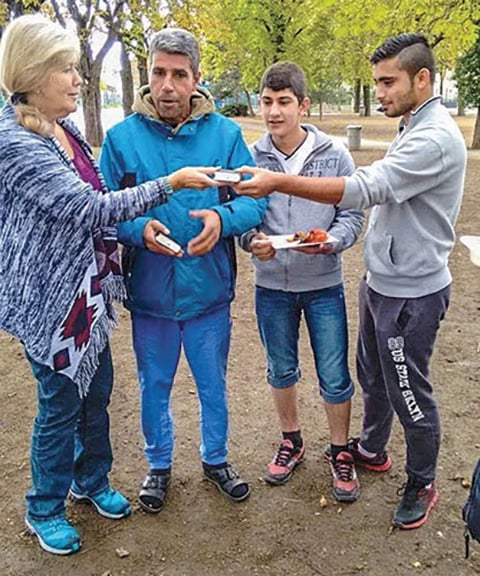
Reggy Hiller, left, gives Arabic-language Bibles to Iranians in Vienna.
Since the Iranian Revolution, Vienna and other cities across Europe have served as refugee and resettlement hubs for persecuted minorities — Jews, Christians, Baha’i and more — fleeing Iran and other Muslim-dominated countries of the Middle East. Large waves from Iran and Afghanistan arrived in the mid-2010s, and new waves are expected as the U.S. and Israel conduct daily airstrikes on Iran.
Churches of Christ have embraced the refugees, helping them to find housing and apply for asylum. Church members also study the Bible with the new arrivals and, if requested, baptize them. Several European churches translate their worship services into Iran’s national language, Farsi.
“Iranian Christians are part of the broader movement for freedom and democracy in Iran,” said Zhale, who worships with the Pohlgasse church. “Our advocacy is both faith-driven and patriotic … Iranian Christians in Europe are actively supporting movements that seek to bring peace, justice and national revival to Iran. Our faith inspires us to advocate for a future where all Iranians are safe and free.”
‘A matter of survival’
Iran, once known as Persia, appears in the Bible nearly 30 times. Its king, Cyrus the Great, ended Israel’s decades-long captivity by the Babylonians. The Old Testament prophet Daniel served in the royal courts of Babylon and Persia. The book of Esther revolves around Persian king Ahasuerus and his Jewish queen, Hadassah.
A series of shahs ruled Iran until 1978. The final shah, Mohammad Reza Pahlavi, implemented rapid modernization, dubbed the “White Revolution,” and fostered strong ties to the U.S. Muslims across Iran expressed discontent with the shah’s pro-Western stance and authoritarian rule, which included severe repression by his secret police. Pahlavi, who suffered from leukemia, fled to the U.S. as the revolution brought Ayatollah Ruhollah Khomeini to power. Iranian militants seized the U.S. embassy in Iran’s capital, Tehran, and held 52 Americans hostage for 444 days as they demanded that the shah be returned to Iran for trial.
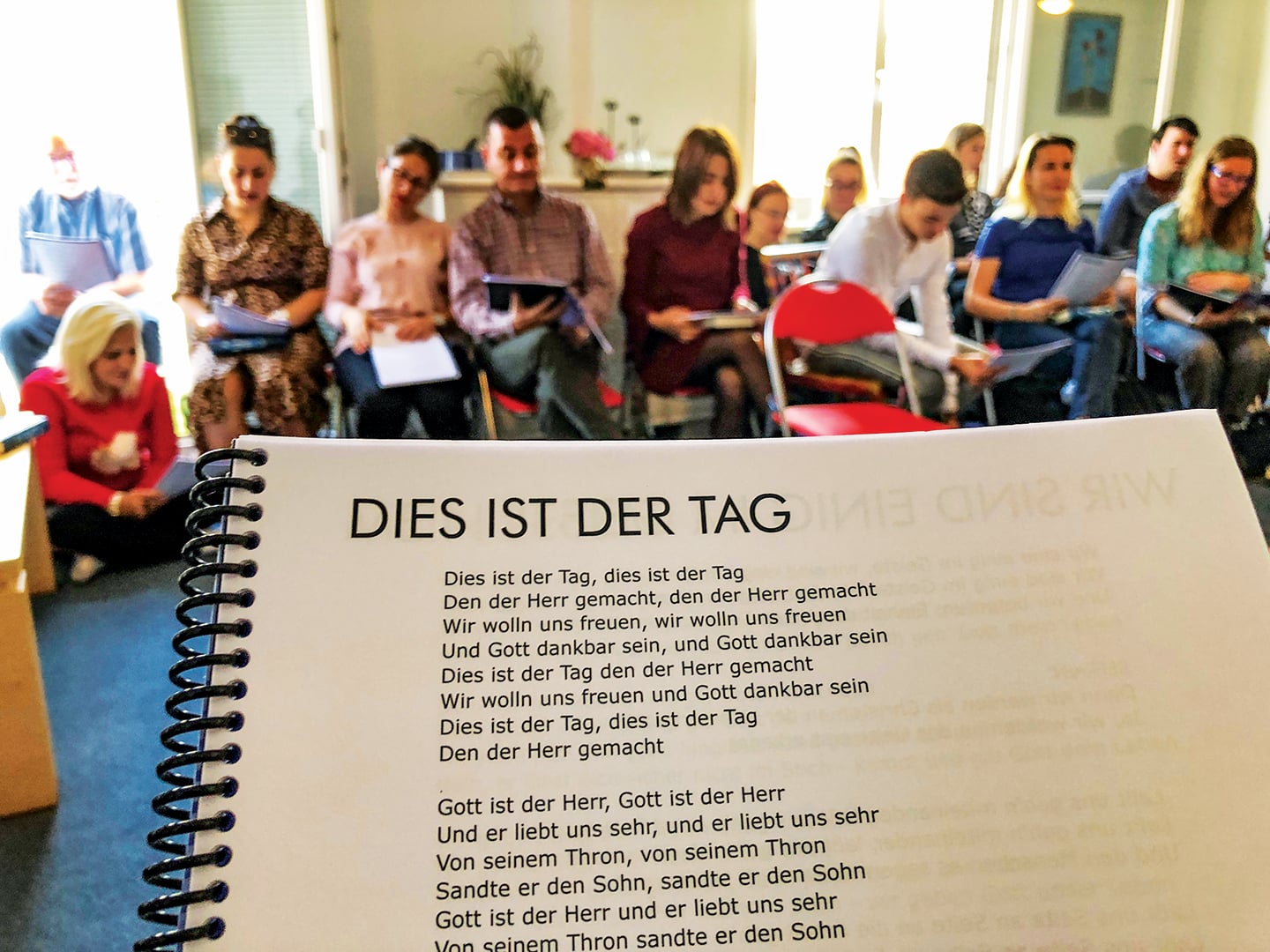
Members of a Church of Christ in Vienna, many of them Iranian, meet in an apartment in 2018 and sing a hymn in German, “Dies ist der Tag” (“This is the Day”).
Zhale was born a year after the revolution. Her father was a member of the shah’s army. He rarely left their house.
“The Islamic revolutionaries wrote slogans on the walls of our house, made threatening phone calls and warned us that my father would be arrested,” Zhale said, “even referring to stealing or harming the children … Our neighbors were radical Muslims who considered us taghuti.” The Arabic term refers to anything worshiped, obeyed or followed in rebellion against Allah. For security reasons, The Christian Chronicle is withholding Zhale’s full name.
Zhale’s school taught strict adherence to Islam, “and any question or doubt about Islamic teachings was met with disciplinary action or humiliation,” she said. “Over time, Islam became for me more a source of psychological pressure, guilt and suppression of individuality than a source of peace.”
In 2020, Zhale moved to Italy to study human rights. Eventually, she traveled to France, Austria and Slovakia and became closely acquainted with Christians there. Last year, while visiting a park in Vienna with her son, she met an Iranian Christian.
“As time passed and we became more familiar, I noticed her very kind personality, her energy and her positive spirit.” Zhale recalled. “She always had a smile on her face, and being around her gave me a feeling of peace and happiness.”
Eventually, their conversations turned to faith, and the Iranian Christian talked with Zhale about the concept of grace.
“Encountering the idea that God loves and saves a human being without coercion, without fear and without the mediation of force created a deep transformation in me. I came to Christianity not out of hatred but out of hope.”
“Encountering the idea that God loves and saves a human being without coercion, without fear and without the mediation of force created a deep transformation in me,” said Zhale, who was baptized on April 30, 2025. “I came to Christianity not out of hatred but out of hope.”
Nonetheless, she knew that putting on Christ meant she could not live under Iran’s current government. After her baptism, she applied for political asylum in Austria.
“What is slowly healing inside me in this safe country could easily be destroyed again in Iran,” she said. “Being here is not simply a choice for me — it is a matter of survival.”
A war against evil, and the evils of war
Other Iranian Christians told the Chronicle that they see the current war as part of God’s plan for their homeland. However, they mourn for the lives lost and pray continually for their friends and family in Iran.
Christians abhor violence and death, said Hossein, who worships with a congregation in Birmingham, England. At the same time, he said, “I’ve watched my country struggle for so long, and part of me hopes this could mean real change. I love Iran and our people deeply, and that’s exactly why I want to see more justice and freedom there.
“My faith, especially what I learned from the Gospel of Matthew, reminds me to care about peace and mercy even when things are complicated. I’m praying that innocent people are protected, that this leads to accountability where it’s needed and that it’s real. Freedom can grow in Iran.
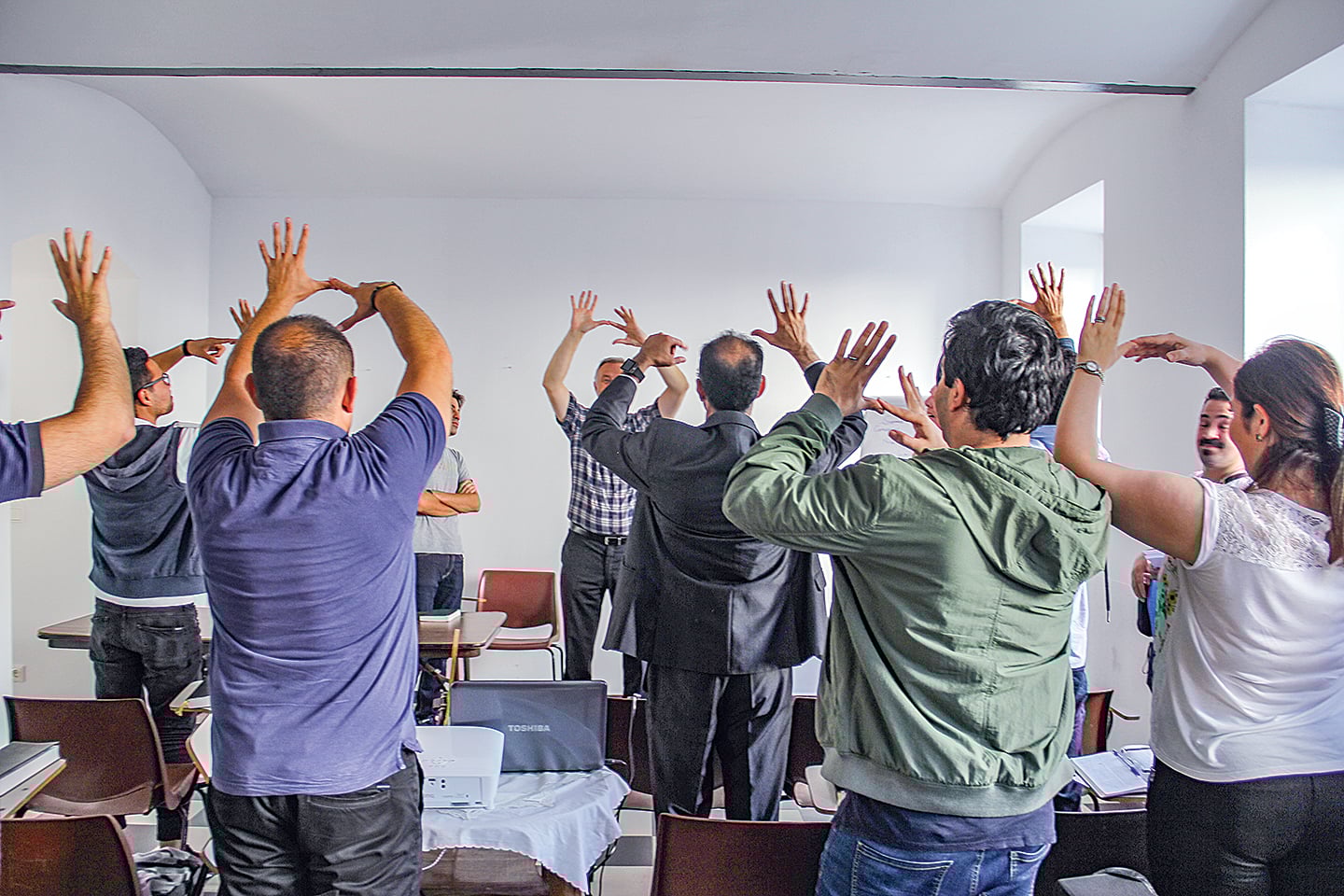
Austrian Christian Gerhard Krassnig leads a “Five Finger Exercise” as he teaches a Bible lesson to members of the Pohlgasse Church of Christ in Vienna, including refugees from Iran, in 2018.
I’m also praying that hearts would change, that violence wouldn’t spiral and that somehow God would bring lasting peace out of all of this.”
The people of Iran, who live under an Islamic theocracy, “endure an experience even worse than prisoners behind the Iron Curtain,” said Fred Petrossian, an Iranian journalist, author and researcher based in Belgium. “Nevertheless, Iranian Christians, facing dehumanization since the Islamic Revolution, deprived of their basic rights and subjected to persecution, have continued to resist and bear witness to their faith and identity.”
“Iranian Christians, facing dehumanization since the Islamic Revolution, deprived of their basic rights and subjected to persecution, have continued to resist and bear witness to their faith and identity.”
In a column for Religion Unplugged titled “Against Evil Or War?: A Defining Choice For Iran’s Christians,” Petrossian discussed the plight of Iranian Christians — those spread among the diaspora and those worshiping in secret in Iran.
Iranians are “living under bombs, caught between a brutal present and an unknown future,” Petrossian wrote. Yet, “they can also find some comfort in the words of Archbishop Desmond Tutu, who fought apartheid: ‘I’m not optimistic, no. I’m quite different. I’m hopeful. I am a prisoner of hope.’
“This, too, is the current sentiment of many Iranian Christians: hope, but without any illusions.”
ERIK TRYGGESTAD is President and CEO of The Christian Chronicle. Contact erik@christianchronicle.org.