


Good morning. 
Welcome back to capitalism work. We sure hope you had a great weekend.
In case you missed it, we published Episode 13 of Headlines by TechCabal on Saturday, our talk show breaking down the biggest stories in African tech.
From major infrastructure bets to the deals and policies shaping the continent’s digital economy, this episode cuts through the noise with sharp, focused analysis.
For sponsorships, speak with our partnerships team. Let’s dive in.

Telecoms
AfDB backs Nigeria’s Project BRIDGE with $200 million

Nigeria is doubling down on fibre as the foundation of its digital economy, with fresh backing from development finance institutions. The African Development Bank (AfDB) has approved a $200 million loan for Nigeria’s Digital Value Chain Infrastructure for Boosting Employment (D-VIBE) project, also known as Project BRIDGE, as part of a broader $2 billion push to expand broadband nationwide.
State of play: The project aims to extend Nigeria’s fibre backbone from about 30,000km to 120,000km, connecting all 774 local government areas and linking the network to neighbouring countries, including Benin, Cameroon, Niger, and Chad. Financing includes $500 million from the World Bank and $100 million from the European Bank for Reconstruction and Development (EBRD), alongside private sector participation through a special purpose vehicle (SPV).
Between the lines: Project BRIDGE remains in a heavy preparatory phase despite fresh funding. Nigeria is spending $6.1 million on consultants covering transaction advisory, legal compliance, and technical planning, highlighting the complexity of execution. Yet, procurement and advisory work suggest timelines will depend as much on regulatory alignment and project structuring as on capital availability.
Right-of-way costs, fragmented policies and coordination challenges continue to slow fibre rollout, explaining the reliance on DFIs to de-risk early stages and attract private capital. A milestone-based disbursement model tied to rollout targets also indicates tighter oversight on execution.
Zoom out: Large-scale fibre investments, such as Project BRIDGE, reinforce the central role of terrestrial infrastructure in national connectivity strategies. Governments are prioritising backbone control and regional interconnection, particularly where digital economies are becoming material contributors to gross domestic product (GDP).
Execution will be closely watched, as delays in Project BRIDGE could prolong connectivity gaps even as parallel investments in mobile networks accelerate in Nigeria.


20+ Markets. One API.
Fincra connects your business to Africa’s payment rails without building market by market. For collection, payout, FX, and settlement through a single integration. See what this means for your business.
Telecoms
South Africa wants telecom operators to provide geo-data of their towers and fibre networks
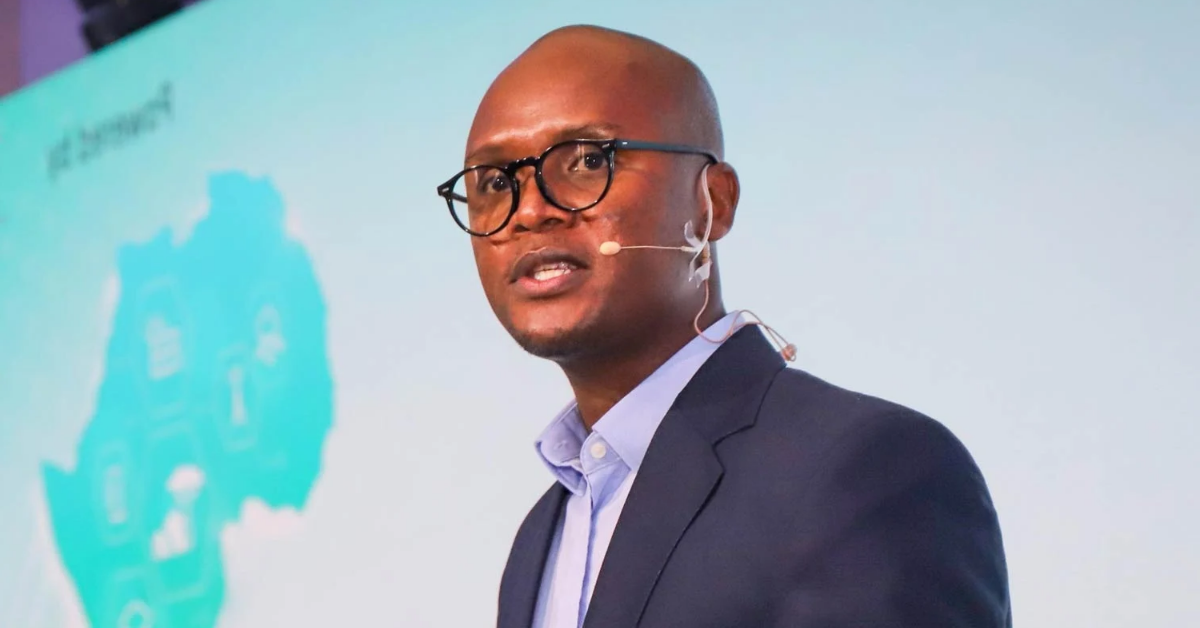
South Africa’s telecom regulator is proposing a new rule that would require every licenced network operator to submit detailed and geo-mapped data about their infrastructure, including where their fibre runs, where towers sit, available capacity per region, and even where they plan to expand next.
What is this for? The Independent Communications Authority of South Africa (ICASA) wants to build a national map of broadband infrastructure that regulators can use to identify coverage gaps, speed up rollout, and make land access and dispute resolution easier. The regulator thinks that urban areas are cluttered; getting a geo-mapped overview of South Africa provinces that still lack coverage will enable it to mandate operators to deploy infrastructure in lacking areas.
What operators are now being asked to do: Operators must submit accurate, geo-referenced data on all their infrastructure (fibre routes, ducts, poles, base stations), service availability at the address level and also their rollout plans. They must now follow stricter rules when deploying infrastructure, including securing approvals and consulting landowners and communities, before they lay any cable. Failing to meet the data requirements can attract fines of up to R1 million ($61,000), with additional penalties for breaching deployment procedures. The proposal is open to public comment for 30 days.
Between the lines: South Africa is asking telecom operators to open up their networks to regulators, in a bid to fix broadband gaps that have long favoured wealthy urban areas. While South Africa’s broadband penetration rate reached 78% in 2024, access in urban areas was still higher than in rural areas, highlighting a gap ICASA has long tried to close with rural-first policies. It mandated that Telkom, a network operator, provide free Wi-Fi in South African provinces with limited government presence, in a bid to narrow the divide.
20+ Markets. One API.
Breet is offering a $10,000 equity-free grant to growth-stage fintech, crypto and payments startups in Africa. Integrate the API, submit your product, and pitch live at ATE Lagos. Two winners get $5,000 each. Deadline by May 31. Learn more.
Banking
South African banks are betting on Optasia’s AI lending model
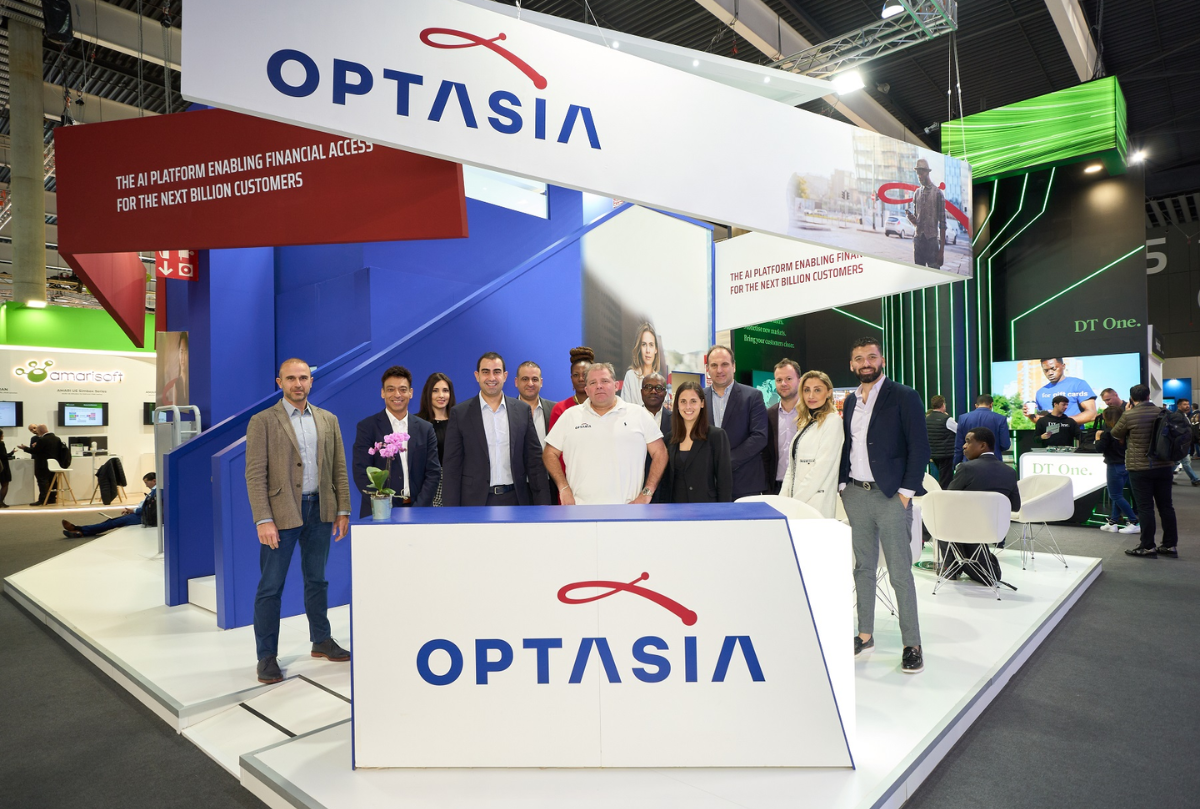
Optasia, a South African-listed fintech company that provides lending recovery services, has refinanced its existing loans on better terms and received up to $330 million in new and expanded debt facilities.
The money isn’t coming from a single lender. It is arranged by banks, and Standard Bank, a South African lender, is the lead underwriter, meaning it will coordinate the deal and guarantee it is fully funded.
What Optasia actually secured: Optasia is getting $180 million in long-term debt it has to repay, plus $150 million in guarantees that protect its funding partners if things go wrong. Those guarantees make lenders more comfortable, so Optasia can lend more money without taking on as much risk itself.
Why banks are interested: Optasia has helped telco-owned mobile money operators, such as MTN MoMo, lend small amounts like airtime advances by using AI to decide who gets credit. Now, it’s taking that same logic to banks, as it announced in March. Banks already have customers, but struggle with lending to riskier segments without increasing defaults. Optasia is pitching itself as the layer that fixes that with AI.
This comes two weeks after FirstRand, the South African tier-1 lender, increased its shareholding in Optasia to 26.1%, after it first invested in the company in October 2025, ahead of the company’s listing on the Johannesburg Stock Exchange (JSE).
Two things are happening to Optasia at once: banks are helping to structure capital, and more banks are buying into the company itself.
Internet
Amazon Leo to launch mid-2026
Amazon’s low Earth orbit (Amazon Leo) broadband push is taking shape as an infrastructure business anchored in enterprise and government demand. In his 2025 shareholder letter, Amazon Chief Executive Officer Andy Jassy said Amazon Leo will launch in “mid-2026” and already has “meaningful revenue commitments” from enterprises and governments, particularly in the United States.
Early customers include Delta Air Lines, AT&T and Vodafone, signalling demand well before full commercial rollout.
Between the lines: Amazon, the US Big Tech company, is positioning Leo as an extension of its cloud business rather than a standalone consumer Internet service. Integration with AWS sits at the core of the pitch, allowing customers to move data between satellite connectivity and cloud environments for storage, analytics and AI. Enterprise-grade performance and lower costs are central to the value proposition, alongside global coverage.
This approach mirrors AWS’s expansion into government and large enterprise contracts, where long-term deals and infrastructure lock-in drive scale. Securing commitments ahead of launch also suggests Amazon is prioritising predictable revenue streams over rapid consumer uptake.
What this means for Africa: The strategy aligns with how connectivity is typically deployed across African markets, where governments and telecom operators play a central role in funding and distribution. Amazon could pursue partnerships or contracts in countries where it already has a footprint or regulatory pathways, such as Nigeria and South Africa.
Starlink, the satellite Internet company operating in 26 African countries, has built an early lead through a mix of direct-to-consumer (DTC) offerings and enterprise deals. Yet, Amazon’s enterprise-first model could challenge that position by targeting national broadband projects, rural connectivity programmes, and telecom backhaul agreements.
While Amazon has not announced a clear plan for its Leo operations in Africa yet, it could offer competitive bundled offerings that combine connectivity with cloud and AI capabilities. Regulatory approvals, pricing, and local partnerships will likely determine how quickly Amazon can convert early commitments into African market entry.
CRYPTO TRACKER
The World Wide Web3
Source:

|
Coin Name |
Current Value |
Day |
Month |
|---|---|---|---|
 Bitcoin Bitcoin |
$72,014 |
+ 1.71% |
+ 2.82% |
| Ether |
$2,192 |
+ 0.76% |
+ 7.62% |
| XRP |
$1.34 |
+ 0.95% |
– 3.10% |
| Solana |
$83.16 |
+ 1.58% |
– 3.91% |
* Data as of 06.45AM WAT, April 13, 2026.
Events
 The voices shaping Africa’s digital future are taking the stage. From AI and IoT to cloud, connectivity and smart infrastructure, IOT West Africa | Data Centre & Cloud Expo Africa 2026 brings together the leaders building the continent’s next digital chapter. This is where the ecosystem meets, and we’ll see you there. The event kicks off on April 28–30 at the Landmark Centre, Victoria Island, Lagos. Register here to attend.
- All roads lead to Nairobi on May 7, 2026. Gathered at the Sarit Expo Centre, senior leaders from across Africa’s fintech and payments ecosystem will gather for a day of meaningful connections, market insights, and cross-border collaboration. The focus of the Africa Fintech Live event is on driving real engagement, bringing together industry leaders and emerging innovators to spark strategic conversations that will shape the future of finance on the continent. Secure your early bird ticket now at 50% off.
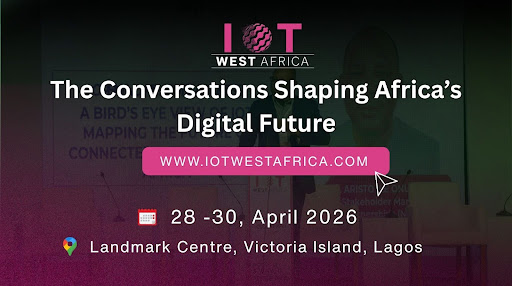 The voices shaping Africa’s digital future are taking the stage. From AI and IoT to cloud, connectivity and smart infrastructure, IOT West Africa | Data Centre & Cloud Expo Africa 2026 brings together the leaders building the continent’s next digital chapter. This is where the ecosystem meets, and we’ll see you there. The event kicks off on April 28–30 at the Landmark Centre, Victoria Island, Lagos.
Written by: Emmanuel Nwosu and Opeyemi Kareem
Edited by: Emmanuel Nwosu and Ganiu Oloruntade
Want more of TechCabal?
Sign up for our insightful newsletters on the business and economy of tech in Africa.
- The Next Wave: futuristic analysis of the business of tech in Africa.
- Francophone Weekly by TechCabal: insider insights and analysis of Francophone’s tech ecosystem
P:S If you’re often missing TC Daily in your inbox, check your Promotions folder and move any edition of TC Daily from “Promotions” to your “Main” or “Primary” folder and TC Daily will always come to you.