

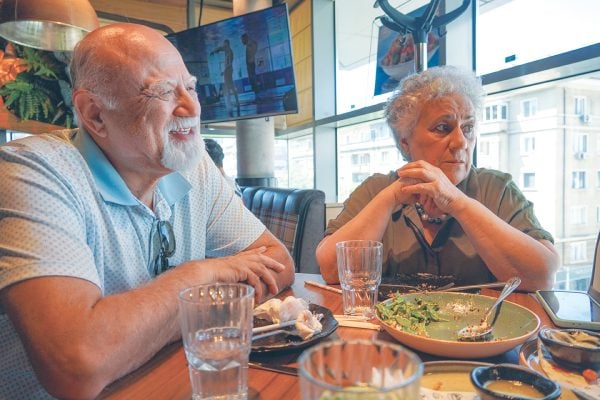
SOFIA, BULGARIA — He picked the wrong guy to evangelize.
It got him a punch in the stomach — and what likely would have been a lifetime of persecution.
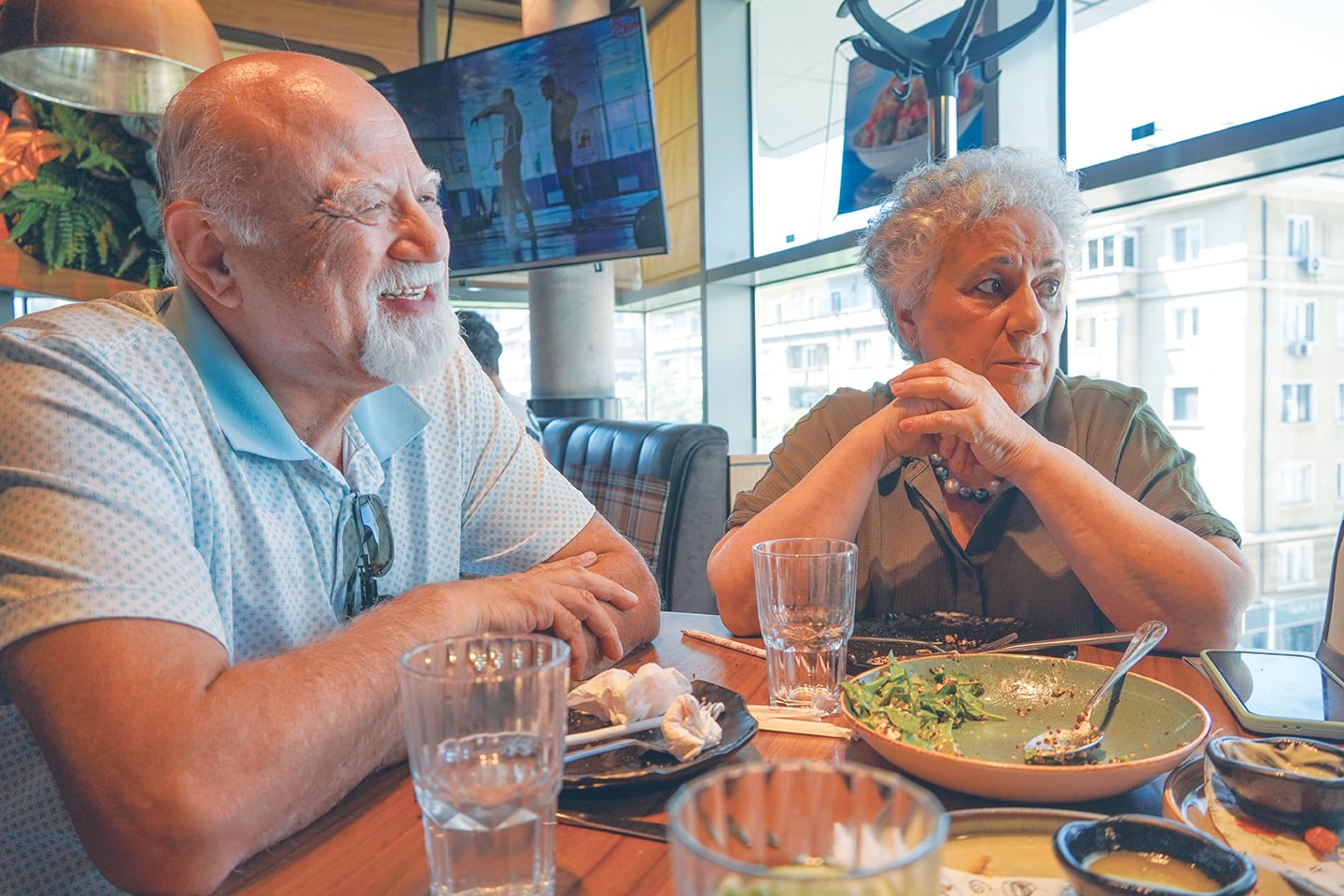
Christo and Vania Arnaudov
Christo Arnaudov was a rarity in communist Bulgaria — a third-generation evangelical Christian. His grandfather preached the Gospel in the days before the Eastern European nation, which sits atop the intersection of Greece and Turkey, became a satellite state of the Soviet Union after World War II.
“There was a slang saying from the Communist Party that religion is like a drug for the nation,” said Deanna Christova, referring to Karl Marx’s critique of faith as “the opium of the masses” — an oft-quoted phrase in the communist era.
“If someone was holding a Bible, was caught with the Bible, they would accuse him of possessing drugs like opium.”
“And if someone was holding a Bible, was caught with the Bible, they would accuse him of possessing drugs like opium,” said Christova, a Bulgarian English teacher who worships with the Sofia Church of Christ, where Arnaudov preaches. The minister and his wife, Vania, spoke with The Christian Chronicle over a lunch of shopska salad, minced meat skewers and yogurt. Christova served as translator.
Christians had to be careful during the communist days. Arnaudov remembers his father receiving a treasure trove of 100 Bulgarian-language Bibles via a colleague in Sweden. A neighbor found out and told the police, who questioned his father for three days about where he got the Bibles. “I don’t know. One day I just found them in my house,” his father insisted — which was technically true.
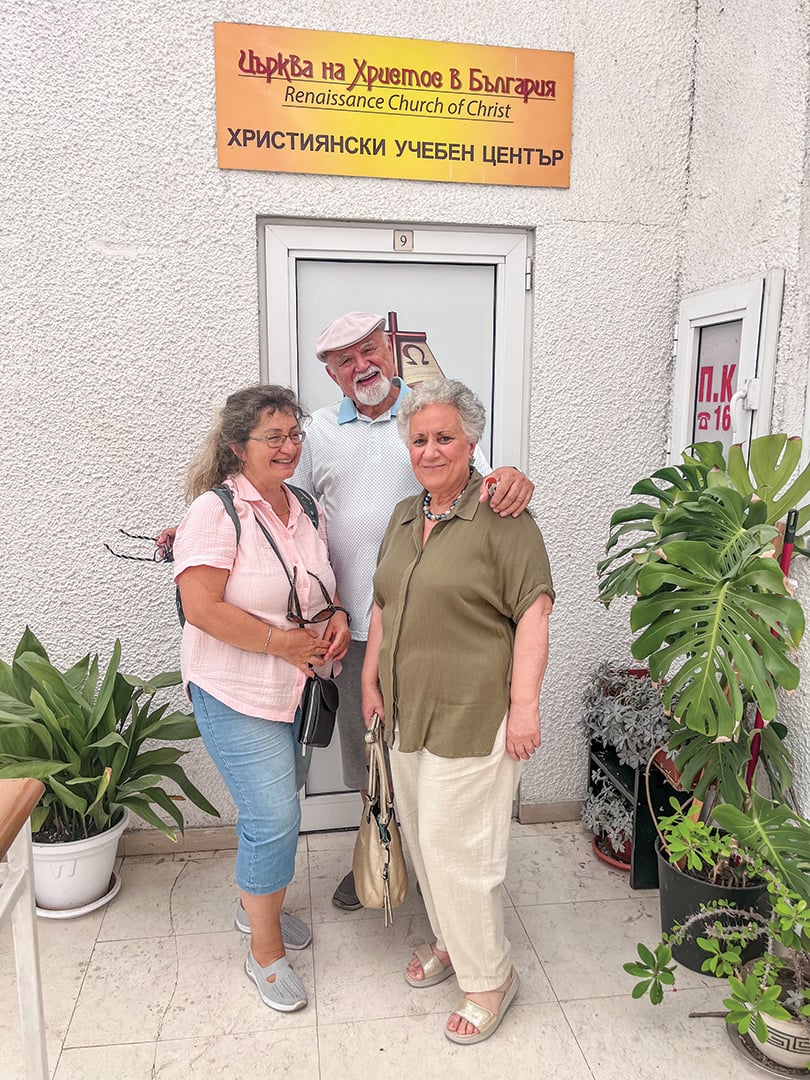
Deanna Christova and Christo and Vania Arnaudov stand outside the meeting place of the Renaissance Church of Christ.
When he turned 18, Christo Arnaudov signed up for two years of obligatory national service. He was in line for appointment to a prestigious unit of investigators, similar to military police. About that time, an innocent-looking, plain-clothed man approached him and asked him about his faith.
“So I started evangelizing him,” Christo said with a laugh. He talked about the Partisans, the resistance soldiers who fought the Nazi occupiers in World War II. “They were few, but they brought Bulgaria the victory. And Christians, we’re very few, too, but God will give us the victory.”
Then came the gut punch. The curious man, it turns out, was an investigator for the military.
“You’re demoted!” he told Arnodov. Instead of serving in the special unit, the minister got posted to what American troops call K.P. duty (Kitchen Patrol). He guarded a food storage unit.
“Rather than beating me to death, he gave me the best position — manager of the food,” Christo recalled. “Everyone was my friend!”
From musician to full-time minister
Culinary benefits aside, Christo’s run-in with the secret police could have haunted him for decades in a society that viewed Bible and narcotics possession equally.
That changed in 1990 as the Iron Curtain fell and Bulgaria held its first multiparty elections. The country, then with a population of about 8.8 million, avoided the political turmoil and bloody wars of its neighbor, Yugoslavia, as it transitioned to a parliamentary democracy. But years of economic instability, food shortages and hyperinflation followed. Banks went bankrupt, including the one where Vania Arnaudov worked.
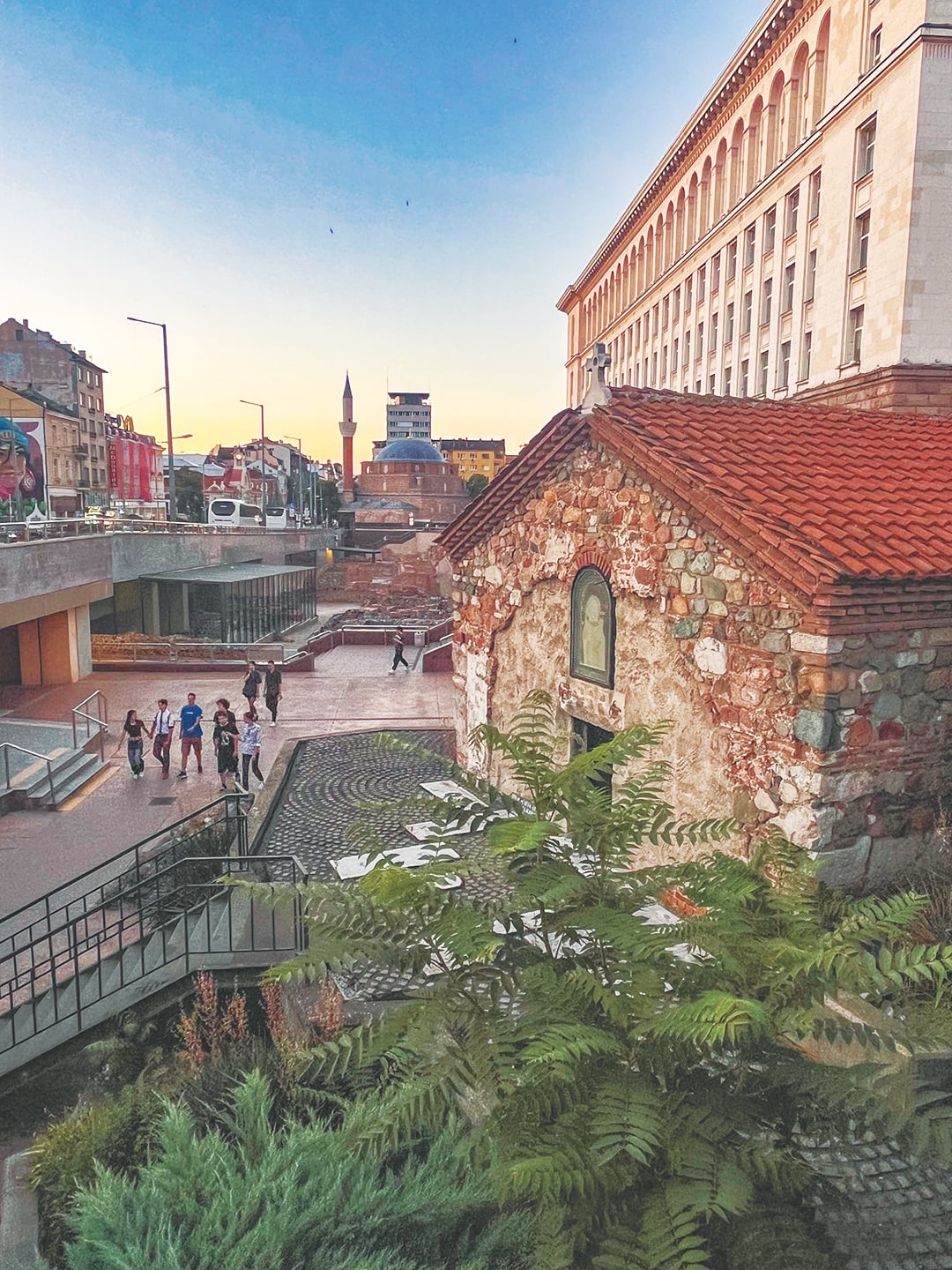
Shoppers and sightseers walk past the Church of St Petka of the Saddlers, a medieval Bulgarian Orthodox church building that stands next to Roman-era ruins in a semi-submerged mall in Sofia, Bulgaria. Behind it stands the Banya Bashi Mosque built by the Ottomans in the 1500s.
Vania, like most Bulgarians, grew up atheist but started questioning her non-belief during a period of illness. A coworker introduced her to the Bible and invited her to a church that met in secret. Vania met Christo there. They lived in Burgas, a city on the Black Sea near the historical region of Thrace. Christo, an accomplished viola player and singer, conducted the city’s choir.
The transition from communism to democracy affected Christo’s job, too, as musicians left Bulgaria to pursue opportunities in Italy and Austria. Bulgaria joined NATO in 2004 and the European Union three years later. More Bulgarians took jobs in other parts of the EU, and the country’s population fell to 6.4 million.
Christo looked for opportunities to perform in Western Europe, but making the move would cost at least 5,000 Euros. He made what he called “an extreme decision” to leave home and look for work in Athens, Greece. On arrival, he found the ancient city crowded with other Bulgarians. He took whatever jobs he could find. Vania later joined him and worked as a nanny.
Their daughter, Natalia, graduated from college in Burgas and came to visit them in Athens. That’s where she encountered a group of study-abroad students from Harding University in Searcy, Ark. The students worshiped with the Omonia Church of Christ, where Dino Roussos served as minister.
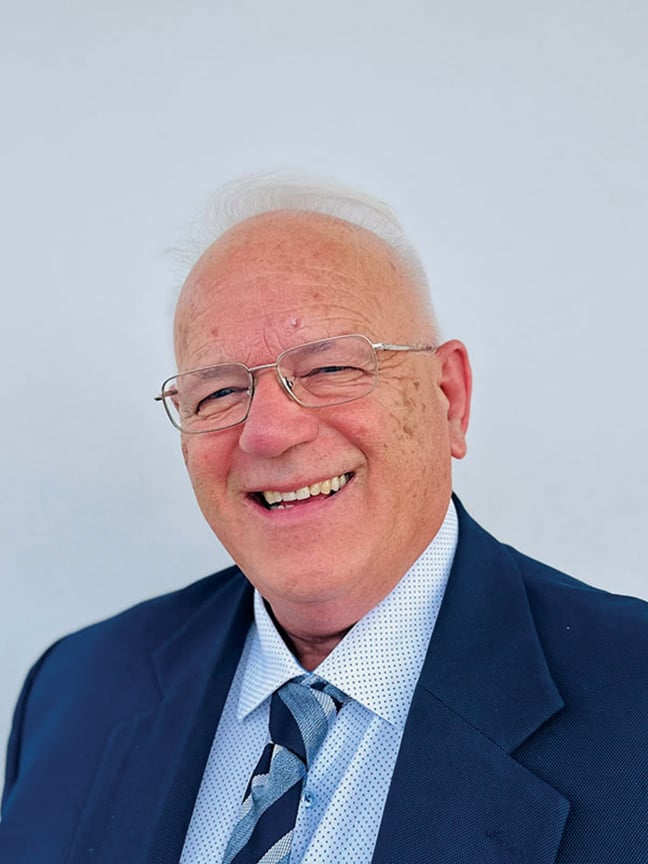
Dino Roussos
“They arrived already well‑versed in Scripture,” Roussos said of the Arnaudovs. “We had the privilege of guiding them deeper into the teaching and practice of the Bible and the Church of Christ.”
The “care and love of the brethren at the Omonia Church of Christ” made the biggest impact on the family, Christo said. As a result, “God changed the material and financial focus in me into an aim to grow spiritually and devote myself to ministry to the Lord.”
The Omonia church building served as the site of the Athens Bible Institute, an affiliate campus of Texas-based Sunset International Bible Institute. Christo began studying at the Athens school. His family launched a Bulgarian-language service for the Omonia church in 2001.
Over the next seven years, some 300 Bulgarians became Christians through the Arnaudovs’ work.
“Christo brought not only a strong teaching ability, but also the rather rare gift of organizing choirs, being a professional musician,” Roussos said. “His musical talent strengthened the church significantly.”
Roussos began traveling to Bulgaria in the mid-1990s. He preached to crowds of hundreds and baptized dozens. It was “a season of extraordinary openness and spiritual hunger,” he said.
Ten years later, as the Arnaudovs shared the Gospel in Athens, they got requests from Bulgarians back home to return. In 2004, Christo registered Churches of Christ as a legal entity in Bulgaria, as required by law. Four years later, the musician who left for Greece to earn seed money for a music career returned to Bulgaria as a church planter.
Rebirth in a changing Bulgaria
The Arnaudovs launched the Renaissance Church of Christ — an allusion to “rebirth” after decades of communist rule — in a small apartment in Bulgaria’s capital, Sofia, in 2008.
“From a very small home group, God kept adding to the church new people,” Christo said, “families with children who would believe, repent and be baptized into Christ.”
Eighteen years later, the Renaissance church meets in a rented facility owned by a local artist. Paintings and sculptures line the walkway to the bright white entrance. Sunday attendance ranges from 30 to 60, including regular guests from the U.S. embassy in Sofia. The church translates its services into English as needed.
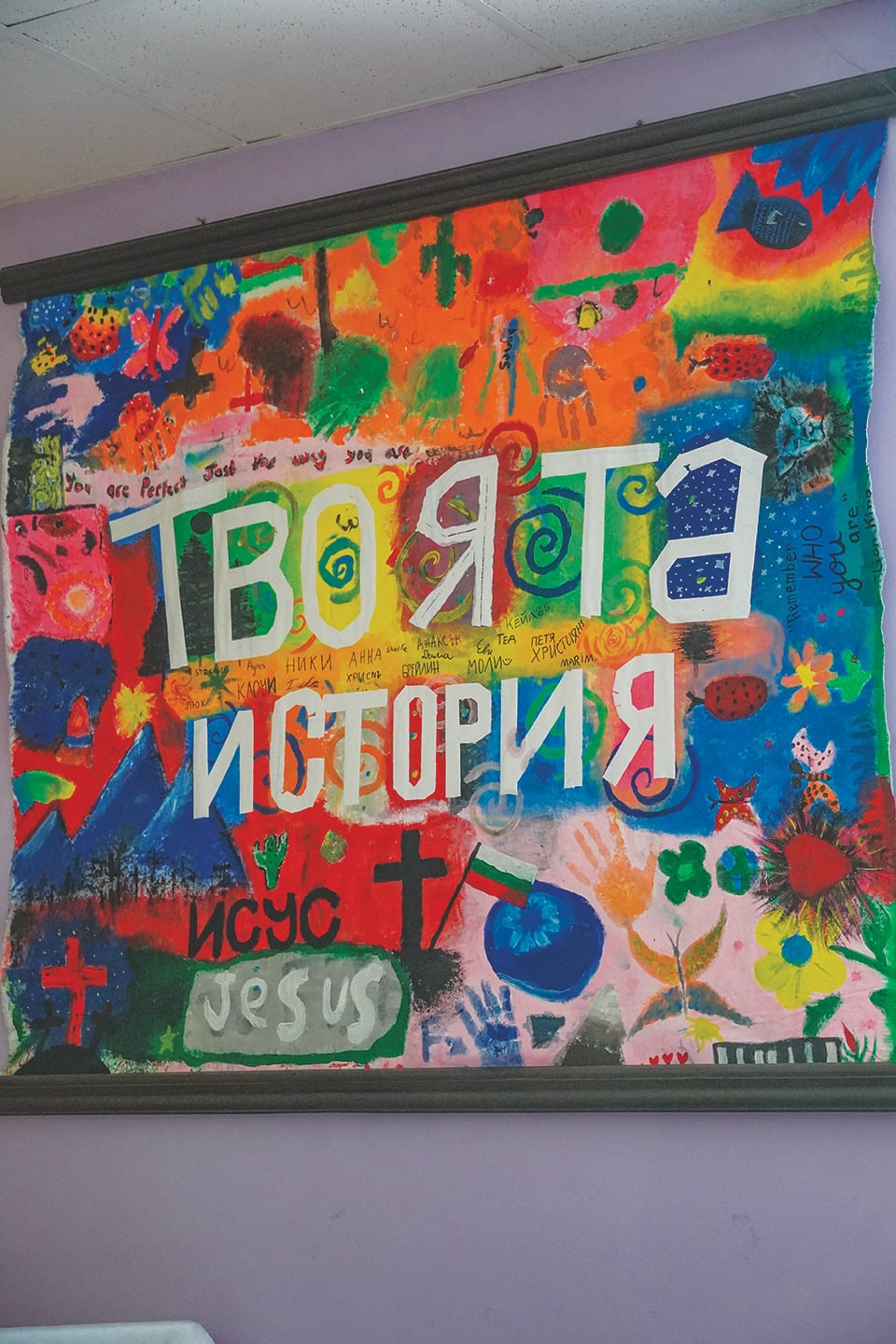
A bulletin board in the Renaissance church building, decorated with Christian symbols, reads “Your Story.”
The Bulgarian Christians worship freely — a big change from the communist era when congregations met in secret. While he praises God for religious freedom, Christo said he misses the sense of unity that Protestant churches once had in his homeland.
“There was one church,” he said. “Some had Baptist beliefs. Others were Pentecostal.” But they found ways to work together and help each other survive under the communist regime.
“There wasn’t a separation between denominations,” Christo said. “Now, there is a line.”
But the collapse of communism has other benefits, including easy interaction with Christians from around the world.
“God opened the hearts of brothers and sisters to support us in the new planting,” Christo said. Among those is the West Ark Church of Christ in Fort Smith, Ark. Rick Odell, who served on the church’s ministry staff, led multiple groups to conduct children’s camps, Vacation Bible Schools and parenting seminars. Odell continues to recruit young people for mission trips to Bulgaria in his current role as associate director of church relations for Oklahoma Christian University.
There are no stomach-punching secret police in the streets of Bulgaria today, but other threats loom, including apathy. About 70 percent of the country claims Eastern Orthodoxy as its faith, and about 11 percent of Bulgarians practice Islam. But surveys show weekly church attendance at only 5 percent.
For that reason, building up the faith of young believers is paramount for the Arnaudovs.
“We encourage the young men at our church toward ministry and dedication,” Christo said, “so that they may continue God’s work.”
Back in Athens, Roussos now ministers for the Glyfada Church of Christ, a multicultural congregation of believers who speak Greek, Russian, Ukrainian, English, Farsi and Albanian.
“The multicultural nature of the ministry reflects the very heart of the Gospel, which was never intended for one nation alone.”
“The multicultural nature of the ministry reflects the very heart of the Gospel, which was never intended for one nation alone,” Roussos said.
Despite the challenges, “Bulgaria has a great future,” he added. As for the Arnaudovs, “their ministry is living proof that seeds planted in faith do not return empty.”
ERIK TRYGGESTAD is President and CEO of The Christian Chronicle. Contact erik@christianchronicle.org.